



By PANLE VWAR and THERESA NAANBAM
the story of Tin City Metro is bigger than buses and a ₦200 fare. It is a test of whether a well-received government intervention can evolve into a durable public service that survives political transitions, economic pressures and rising operational costs. As they examine the programme’s impact on commuters, its employment benefits and the challenges confronting its future, they argue that the real measure of success will not be how cheaply Plateau travels today, but whether Tin City Metro can remain affordable, efficient and accountable for generations to come
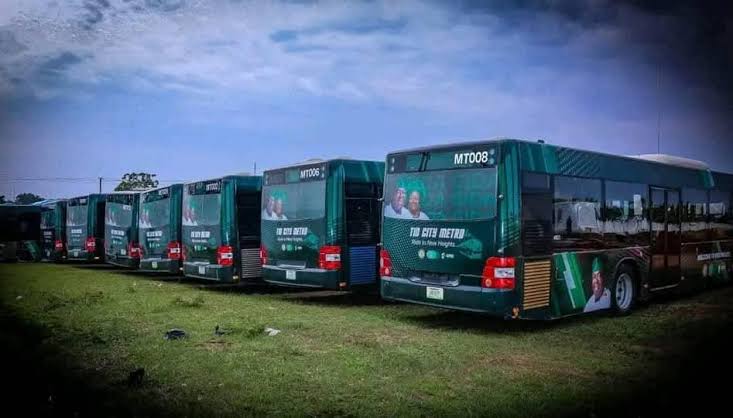
When the Plateau State Government rolled out the Tin City Metro Bus Service, it was more than a transport intervention. It was relief for households struggling with rising fares and a lifeline for students, civil servants, traders and everyday commuters in Jos and beyond.
Initiated by Governor Caleb Mutfwang’s administration, the programme has provided affordable transport across the Jos metropolis and extended services to Heipang, the host community of the Yakubu Gowon Airport. At ₦200 per trip, regardless of distance within designated routes, the buses have become a buffer against fuel price shocks and rising transport costs.

The appeal goes beyond the fare. Commuters can purchase Tin City Metro Travel Cards and subscribe online, reducing the hassle associated with cash payments and queues.
Mr Samuel Gwott, Group General Manager of Plateau Express Services, the parent company of Tin City Metro, confirmed that there are no plans to review the fare.
“There is no intention to review the fare, considering that it is meant to be a palliative measure towards ameliorating the transportation difficulties of Plateau people,” he explained.
He added that with more than 30 buses in operation, the initiative continues to receive commendation from individuals, groups and other stakeholders.
Even President Bola Tinubu described the project as “a step in the right direction” and urged the governor to sustain it.
For commuters, the impact is direct. Mrs Lazarus Kyenpia disclosed that the service has helped her reduce transport costs and plan her budget better, while Mr Fred Keyen described it as “currently the cheapest public transport in the country” and praised the government for maintaining the ₦200 fare despite the economic hardship.
Beyond passenger relief, Tin City Metro has also created jobs. According to the Group General Manager, more than 500 people are employed as card vendors, drivers, unit heads and support staff, providing a welcome boost in a region grappling with unemployment.
The sustainability question
But relief today must not become abandonment tomorrow. Every good initiative faces short- and long-term challenges, and Tin City Metro is no exception.
Running a public transport system requires consistent funding. Buses must be fuelled and maintained, tyres and spare parts replaced, drivers and other staff paid, and administrative costs covered.
The ₦200 fare is deliberately affordable, which is why it has become popular. The critical question, however, is whether fares alone can sustain operations when the costs of fuel, spare parts and salaries continue to rise.
Mr Timothy Dishak, a transport operator of 15 years, suggested that while a minor fare adjustment may eventually become inevitable, government could continue to subsidise part of the cost because the service functions as a social intervention rather than a profit-making venture.
Political analyst, Mr Patrick Mbak, argued that sustainability will depend on structure rather than goodwill.
“It is important for government to put in place legal, financial and institutional frameworks to ensure that the programme stands the test of time and avoids disruption. Subsidising public transportation is a critical social service that should not be underestimated,” he said.
He added that because the programme depends heavily on political will, stakeholders and the public must develop enduring mechanisms to sustain it so that it does not become vulnerable to underfunding when another administration takes over.
“That is where the Plateau State House of Assembly comes in. They have a role to play to institutionalise the service through legislation that ensures continuity across political transitions,” he said.
The point is clear: Tin City Metro should not be treated as a project belonging to one administration. It should be developed into a permanent public transport institution for Plateau State.
Building for the long haul
For long-term survival, transparency and accountability must be prioritised alongside fleet expansion. Fortunately, the service already leverages technology through travel cards and electronic payment platforms. That digital infrastructure provides an opportunity for tighter revenue monitoring.
Passenger numbers, fares collected, routes covered and daily revenue should be tracked in real time, reducing reliance on manual reporting and making it easier to identify leakages.
Quality control must also improve. Commuters such as Mr Rwang Deme have complained about long waiting times and application errors.
“At times the app doesn’t show exactly where a bus is. It’s a kind of system error. You have to wait too long. Also, there is too much congestion in most cases and I think this calls for more buses,” he said.
Resolving telemetry and application issues while increasing the fleet size would improve reliability, encourage patronage and reduce overcrowding that could create health and safety concerns.
On finances, management should publish regular operational reports. Independent audits would help demonstrate what is working and what requires adjustment. Clear procedures should also be maintained for reporting revenue, fuel consumption, mileage, maintenance and breakdowns.
Staff welfare is equally important. Employees who demonstrate professionalism and integrity should be recognised and motivated, while salaries must be paid promptly to maintain efficiency and morale.
Government should also establish a clear formula for determining the subsidy required to maintain the ₦200 fare. If the actual cost of transporting each passenger is higher than the amount collected, the deficit should be covered through a structured annual budgetary allocation rather than emergency bailouts.
Revenue should not depend solely on fares and government subventions. Advertising offers another viable source of income.
Banks, telecommunications companies, schools and other corporate organisations could advertise on buses and at bus stops, with proceeds channelled towards maintenance and fleet replacement. Partnerships through corporate social responsibility programmes could further strengthen the financial base.
Finally, the physical condition of the fleet must be protected. Drivers should be trained in preventive maintenance to counter the tendency to neglect government-owned property. A dedicated capital replacement fund would ensure that new buses can be procured when existing ones reach the end of their service life without creating a sudden fiscal burden.
Legacy beyond ₦200
Governor Mutfwang’s administration deserves commendation for putting the buses on the road and helping households save thousands of naira that can now be directed towards food, education and healthcare.
But the greater legacy would be the creation of a resilient public transport institution backed by law, transparent finances, accountable management, reliable technology, corporate partnerships and a long-term fleet renewal plan.
The ₦200 fare is a symbol of relief. Affordability must now be balanced with sustainability.
The buses may have started their journey under this administration, but their continued journey must become the enduring responsibility of Plateau State.