



In this feature commemorating this year’s Children’s Day, CHRISTIANA DANGYANG examines how economic hardship in Plateau State is affecting education delivery in public schools and the ways in which inconsistencies in government systems are forcing both teachers and pupils into difficult choices. The report highlights how these pressures are widening inequality between public and private schools and reshaping what inclusion means for children in real terms
Children’s Day celebrations in Nigeria, held on May 27, are usually about march pasts, songs, and promises for the future. But in Jos this year, under the theme, ‘Future Now: Promoting Inclusion for Every Nigerian Child’, the future feels tied to something much simpler: whether parents and teachers can afford to show up.
Economic hardship has forced many Plateau State workers to cut down their workdays. Strikes, unpaid salaries and inconsistency in government schools have pushed more families to the edge.
For children, this harsh reality manifests as empty desks, missed lessons, and longer walks to school. The gap is widening. The rich send their children to private schools, ensuring they get all the attention they need.
Meanwhile, children in public schools are falling behind. This is not for a lack of effort or intelligence. It is because the system meant to serve them keeps breaking down. This is what inclusion looks like when tested in real time.
Voices from the classroom
“My teacher is only here three days a week,” complained Nanrin Yohanna, 14, a JSS 3 student in Jos South Local Government Area of Plateau State.
Nanrin used to see her mathematics teacher every weekday. But now, it is only on Mondays, Wednesdays and Fridays.
“On the days she’s not here, we just copy notes. Nobody explains the topics,” Nanrin says, flipping through a notebook filled with half-finished equations.
“I’m scared for WAEC. How will I cover the syllabus?”
Hanatu Shadrach, the teacher Nanrin described, told THE NIGERIA SATANDARD that she and her colleagues could no longer afford the daily commute.
“Transport alone consumes our salaries, so we cannot go every day. It’s about survival before productivity,” she explained.
For Nanrin, survival at home means falling behind at school. She stays after class to ask her classmates for explanations, but some of them are just as lost as she is.
“When teachers are on strike or not paid, we stay at home for weeks,” she adds.
“My cousin in a private school never misses a day. They finish the syllabus on time. I feel like we are always chasing them,” she added, sadness flooding her young face.
Nanrin’s frustration is common. Inconsistencies in government schools, delayed salaries and frequent industrial actions mean public school children lose weeks, sometimes months, of learning in a single academic year. Those are weeks they can never recover.
“I walk almost an hour because my mum can’t pay my fare,” said Stephen Moses, 14, a primary 6 pupil.
Last term, Stephen’s mother gave him ₦500 daily for transport. This term, she told him he would have to walk.
“It takes me close to an hour to get to school,” Stephen said, wiping sweat from his face after morning assembly.
“Some days I’m too tired to write. And when my mum doesn’t go to work, I stay home too.”
Stephen’s mother is one of many Plateau civil servants who now report to work only three times a week due to soaring transport fares. The decision saves money at home but costs her son valuable time in the classroom.
“My teacher says I’m missing schoolwork, but what can I do?” Stephen asked, almost hopeless.
“We have to eat first. I want to come to school every day, but if we don’t eat, I can’t learn.”
His teacher, who asked to remain anonymous, confirmed that this pattern is widespread. When parents reduce their workdays to save on transport costs, their children’s school days drop right along with them.
And when strikes hit, students end up staying home for months. Private school children do not face these problems.
Two systems, one country
The divide is stark. Private schools in Jos run strictly on schedule, pay teachers on time and provide standard textbooks and laboratories. Public schools, conversely, struggle with overcrowded classrooms, delayed salaries and interrupted academic calendars.
“The rich send their children to private schools and get all the attention they need,” said a parent in Jos North who asked not to be named.
“While public school children are lagging behind due to strikes, unpaid salaries, and inconsistency in government schools, the children of the poor are left behind.”
It is a quiet indictment of how inclusion fails when public services collapse. A child’s postcode and their parents’ income now dictate the quality of education they receive. That is not inclusion. That is separation.
“I share one textbook among three people,”
complained David Choji, 16, an SS 2 student resident in Jos South Local Government Area.
David’s family stopped buying new textbooks this year.
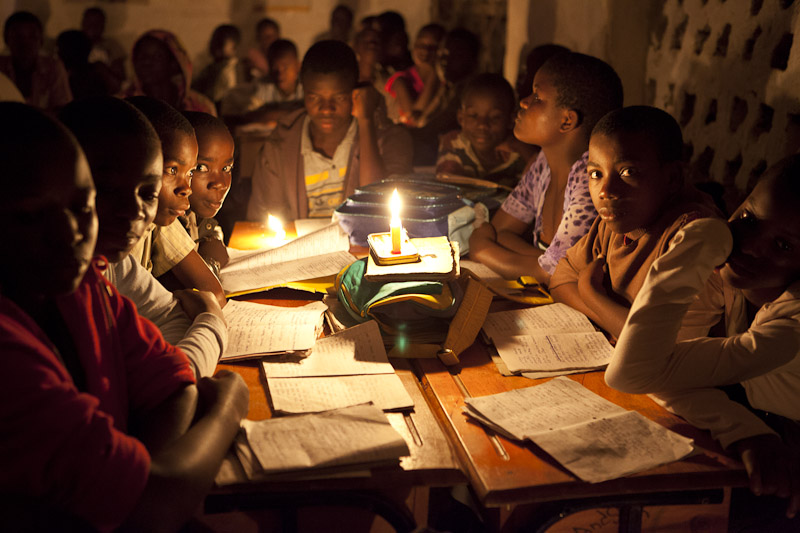
“My dad said we should manage, so me and two other classmates share one textbook in class. At night, I borrow the book and read under the lamp,” David says.
“If I don’t finish before my friend needs it back, I fail the test. I want to be a doctor, but how will I pass Chemistry like this?”
Sharing textbooks slows everyone down. Students must take turns, lose time copying text by hand and struggle to revise at home. For subjects like Mathematics and Science, where independent practice is vital, sharing becomes a massive barrier to success.
“I’m scared I’ll drop out like my friends.” These are the words of Amina Yusuf, 15. She is a JSS 2 student resident in Jos North LGA.
Amina still comes to school every day, even though it means walking 40 minutes each way. But she worries she won’t be able to keep it up for much longer.
“Three of my friends stopped coming last term,” she says quietly.
“Their parents said there is no money. I want to be a nurse, but I’m scared the same thing will happen to me.”
Amina’s mother works as a cleaner in a government office. Her salary has stayed the same, but the cost of transport and food has skyrocketed.
Some weeks, Amina comes to school without lunch.
“I tell myself that if I study hard, maybe I can help my family later,” she says. “But it’s hard when you’re tired and hungry. I don’t want to stop school. School is the only place where I feel like I have a chance.”
What ‘inclusion’ must mean
The Federal Ministry of Women Affairs announced ‘Future Now: Promoting Inclusion for Every Nigerian Child’ to emphasize that no child should be left behind due to gender, disability, religion, ethnicity or location.
For the children in Jos, however, inclusion has a much more immediate meaning. It means having a teacher in the classroom every single day. It means paying salaries on time so strikes do not happen. It means providing textbooks for every student, rather than forcing three to share one.
Ultimately, it means making public schools work so that poor children do not lose their futures simply because they cannot afford private education.
In conversations across three public schools, three requests came up repeatedly from students:
Consistent teachers: “If our teachers are tired or absent, we lose time we can’t get back,” said Nanrin.
Affordable transport and paid salaries: “Even ₦500 a day is too much for my mum now. Teachers need to be paid so they can come to work,” said Stephen.
Fundamental learning materials: “We can’t study properly if we’re sharing one book,” said David.
These are not demands for luxury. They are the bare minimum conditions required for the right to education to mean anything at all.
Cost of inaction
The struggles these children describe are deeply intertwined with the struggles of their parents and teachers. When salaries are delayed, teachers go on strike. When teachers go on strike, children stay home. When children stay home, they fall behind. And when they fall behind, the gap between the rich and the poor widens into a chasm.
One civil servant summarized the crisis bluntly: “The solution lies in the government providing an enabling environment for workers to perform.”
For children, that enabling environment starts by making it possible for their teachers and parents to show up consistently.
However, Plateau State has shown that it is capable of taking action. In June 2025, over 1,000 school kits were distributed to out-of-school children in Jos North and Mangu, led by Deputy Governor Josephine Piyo, allowing those children to return to class.
Similar targeted interventions are urgently needed now—focused specifically on keeping public schools open, ensuring teachers are paid and keeping children in the classroom.
The children are watching
Children are not passive observers in this crisis. They notice when their teachers are absent. They notice when their friends drop out. They notice when their private-school peers finish the syllabus while they are still struggling to copy basic notes.
“I want to be a nurse,” Amina says. “But I need to be in school to do that. I don’t want to be part of the statistics of children who dropped out.”
Nanrin puts it even more bluntly: “We are the future, but the future needs help right now. The government must put real effort into securing the future of children, in line with the theme of this year.”
On Children’s Day, the message echoing from the classrooms of Jos is clear: true inclusion means closing the gap before the desks empty out completely.