



By MARIE-THERESE NANLONG
As Nigeria inches closer to the 2027 general elections, concerns are mounting over widespread information disorder, hate speech and digitally manipulated content capable of inflaming tensions and undermining democratic processes.
Therefore, journalists, fact-checkers and civil society actors are intensifying efforts to combat misinformation and safeguard democratic integrity ahead of the next electoral cycle.
From misinformation, disinformation and mal-information to false political narratives circulated on social media and AI-generated content designed to mislead voters, the country is witnessing an information warfare capable of eroding public trust in the electoral process and threatening national peace.
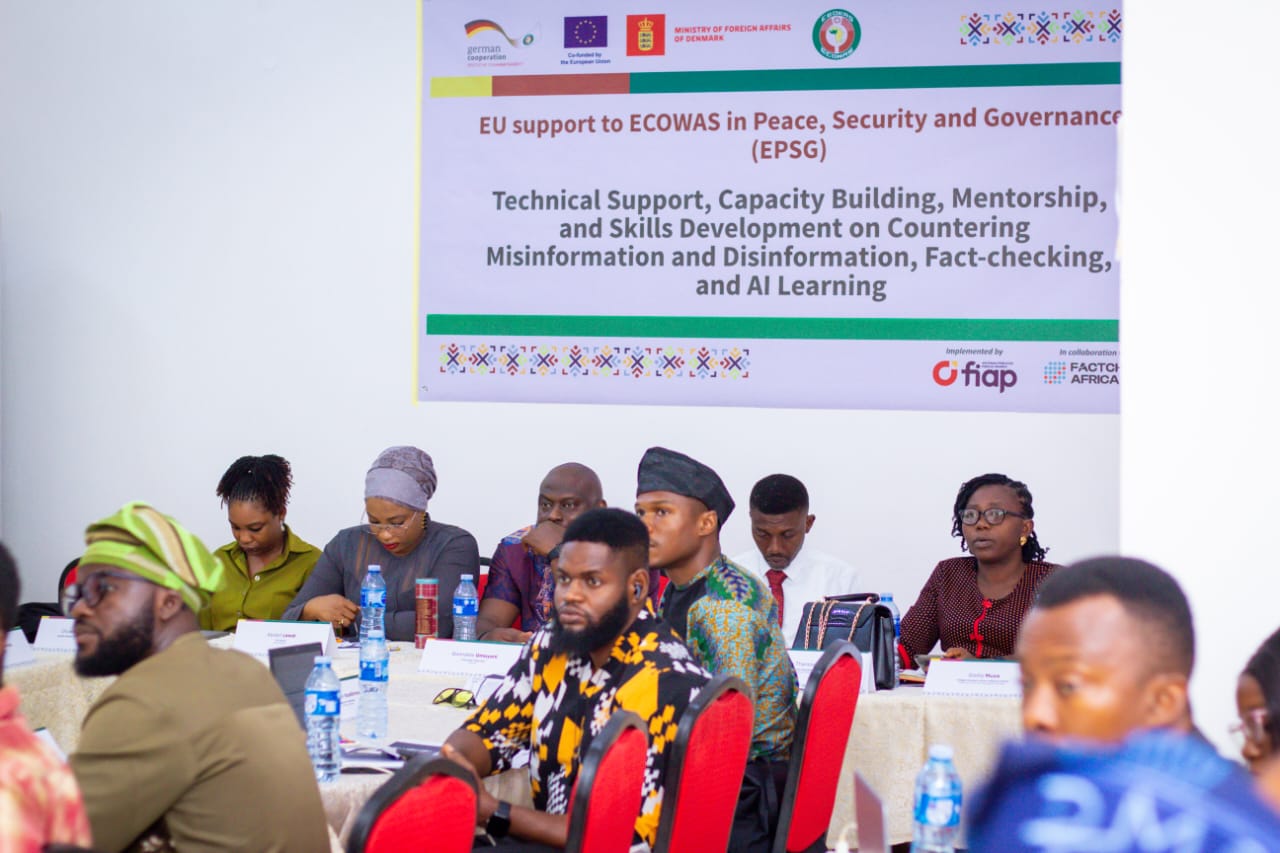
Against this backdrop, journalists, fact-checkers and civil society actors from across northern Nigeria gathered in Abuja for a three-day regional workshop aimed at strengthening media integrity and promoting peaceful elections.
The workshop, titled, ‘Truth at the Ballot: Strengthening Media and Civil Society for Democratic and Peaceful Elections in Nigeria‘, emphasised the importance of fact-checking and verifying information before it is posted or shared.
The event was organised by the Fundación para la Internacionalización de las Administraciones Públicas (FIIAPP) through its frontline implementing partner, FactCheckAfrica, under the European Union Support to ECOWAS in Peace, Security and Governance (EPSG) Project.
Held between May 18 and 20, 2026, the workshop brought together 35 participants to strengthen their capacities to demand democratic accountability and electoral peacebuilding. Resource persons included Samad Uthman of Agence France-Presse (AFP), Ajibola Amzat, co-founder of WikkiTimes, Silas Jonathan from the Centre for Journalism Innovation and Development (CJID), Kunle Adebajo of Code for Africa, Ahmad Aluko, a fact-checker with the Centre for Democracy and Development (CDD) and Gbemisola Adebowale from TechHerNG, among others.
The programme focused on practical strategies for combating electoral information disorder, online manipulation and hate speech ahead of the next electoral cycle.
Rising fears over digital manipulation
Participants underwent sessions on mapping the Nigerian disinformation landscape, verification and fact-checking, Open Source Intelligence (OSINT), hate speech and narrative analysis, digital investigations, election safety reporting, gender-sensitive journalism and the ethical use of artificial intelligence within the media ecosystem.
In a communiqué issued at the end of the training and signed by all participants, they warned that electoral disinformation campaigns were becoming “increasingly coordinated, sophisticated and digitally amplified,” posing serious threats to democratic stability and public confidence.
They also stressed “the urgent need for ethical, accurate, conflict-sensitive and inclusive electoral reporting ahead of the 2027 general elections.” The participants expressed concern that unverified claims, manipulated videos and inflammatory content spread rapidly before corrections can be made.
They observed that artificial intelligence tools and manipulated digital media present major challenges for citizens attempting to protect the integrity of public information.
“Artificial intelligence tools, manipulated media, and platform-driven virality present emerging risks to information integrity,” the communiqué stated. The workshop also highlighted the impact of online abuse during election periods, particularly against female candidates and young civic actors.
According to participants, “women journalists, women candidates, and young civic actors continue to face disproportionate harassment, intimidation and harmful online narratives.”
Calls for stronger media collaboration
Participants further noted that many media organisations and civil society groups still lack the institutional support, technical resources, and safety structures needed to effectively respond to election-related misinformation.
To address the challenge, they pledged to promote “ethical, accurate and conflict-sensitive electoral reporting practices” while integrating fact-checking and verification tools into newsroom and civic communication workflows.
They also committed themselves to countering “misinformation, hate speech and incitement through responsible reporting and evidence-based communication.” Beyond training, participants called for sustained collaboration among journalists, fact-checkers and civil society organisations across regions, insisting that no single institution can effectively tackle information disorder alone.
They urged media organisations to invest in “newsroom verification systems, safety protocols and continuous professional training,” while also mainstreaming “ethical AI use and misinformation response frameworks into editorial practice.”
Founder of FactCheckAfrica, Abideen Olasupo, said explained that the workshop was designed to equip media professionals and civic groups with the tools needed to strengthen democratic resilience and public trust.
His words: “As Nigeria approaches another critical electoral cycle, it is increasingly important to equip journalists, fact-checkers and civic actors with the tools and knowledge necessary to counter misinformation, strengthen public trust and promote peaceful democratic participation.
“This workshop is part of a broader effort to support information integrity and democratic accountability across the region.”
Experts stress vigilance, inclusive reporting
The workshop forms part of a broader regional intervention under the EPSG Project, which is co-financed by the European Union, the German Federal Ministry for Economic Cooperation and Development, and Denmark’s Ministry of Foreign Affairs. FIIAPP is currently implementing aspects of the project in West Africa alongside GIZ, focusing on strengthening electoral processes through the prevention of electoral violence and the countering of disinformation and hate speech.
In their respective presentations, Adebajo recalled past examples of disinformation and urged citizens to remain vigilant so they do not share such content.
Uthman advised citizens to utilise tools like advanced Google search, X advanced search, domain lookups, and the Meta Content Library to identify and verify claims, as well as train algorithms to surface fake news for fact-checking.
Aluko called for an understanding of the context behind hate speech and recommended analysing narratives to de-escalate harm.
Meanwhile, Jonathan listed the risk factors in election reporting, urging caution because “no story is worth a life and protecting journalists protects democracy and information integrity.”
Speaking on inclusive reporting, Adebowale pointed out that “bad reporting weakens democratic legitimacy, distorts voter participation, and excludes voices that should be heard.”