



In this article, CLEM OLUWOLE argues that Nigeria’s worsening security crisis cannot be effectively addressed through conventional policing and military operations alone. Drawing lessons from global conflicts and recent developments within the country, he makes a strong case for the deployment of advanced drone technology and comprehensive surveillance systems as a more effective and cost-efficient solution to terrorism, banditry and kidnapping
It is a truism that when you see a bird gyrating in the middle of the road, the drummer is somewhere in the bush. A few days ago, a story surfaced that a former Senior Special Assistant on Community Development to the Katsina State Governor, Nuhu Aliyu Garwa, was implicated in the abduction of a minor for ransom.
Garwa recently resigned in order to contest for a seat in the House of Assembly to represent his people.
On the fateful day of May 13, 2026, the boy, aged eight, was seized while returning home from a Quranic school. His family members were contacted and a whopping sum of N50 million was demanded as ransom by the abductors. The ransom was negotiated down to N17 million, which was eventually paid.
As though they sensed something suspicious, the family reached out to a security outfit known as the Violent Crime Response Unit in Katsina State.
The unit swung into action and its investigation led to the arrest of six of the bandits about 10 days later. A search was carried out at Garwa’s house, where investigators reportedly recovered N7.5 million in a Ghana-Must-Go bag believed to be his share of the ransom. They also found the motorcycle used for the operation and other items.
Although investigations into the crime are ongoing, the development underscores the age-old fear that many of these criminal elements, despite appearing bedraggled, are merely carrying out the bidding of powerful sponsors while cloaking their nefarious activities in the garb of jihadism. They are bandits and robbers through and through.
When the Boko Haram insurgency was still in its infancy, I wrote that some high-profile individuals could exploit the situation to eliminate their enemies while disguising their operations with a terrorism label. It is no longer debatable that some individuals in high places have turned banditry into an industry, establishing criminal cells like factories and recruiting desperate young men to work for them.
How else can one explain the continued poverty of these criminals even after collecting millions of naira in ransom? These barbarians are nomadic by nature and have no permanent place of abode.
Limits of conventional security measures
Now, let us turn to the subject of the day. There is no gainsaying the fact that Nigeria is currently on tenterhooks. I have been in the vanguard of advocating for the establishment of state police for more than a decade and a half. The National Conference of 2014 also recommended the decentralisation of the police system.
However, I have changed my mind, given the way insecurity has escalated in recent years. I no longer believe that merely adding another layer of policing will solve our intractable security challenges.
In fact, the entire security architecture put together cannot adequately secure this country against the ubiquitous, bloodthirsty and cruel elements operating within our midst. This is largely because of the country’s vast size and the porous nature of its borders.
Given the prevalence of terrorism, insurgency, banditry and other forms of criminality across the globe, no nation can secure its territory by relying solely on physical manpower.
The world has evolved towards state-of-the-art technology to prosecute modern warfare and combat crime. Gone are the days when wars were fought with 80 per cent boots on the ground. Why do you think the Ukrainian army has managed to hold its ground against mighty Russia since early 2022?
When the war broke out, many observers believed that President Vladimir Putin and the Russian military would overrun their neighbours within days. Yet, four years later, the Ukrainians have refused to be crushed into submission. This is because President Volodymyr Zelensky and his fighters have leveraged technology to offset Russia’s military superiority.
What Ukraine lacks in size is compensated for by technology. Indeed, many nations are now paying close attention to Ukraine because of its advancement in drone warfare. A drone-less Ukraine would probably have become history long ago and been reduced to rubble.
Why drones offer a better alternative
This is not the first time I have called for the deployment of technology to tackle this asymmetrical war against terrorism and banditry. Insanity has been defined as doing the same thing repeatedly while expecting different results.
Humongous sums of money have been spent acquiring all manner of arms and armaments, including Tucano fighter jets, to tackle the security challenges since the late 2000s. Yet, it appears that the more we spend, the deeper the nation sinks into the dark and seemingly bottomless pit of insecurity.
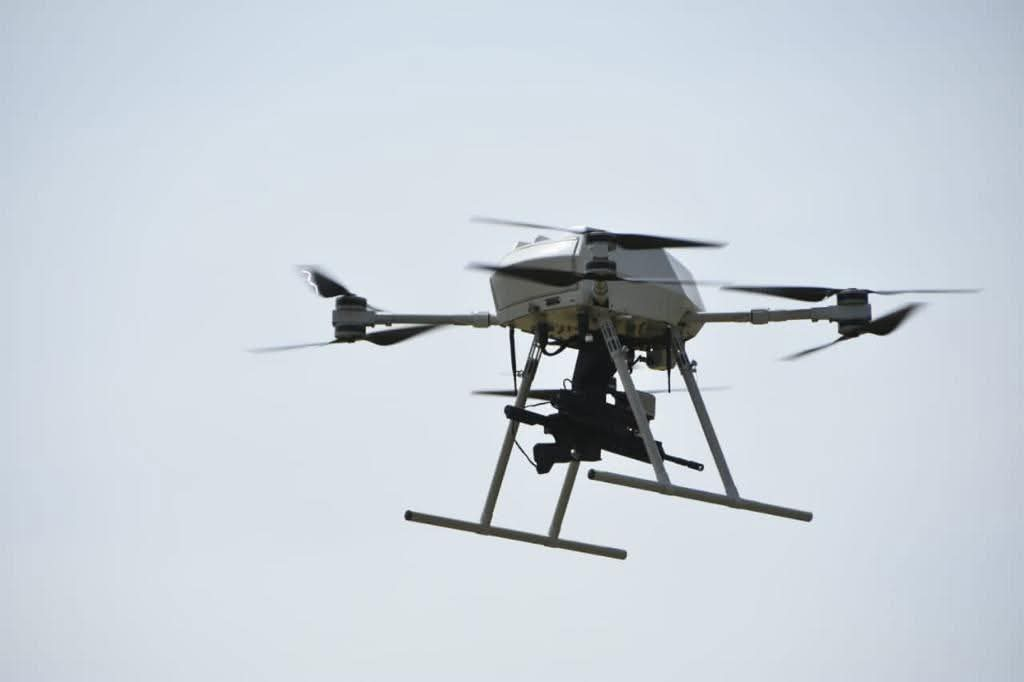
In prosecuting this asymmetrical war, it would be far cheaper to deploy attack drones than fighter aircraft. For instance, it costs between $10 million and $18 million to acquire a single A-29 Tucano light attack and reconnaissance aircraft.
By contrast, a reusable attack drone may cost as little as between $5,000 and $10,000. Kamikaze, suicide or loitering drones may even cost less.
One of the major challenges confronting rescue operations and attacks on terrorists and bandits in their hideouts, where victims are often warehoused, is how to minimise collateral damage. However, there are drones capable of identifying and isolating specific targets within a crowd through AI-driven computer vision and advanced subject-tracking technology.
These systems employ sophisticated algorithms to lock onto targets and keep them within view, even when they are partially obscured or surrounded by abductees. With such technology, much of the drama currently unfolding in Oyo and other forests across the country could have been prevented or brought to an end without collateral damage.
The Safe School Initiative (SSI) can also be implemented more effectively through technology rather than relying solely on physical fortifications. Algeria reportedly deployed technology capable of detecting approaching threats between 10 and 20 kilometres away during the Arab Spring. Such systems can alert security personnel whenever armed criminals approach schools or other institutions.
Government at all levels must embrace technology capable of driving these criminals out of hiding. As stated earlier, Nigeria is simply too large to be policed solely by boots on the ground.
For instance, in Canada, the entire country is covered by extensive satellite imaging systems. Consequently, there is virtually no hiding place for anyone once they enter a public space.
A friend travelled to Canada some months ago to visit his son. While driving along a highway, he asked his son to stop the vehicle so that he could answer the call of nature. His son explained that such behaviour was prohibited, even in remote areas.
He warned that penalties could follow because they would be tracked. The situation is quite different in Nigeria, where pedestrians sometimes openly defecate in roadside gutters even within major cities.
Case for a Canada-style surveillance system
While serving as Chief of Defence Staff (CDS), the current Minister of Defence, Gen. Chris Musa (retd), floated the idea of constructing a fence across Nigeria’s northern border. He may have borrowed the idea from American President, Donald Trump, who was strongly committed to building barriers along the Mexican border.
Such a project would be a waste of resources in Nigeria. Cross-border criminals could simply drill holes through the fence or blast openings in it. The Canadian model would be far more effective.
I must also recall the frustration expressed by the former Chief of Army Staff, Gen. Yusuf Tukur Buratai, while appearing on a TVC programme earlier this week. He alleged that some bad eggs within the security agencies were profiting from banditry.
Around the same time, a guest on another national television programme accused certain security personnel at checkpoints of collecting portions of ransom payments intended for abductors.
According to the account, when a ransom courier eventually reached the criminals and they questioned the shortfall, he explained that part of the money had been used to settle security personnel at checkpoints.
The abductors reportedly accepted the explanation as part of the process. Do you now see why the crime continues to thrive?
No thanks to sponsors such as Garwa and collaborators at checkpoints, the war against criminality may remain prolonged. With such enemies within, the battle against banditry and terrorism will continue to be long-drawn.
They can only be effectively neutralised through the strategic deployment of advanced technology, particularly drones. If drones are already being used, then they are little more than toys compared with the capabilities I have described here.
All this madness would disappear if our entire national space were subjected to the kind of surveillance coverage available in Canada, where there is virtually no hiding place for criminals, collaborators or even law-abiding citizens.
If Canada, which does not face the scale of security challenges confronting Nigeria, can go to such lengths to protect its citizens, one wonders why Nigeria cannot adopt a similar approach.
It would cost far less to secure the country through technology than to continue pouring money into endless military operations against criminals, as we have done for years. Those who have profited from insecurity, much like the notorious oil subsidy thieves, will undoubtedly resist such reforms.
However, the buck ultimately stops on the table of Mr President. He is the one being blamed for keeping Nigerians perpetually anxious and fearful about their safety and security.