



With NANCY TUAMMEN
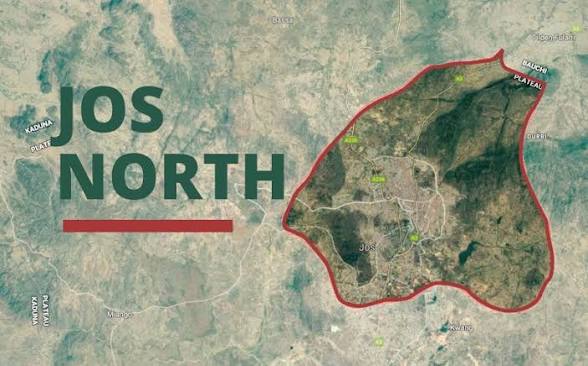
On June 9, 2026, Plateau State woke up to reports that Justice Chris Donglong had granted indigeneship rights to Hausa people born and raised in Jos North Local Government Area.
The judgment was said to have arisen from a case filed before Court 7. According to information available to the public, the defendant was absent when the matter came up, resulting in what has been described as a default judgment in favour of the plaintiff.
Without delving extensively into the details of the case, it is important to understand the concept of a default judgment. In seeking clarification, yours sincerely consulted a lawyer who explained that when a defendant fails to appear in court or respond to a lawsuit, judgment may automatically be entered in favour of the plaintiff.
Several legal authorities provide similar definitions. According to the Law Offices of Peter J. Lamont, a default judgment is a court judgment entered against a defendant who fails to respond to a lawsuit within the stipulated time.
In simple terms, the case proceeds without the defendant’s participation, and the plaintiff may obtain a judgment carrying the same force as any other court judgment.
The People’s Law Library explains that a default judgment is considered a final judgment because it represents a decision on the merits of a properly heard matter. A party dissatisfied with such a judgment may file an appeal or a motion for reconsideration. The defaulting party may also seek to overturn the judgment through the appellate process.
Similarly, Barrister Martin Dillon notes that a court may restore a suit dismissed for default if, within thirty days of the dismissal, the affected party satisfies the court that there was sufficient reason for failing to appear on the scheduled date.
Who is an indigene in Nigeria?
According to research conducted through Artificial Intelligence platforms, an indigene in Nigeria is generally regarded as a person whose parents or grandparents belong to an indigenous ethnic community native to a specific state or local government area. While citizenship guarantees national rights, indigeneity is traditionally linked to ancestral lineage and provides access to certain local rights, privileges and ancestral affiliations.
An indigenous ethnic community is typically defined as a distinct group of people native to a particular geographical region, sharing a common culture, language and ancestral ties to the land that predate the arrival or settlement of other groups.
Based on this interpretation, it is argued that the Hausa people were not indigenous to Jos North or Plateau State before the colonial era.
Questions arising from the judgment
Having examined the foregoing issues, many questions naturally arise. Why did Jos North Local Government Council fail to appear in court? Was the absence deliberate, accidental or the result of administrative lapses? What exactly transpired?
For many Plateau indigenes, particularly those from Jos North, the judgment has generated concern and controversy. Questions have also emerged regarding the scope of the ruling. Does it apply only to Hausa people born and residing in Jos North, or could its implications extend to the wider state?
Reference has also been made to an earlier Supreme Court judgment which reportedly recognised only three indigenous ethnic groups in Jos North Local Government Area—the Berom, Afizere and Anaguta peoples. Hausa people were not listed among those groups in that judgment.
This raises further questions. Why was the earlier Supreme Court ruling not considered in the present case? Can a lower court depart from an existing Supreme Court decision on the same matter? Given that the Supreme Court is the highest court in Nigeria, its decisions are generally regarded as binding precedents on lower courts.
For this reason, many believe that Jos North Local Government Council owes a responsibility to the people of Plateau State by appealing Justice Donglong’s judgment and seeking clarification from higher judicial authorities.
State of origin, immigration, inclusivity
Another issue relates to the concept of state of origin. Where did the Hausa communities presently resident in Jos originate from? If their ancestral roots lie in other northern states where they are recognised as indigenous, does that affect claims to indigeneship elsewhere?
Critics of the ruling argue that the Nigerian Constitution does not permit an individual to claim indigeneity in two states solely on the basis of place of birth or residence. In their view, indigeneity remains tied to ancestry rather than residency.
The issue becomes more complex when viewed from the perspective of immigration. Plateau State hosts a sizeable population of Hausa-speaking people, including some with ancestral links to neighbouring Niger Republic. Under the ECOWAS Protocol on Free Movement, citizens of member states previously enjoyed rights of movement and temporary residence across member countries.
However, following Niger Republic’s withdrawal from ECOWAS, questions have arisen regarding the status of some residents and the implications for residency and citizenship documentation. Some commentators argue that immigration authorities must continue to ensure compliance with Nigerian immigration laws irrespective of ongoing debates about indigeneship.
The matter also has implications for census figures, planning and resource allocation. Population data collected during national censuses often includes information on state of origin, local government of origin, nationality and other demographic indicators. Such information is used in planning, budgeting and political representation.
Supporters of the ancestral definition of indigeneity contend that maintaining clear distinctions helps prevent duplication in resource allocation and ensures that governmental planning remains accurate and equitable.
On the issue of inclusivity, some argue that Plateau State should focus on ensuring broader participation among its numerous indigenous ethnic groups, many of which, they believe, remain underrepresented in governance. They maintain that political inclusion should first address perceived imbalances among indigenous communities before extending to debates over indigeneship for groups whose ancestral origins lie elsewhere.
Consequently, proponents of this position insist that the recent judgment should be challenged through the appellate process. In their view, only the Supreme Court possesses the authority to conclusively determine matters where its previous decisions are perceived to be in conflict with subsequent lower court judgments.
They, therefore, call for an appeal of Justice Chris Donglong’s ruling, arguing that the finality and supremacy of Supreme Court decisions must be preserved in order to maintain consistency within Nigeria’s legal system.