





In a technology ecosystem often defined by fintech breakthroughs, software platforms and digital services, hardware innovation remains a quieter but critical frontier. This report by CHRISTIANA LOT & SHALOM KASIM explores the journey of Zang Luka, founder and chief executive officer of Zang Global, whose work in Jos, Plateau State, is challenging Nigeria’s heavy reliance on imported technology through social enterprise, e-waste recycling and locally developed devices
For years, discussions around technology in Nigeria have been dominated by software development, fintech startups and digital services. Investment, media attention and policy conversations have largely focused on applications, platforms and financial technology. Less visible are the individuals attempting to manufacture technology products locally in a country that imports most of the devices it uses.
Among those trying to change that narrative is Zang Luka, founder and chief executive officer of Zang Global, a Jos-based social enterprise focused on hardware innovation, e-waste management and local manufacturing.
For Luka, the journey began with a question he has carried for years: “Where are the Made-in-Nigeria products?”
The question has shaped his work and influenced his decision to pursue hardware innovation in an environment where manufacturing remains difficult and imported products dominate the market.
“My journey into innovation began with a simple but profound question: Where are the Made-in-Nigeria products?” he said in an interview with THE NIGERIA STANDARD.
Born and raised in Plateau State, Luka’s path into technology did not follow the traditional route associated with many innovators. He recalls that while in secondary school, he was unable to continue in the science class after struggling with some science subjects during his early years.
For many students, that experience might have marked the end of any ambition in science and technology. For Luka, however, it became the beginning of a different learning process.
He turned to self-study, reading books, conducting personal experiments and exploring technology through observation and practice. Over time, what began as curiosity developed into a commitment to building practical solutions to problems within his immediate environment.
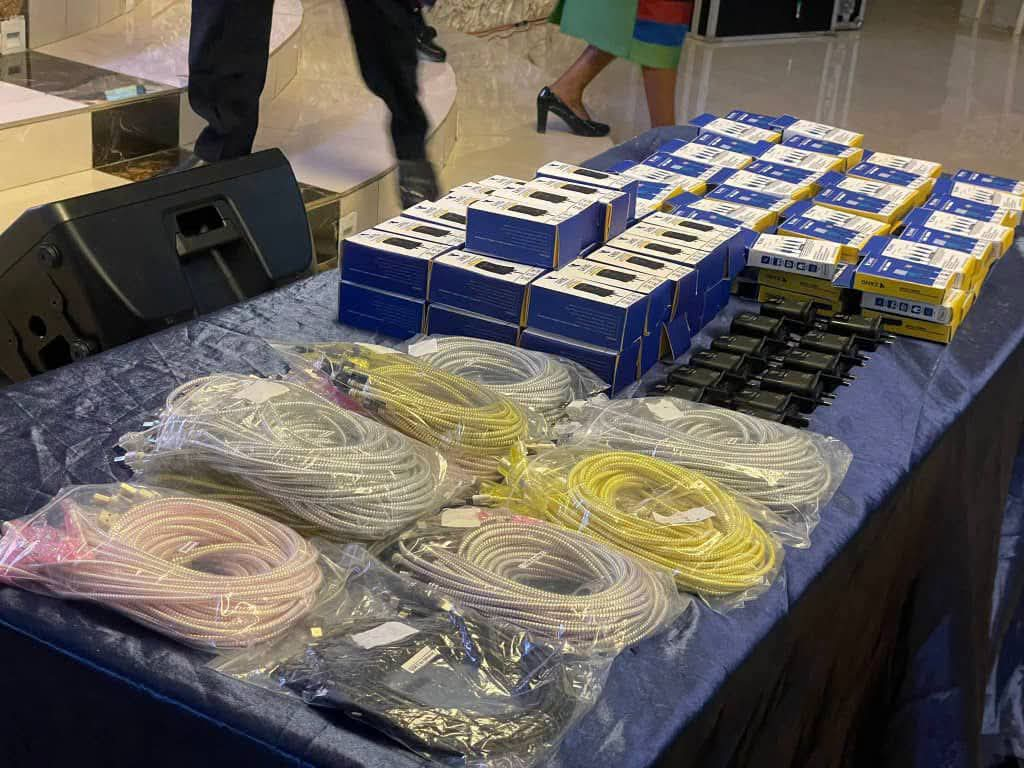
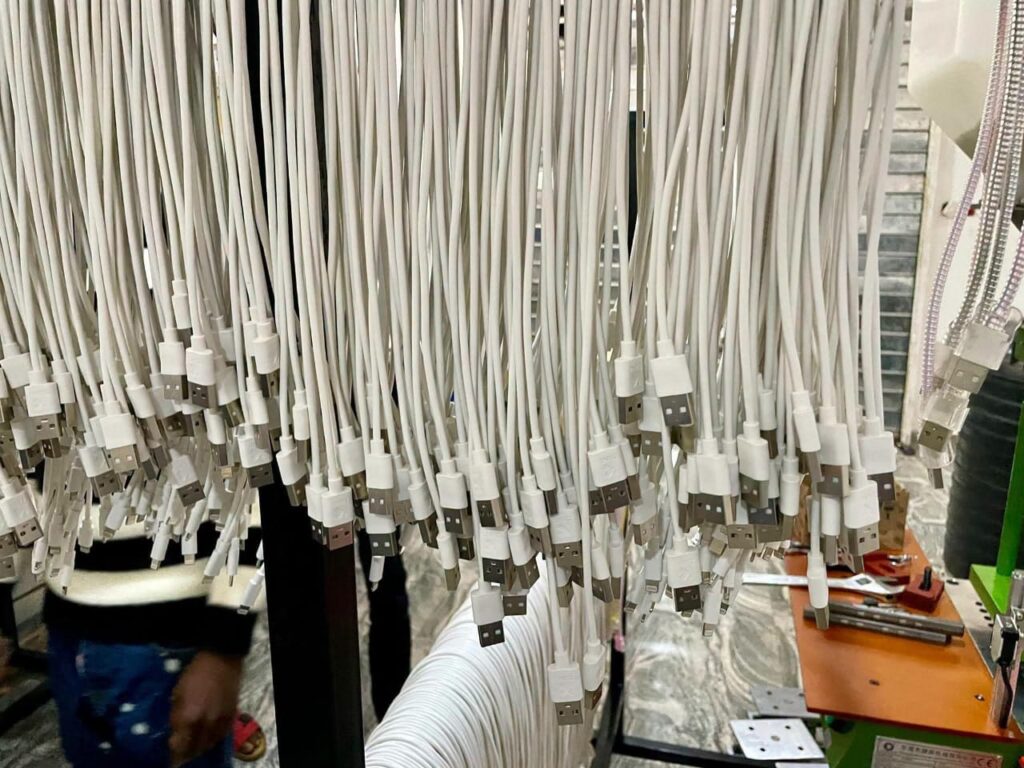
That commitment eventually led to the establishment of Zang Global, a company that focuses on designing and assembling technology products locally while promoting environmental sustainability through electronic waste recycling.
Innovation beyond software
Unlike many technology entrepreneurs who concentrate on software products, Luka chose hardware innovation because he believed solutions designed and manufactured locally could better address some of Nigeria’s challenges.
“What inspired me was the desire to solve indigenous problems using solutions designed with our environment and realities in mind,” he said.
His belief is rooted in the idea that technology should not merely be imported and consumed but should also be developed and produced by local talent.
That philosophy is reflected in one of his most recognised innovations, the Computer Foot Mouse.
The device was developed to assist individuals living with upper-limb disabilities by enabling them to operate a computer using their feet.
According to Luka, the idea emerged from a simple observation that many technologies are designed without considering the needs of persons living with disabilities.
“I asked myself, how can an amputee without arms conveniently access and operate a computer?” he said.
The answer became the foundation for a device intended to improve accessibility and independence for users who might otherwise face significant barriers when interacting with digital technology.
For Luka, the innovation is not solely about engineering. He sees it as a practical response to exclusion.
The reception from users, he said, has reinforced his conviction that innovation should address real human needs.
“Many users and their families express gratitude because the innovation gives them a renewed sense of independence and possibility,” he said.
Barriers to building hardware in Nigeria
Developing such products in Nigeria, however, comes with significant challenges.
Contrary to popular assumptions, Luka said the greatest obstacle is not necessarily generating ideas or designing solutions. Rather, it is gaining access to the tools, equipment, financing and infrastructure required to transform ideas into commercially viable products.
“Nigeria has an abundance of talented innovators, but limited access to specialised tools, components, fabrication facilities, funding and technical support often slows down the process,” he said.
These challenges are familiar to many hardware innovators across the country. While software developers can often build products with a laptop and internet connection, hardware innovators typically require machinery, manufacturing facilities, specialised components and more substantial capital investment.
The result is that many promising ideas struggle to move beyond the prototype stage.
Luka believes this gap partly explains why hardware innovation has not received the same level of attention as software and fintech in Nigeria.
“Hardware forms the foundation of technological advancement,” he said.
According to him, software growth remains important and commendable, but sustainable industrial development requires investment in manufacturing capacity and physical technologies.
His position reflects a wider debate within Nigeria’s innovation ecosystem.
Over the past decade, fintech companies have attracted significant local and international investment, helping position Nigeria as one of Africa’s leading technology hubs. Yet the country continues to rely heavily on imported electronic products, equipment and industrial machinery.
For innovators like Luka, addressing that imbalance requires a deliberate effort to support local production.
He argues that local manufacturing offers benefits that extend beyond technology itself.
“It can create jobs, reduce dependence on imports, stimulate industrial growth and strengthen national self-reliance,” he said.
The economic argument is straightforward. Products manufactured locally generate employment opportunities, develop technical expertise and retain value within the domestic economy.
Yet convincing consumers to embrace locally manufactured products remains another challenge.
According to Luka, market acceptance is one of the biggest barriers facing Nigerian innovators.
“Many consumers automatically assume that imported products are superior to locally made alternatives, regardless of actual quality,” he said.
The perception has persisted across multiple sectors of the economy and continues to affect locally manufactured goods, including technology products.
Luka believes Nigerian-made products can compete favourably with imported alternatives if adequate investments are made in research, quality assurance and manufacturing infrastructure.
“The key lies in investing in research, improving manufacturing capacity, maintaining quality standards and building consumer confidence,” he said.
Turning waste into opportunity
Beyond hardware manufacturing, Luka has also invested considerable effort in electronic waste recycling.
Electronic waste, commonly known as e-waste, has become one of the fastest-growing waste streams globally. Discarded batteries, computers, mobile phones and electronic components often end up in landfills, creating environmental concerns while leaving potentially valuable materials unused.
Luka views the issue differently.
“Many people see electronic waste as a problem, but I see it as an opportunity,” he said.
One area of focus for his company is the recovery and repurposing of lithium batteries from discarded electronics.
According to him, responsible recycling can help reduce environmental pollution while creating affordable energy storage solutions and employment opportunities.
The approach combines environmental sustainability with economic activity, an area increasingly attracting attention as countries seek ways to balance industrial growth with climate and environmental concerns.
Luka’s work has also received national attention through initiatives such as the NASENI InnovateNaija Challenge, where he has had the opportunity to present his innovations on a broader platform.
While recognition is important, Luka insists that broader support systems are necessary if Nigeria intends to unlock its innovation potential.
Yet technology itself is not the enemy. It remains one of the strongest tools for civic engagement, enabling citizens to monitor elections, report irregularities, participate in democratic discussions and hold leaders accountable. The problem lies in its misuse.
Experience has shown that during elections, social media does not merely amplify information—it accelerates it, often without regard for accuracy. In such moments, falsehood travels faster than verification.
The danger is not only that citizens may be misled. It is that misinformation can inflame existing divisions, deepen mistrust among communities, and erode confidence in democratic institutions. Plateau State does not need reminders of how quickly rumours can escalate into fear and confusion.
Election periods amplify this vulnerability. A photograph taken years earlier can suddenly be presented as evidence of current violence. A fabricated statement can be wrongly attributed to a candidate. A manipulated video can be circulated to provoke outrage. Before long, thousands have shared content without pausing to ask the most basic question: is this true?
This is not a Plateau problem alone. Across Nigeria, fact-checking organisations now operate under intense pressure during elections, working tirelessly to debunk false narratives targeting individuals, parties and the electoral process itself.
What makes the situation more complex is that many young Nigerians have gained political awareness through social media. But awareness without verification can become dangerous when speed replaces accuracy and emotion replaces evidence.
As 2027 approaches, responsibility must become collective. Every social media user must learn to pause before sharing information—ask who created it, when it was recorded, and whether credible sources have confirmed it. Sensational content must never be accepted at face value.
Even simple habits—such as reading beyond headlines or verifying before reposting—can significantly reduce the spread of falsehood.
However, citizens alone cannot carry this burden. Journalists, civil society organisations, religious leaders, youth groups and educational institutions must intensify efforts toward media literacy and public awareness. The ability to identify manipulated content and distinguish fact from opinion is no longer optional in a digital democracy.
At the same time, political actors must exercise restraint. Elections should be won through ideas, track records and persuasion—not through propaganda, fabricated narratives or deliberate misinformation aimed at discrediting opponents. Democracy suffers when truth becomes collateral damage in political competition.
Plateau State now stands at a crossroads. It can either become a breeding ground for digital propaganda and rumours, or it can cultivate a culture of responsibility, verification and truth in public communication.
The campaign #CheckBeforeYouPost should not remain a slogan. It must become a civic ethic embedded in daily behaviour, because every share carries consequences. Every repost can either strengthen public trust or deepen division.
Ultimately, the credibility of the 2027 elections will not depend solely on electoral institutions or laws. It will also depend on the choices of ordinary citizens—what they believe, what they share, and what they refuse to amplify. In a digital age, democracy is no longer shaped only at the ballot box, but also on the screens of millions of smartphones.