



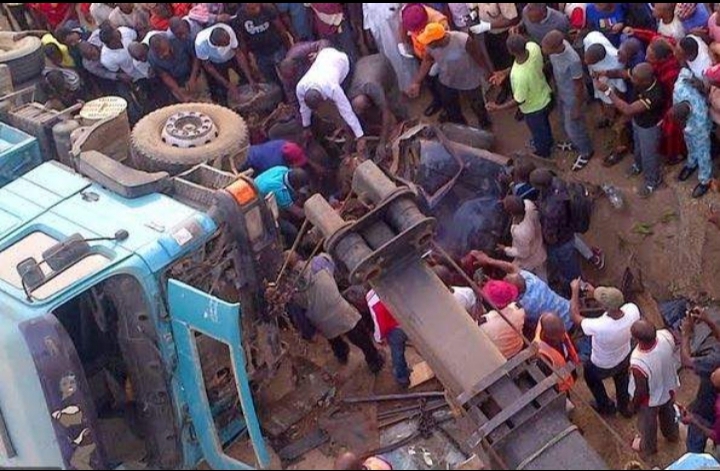
In an era dominated by smartphones and social media, the values of compassion and humanity appear to be fading as many people now prioritise recording tragic incidents over helping victims in distress. HASSAN SHALLPELLA examines this disturbing shift in society, explores why bystanders have become reluctant to render assistance, and highlights calls by concerned citizens and emergency responders for Nigerians to rediscover the spirit of empathy that once defined the nation
Wayyo! Wayyo!! Wayyo!!! “My God! My God!! My God!!!”
These were the agonising cries of accident victims lying helplessly on the ground as blood gushed from injuries sustained in a fatal road crash.
An accident victim in such a condition desperately needs assistance to stop the bleeding and relieve the pain, yet such help is becoming increasingly difficult to find.
Since time immemorial, Nigerians have been known for rendering humanitarian assistance to people in need regardless of race, religion or region.
In those days, people rushed to the scene of an accident to provide whatever support they could in order to save lives. Today, however, the reverse appears to be the case, as many of those arriving at accident scenes are more interested in taking photographs or filming victims lying helplessly in pools of blood.
The disturbing images are quickly uploaded to social media instead of efforts being made to administer first aid or stop excessive bleeding that could save lives. The widespread use of Android phones and smartphones has enabled many bystanders to instantly share pictures and videos without considering the consequences of their actions.
The events of July 20, 2020, involving the then Acting Managing Director of the Niger Delta Development Commission (NDDC), Prof. Daniel Pondei, who fainted during a public hearing after being questioned for about 45 minutes by members of the House Committee probing the alleged mismanagement of N40 billion, illustrate how quickly people now resort to recording dramatic moments rather than responding appropriately.
If about 20 people gather at the scene of an accident, perhaps only three to five would make genuine efforts to rescue the victims, while the rest concentrate on taking photographs or recording videos.
Many accident victims have lost their lives because of negligence and the lukewarm attitude of those who could have rendered assistance.
The question, therefore, remains: Do we still genuinely love one another, or are we merely pretending? The answer may be as good as yours.
Why compassion is fading
However, this unfortunate trend may partly be explained by security concerns.
Many people now avoid assisting accident victims because they fear prolonged police investigations, repeated invitations to police stations and disruptions to their personal or official engagements after acting as Good Samaritans.
Usman Mohammed Dakkuna, popularly known as Usman Gilos, a driver, believes people should render first aid before taking photographs.
“It is important to render first aid to victims before snapping pictures and posting them on social media to enable relatives know the condition of their loved ones. People should not be afraid of security agencies while rendering assistance to victims,” he said.
Journalist Kate Aliyuda expressed concern over the negative use of social media.
She lamented that instead of helping accident victims, many people simply take photographs and upload them on Facebook for public attention.
“In those days when something happened like this, people would hurry to help the victims, but not now,” she said.
Aliyuda urged members of the public to always prioritise assisting victims rather than rushing to upload photographs and videos on social media while announcing casualty figures that sometimes turn out to be inaccurate.
She also advised people to promptly alert the Federal Road Safety Corps (FRSC) or the police whenever accidents occur and called on the agencies to make their emergency contact numbers more accessible to the public.
Similarly, the Communication Officer of the Nigerian Red Cross Society, Adamawa State Chapter, Ms Gloria Jonathan, observed that cumbersome police reporting procedures have discouraged many people from assisting accident victims.
“If you can’t assist, call relevant agencies like the Federal Road Safety Commission and the Red Cross, as well as alert the Police so that the lives of victims can be saved rather than taking pictures only,” she said.
Jonathan explained that not everyone has been trained in first aid or emergency response, making it important for members of the public to quickly contact appropriate rescue agencies.
Rediscovering our humanity
Usman Gilos maintained that before mobile phones became widespread in Nigeria, people naturally rushed to accident scenes to assist victims.
According to him, the influence of social media has caused many people to abandon their responsibility as their brothers’ keepers.
“Instead of assisting accident victims, people now concentrate on taking pictures. It is disheartening to see that even during pilgrimage to Mecca, pilgrims are busy taking and posting pictures rather than engaging in spiritual activities,” he said.
Journalist Atanga Philip also lamented that many people now rush to accident scenes simply to obtain first-hand information instead of rendering assistance.
He attributed the trend to a gradual decline in empathy and changing societal values.
“Cosmopolitan lifestyle has taken over the morality of people and replaced it with socialisation. Family background is another factor because a person who has no sympathy will not see anything wrong with such behaviour since those virtues of helping others were never instilled in them.
“People should stop thinking about taking photographs and instead devise ways of rendering first aid to victims,” he added.
Philip urged parents to inculcate sound moral values in their children, while adults should engage in self-reflection and religious leaders should continue to teach compassion and morality to their followers.
He noted that the survival of accident victims often depends on the severity of their injuries. Whether the victim suffers fractures or bruises, those at the scene should continue communicating with the victim while awaiting professional help, as this could improve the victim’s chances of survival.
As society continues to embrace technological advancement, Nigerians must not abandon the compassion and humanity that once defined them. People should reflect on the spirit of neighbourliness that existed before the advent of smartphones so that more lives can be saved and stronger bonds of care and empathy can once again flourish within society.