



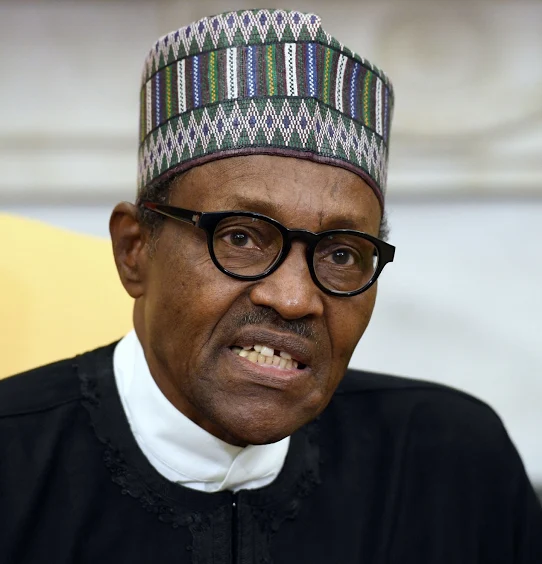
As Nigeria reflects on the life and times of former President Muhammadu Buhari one year after his death, debates over his place in the nation’s history remain as vigorous as ever. While opinions about his leadership continue to differ, few dispute that his years in office left a lasting imprint on governance, infrastructure, security and public institutions. In this piece, SANI IBN SALIHU revisits the defining milestones of Buhari’s public service and examines the legacies that continue to shape national discourse beyond his lifetime
Nigeria lost former President Muhammadu Buhari a year ago. Soldier, former military Head of State and two-term democratically elected President from 2015 to 2023, Buhari’s public life spanned Nigeria’s military era and the Fourth Republic.
As the nation marks the first anniversary of his passing, attention has increasingly turned from the politics of his administration to the impact of his leadership and the legacy he left behind. As the Hausa saying goes, “Mutuwa ta raba gaskiya da karya”—death separates truth from falsehood.
Integrity, infrastructure, institutional reforms
For more than four decades in public life, integrity remained the defining feature of Buhari’s political identity. His anti-corruption agenda became the cornerstone of his administration and shaped public expectations of governance.
Among the major reforms implemented during his tenure was the Treasury Single Account (TSA), which consolidated Federal Government accounts and reportedly saved an estimated ₦3 trillion in leakages between 2015 and 2023, according to reports by the Central Bank of Nigeria and the Office of the Accountant-General of the Federation.
His administration also strengthened accountability through the Bank Verification Number (BVN), the Integrated Personnel and Payroll Information System (IPPIS) and other financial management reforms that eliminated more than 50,000 ghost workers from the public service.
Beyond institutional reforms, Buhari cultivated a reputation for personal discipline and modest living. He publicly declared his assets and was never personally linked to any major corruption allegation throughout his presidency.
Several of these reforms, including TSA, IPPIS and the Government Integrated Financial Management Information System (GIFMIS), have remained in place beyond his administration, reinforcing a culture of accountability within government.
Infrastructure development was another major focus of Buhari’s administration. Between 2015 and 2023, Nigeria witnessed one of its most ambitious infrastructure programmes since the return to democratic rule in 1999.
Major rail projects such as the Abuja-Kaduna, Lagos-Ibadan and Warri-Itakpe standard gauge lines revived passenger rail transportation after decades of decline.
Road infrastructure also received considerable attention through projects including the Second Niger Bridge, the Lagos-Ibadan Expressway and the Abuja-Kano Road, alongside over 13,000 kilometres of roads financed through Sukuk bonds.
In the energy sector, the completion of the 700-megawatt Zungeru Hydroelectric Power Project, progress on the Mambilla Hydropower Project, the Siemens Power Initiative and gas flare reduction policies reflected efforts to improve electricity generation.
His administration also introduced policies aimed at strengthening local production, including the 2019 land border closure to curb smuggling and the Anchor Borrowers Programme, which supported millions of farmers across the country.
Today, many of these roads, rail lines and public infrastructure projects continue to serve Nigerians, shifting the national debate from whether they should have been built to how they should be maintained and managed sustainably.
Security, social investment, democratic governance
Security remained one of the greatest challenges of Buhari’s presidency.
He assumed office in 2015 with a commitment to defeat Boko Haram, and significant military operations resulted in the recovery of territories previously occupied by insurgents, including Sambisa Forest. The relocation of the military command headquarters to Maiduguri also strengthened operations in the North-East.
Although Boko Haram’s territorial control was substantially reduced, new security threats emerged during his tenure, including widespread banditry in the North-West, separatist violence in the South-East and persistent farmer-herder conflicts.
His administration responded by increasing defence spending, restructuring aspects of the security architecture, signing the Police Act 2020 and promoting community policing initiatives.
Supporters argue that these measures strengthened the capacity of the military and security agencies, while critics maintain that more decisive responses were needed to tackle emerging security challenges.
Buhari’s government also expanded Nigeria’s social investment programmes on an unprecedented scale.
Initiatives such as N-Power, TraderMoni, MarketMoni, the Conditional Cash Transfer Programme and the National Home-Grown School Feeding Programme sought to provide support for vulnerable citizens and stimulate economic inclusion.
By 2023, more than 12 million households had reportedly been captured in the National Social Register, providing the framework for targeted social intervention programmes that continue to evolve under subsequent administrations.
His administration equally recorded notable legislative milestones, including the signing of the Not Too Young To Run Act and the Discrimination Against Persons with Disabilities (Prohibition) Act, both in 2018, expanding opportunities for youth participation and protecting the rights of persons with disabilities.
Politically, Buhari occupies a unique place in Nigeria’s democratic journey.
He became the first opposition candidate to defeat an incumbent president through the ballot in 2015 and later completed his constitutional tenure before peacefully handing over power in 2023, strengthening democratic succession in the Fourth Republic.
Throughout his presidency, he consistently projected himself as a national leader above ethnic and religious divisions, reflected in his famous declaration: “I belong to everybody and I belong to nobody.”
One year after: The enduring conversation
Like many leaders, Buhari’s legacy continues to generate differing opinions.
His critics point to perceived delays in decision-making, inadequate public communication and unresolved security challenges.
Supporters, however, emphasise his consistency, personal integrity, long-term investments in infrastructure and commitment to institutional reforms.
One year after his passing, three characteristics continue to define public assessments of his leadership.
First was his consistency. From his days as military Head of State in 1984 to the completion of his presidency in 2023, his message remained centred on discipline, accountability and national service.
Second, he consistently prioritised enduring institutions over political headlines. His investments in roads, railways, financial reforms and national social registers were designed to outlive his administration.
Finally, Buhari remained unwavering in his belief in Nigeria’s unity, even during periods of intense criticism and personal health challenges.
President Bola Tinubu, during Buhari’s first-year Fidau prayers, described him as “a patriot to the core,” adding that although leaders may differ in style, Buhari’s love for Nigeria was never in doubt.
Ultimately, history often judges leaders by what they built, what they reformed and the foundations they laid for future generations.
For Buhari, supporters argue that he strengthened public institutions, expanded infrastructure and elevated accountability within governance. They also contend that he initiated a broader national conversation on ensuring that government policies reach the poorest and most vulnerable citizens.
As the Qur’an reminds believers, “Kullu nafsin dha’iqatul maut”—every soul shall taste death.
President Muhammadu Buhari has completed his earthly journey. What remains is the record of his service, the institutions he helped shape and the continuing national conversation about his place in Nigeria’s history.
May Almighty Allah forgive his shortcomings, accept his good deeds and grant him Al-Jannah Firdaus. Amin.