


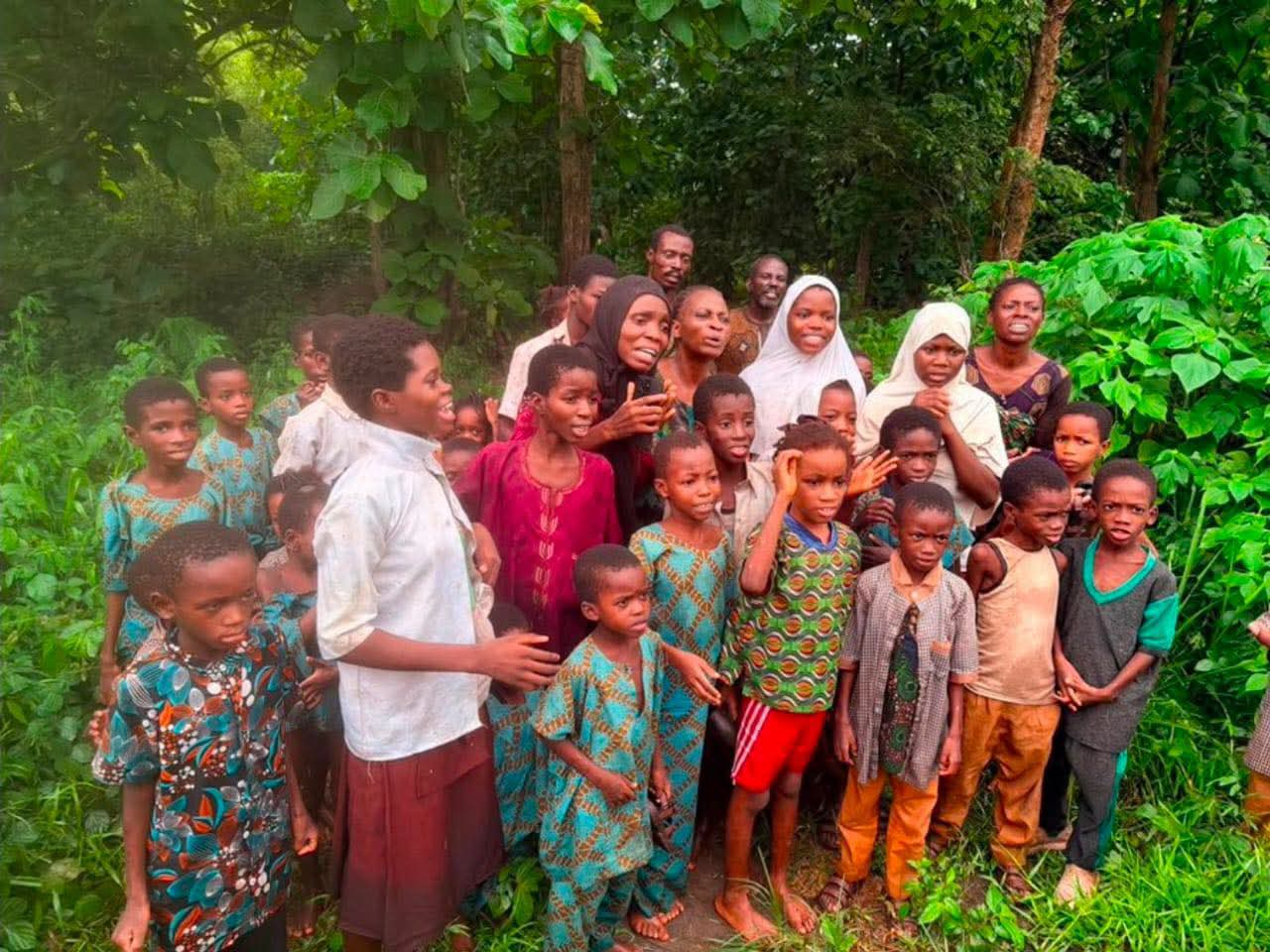

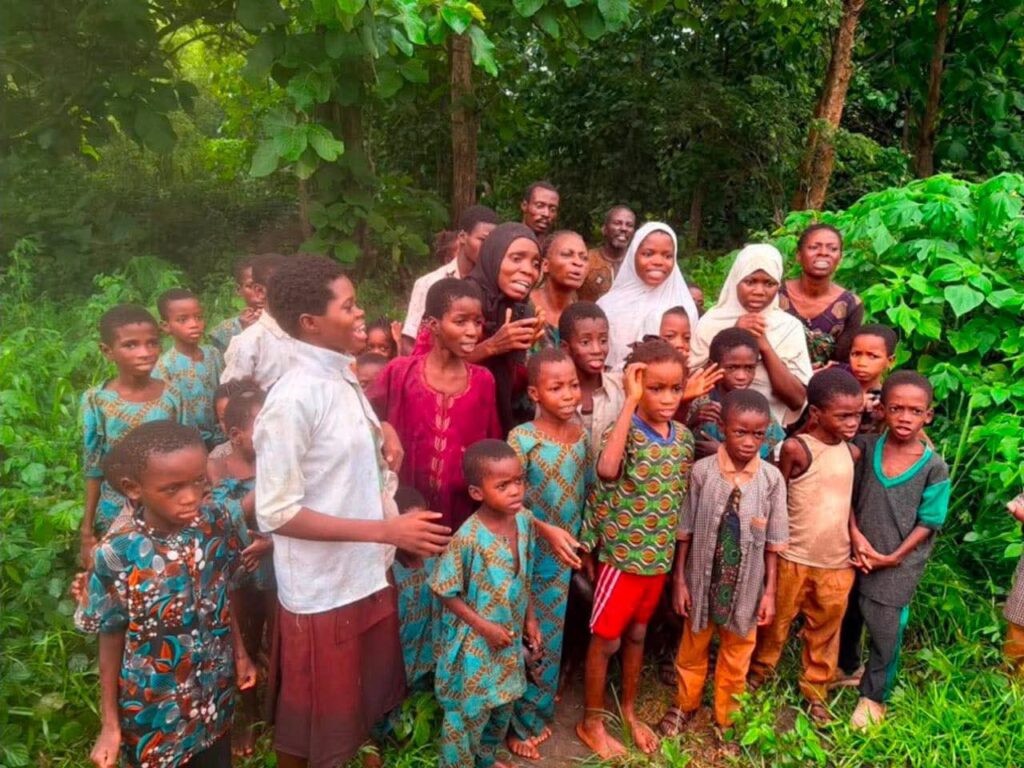
The recent dramatic rescue of dozens of abducted teachers and pupils in Oyo State was rightly celebrated as a major victory for Nigeria’s security forces. Yet, as NICK DAZANG contends, the operation should mark not the end of a national conversation but the beginning of a deeper one about the plight of other captives still in the hands of terrorists, the need for equitable rescue efforts across the country and the politics that have since overshadowed an otherwise commendable security success
After 56 harrowing days in captivity, the 45 teachers, students and learners from three schools in Oyo State were finally rescued by members of the Nigerian Armed Forces. Their rescue deserves unreserved commendation. This is not only because it brought an agonising ordeal to an end but also because it demonstrated the professionalism, courage and operational competence of the military in executing a delicate and highly complex mission.
The operation further reinforces the confidence Nigerians continue to repose in the Armed Forces. That confidence has been built over years of successful operations in both internal security engagements and international peacekeeping missions, where Nigerian troops have consistently distinguished themselves through resilience and gallantry.
Although the victims endured severe physical and psychological abuse during their captivity, it is heartening that all of them, except the Mathematics teacher who was brutally decapitated, were rescued alive. The tragedy of his death, however, serves as a painful reminder of the brutality inflicted by criminal elements on innocent citizens.
The Federal and Oyo State governments must now move swiftly to provide comprehensive rehabilitation for the rescued victims. Beyond medical care, they require psychological support to overcome post-traumatic stress and assurances that adequate measures are being taken to guarantee their future safety.
The rescue must not end with Oyo
While the successful operation in Oyo State deserves celebration, it must also serve as a catalyst for renewed efforts to rescue hundreds of other Nigerians still languishing in captivity across the country. Their continued suffering demands the same urgency, determination and operational commitment that secured the freedom of the Oyo victims.
Among those awaiting rescue are the 42 abductees from the primary and junior secondary schools in Mussa, Askira-Uba Local Government Area of Borno State, who were kidnapped on June 15, 2026—the same day the Oyo victims were abducted. Equally deserving of urgent attention are the 37 students writing the Senior School Certificate Examination (SSCE) at Government Day Secondary School, Lassa, in the same local government area, who were abducted on June 27, 2026, by suspected Boko Haram/ISWAP terrorists.
The wave of school abductions has not been confined to Borno State. Kogi State has also witnessed a disturbing series of attacks, culminating in the July 15, 2026 assault on Government Secondary School, Olowa, in Dekina Local Government Area, where gunmen kidnapped the principal, four students and a National Examinations Council (NECO) official. Similar incidents have equally been recorded in Kwara, Zamfara, Sokoto and Katsina states.
The Nigerian state owes these helpless victims the same level of commitment demonstrated in Oyo State. Any disparity in response could reinforce the dangerous perception that some Nigerian lives are considered more valuable than others or, worse still, that certain victims have been abandoned to their fate.
Unfortunately, instead of inspiring universal celebration, the rescue operation has generated political controversy that now threatens to overshadow its significance.
Politics, controversy, federal-state relations
The controversy began when Oyo State Governor Seyi Makinde called for an investigation by the United Nations and other independent international human rights organisations into the circumstances surrounding the abduction.
Speaking in a statewide broadcast on Monday, July 13, 2026, after the military formally handed over the rescued pupils and teachers to the state government, Makinde argued that the incident raised questions that deserved independent scrutiny beyond Nigeria’s domestic institutions.
He had earlier suggested that the abduction coincided with the announcement of his presidential ambition.
The Presidency responded swiftly, accusing the governor of viewing a national tragedy through a political prism. The Special Adviser to the President on Information and Strategy, Bayo Onanuga, described the allegation as “unthinkable”, arguing that no reasonable person would deliberately subject innocent children—some as young as four years old—to a 56-day ordeal that resulted in the gruesome killing of a Mathematics teacher.
The Senate also rejected Makinde’s demand, maintaining that an international investigation would only trivialise an incident that had already been successfully resolved by Nigeria’s security agencies.
Admittedly, the governor’s demand appears excessive and may well be interpreted as politically motivated, especially given his reported presidential ambition. Yet, it would be simplistic to dismiss his position without examining the circumstances that may have informed it.
In several respects, the Federal Government inadvertently created the conditions that made such a reaction almost inevitable.
On May 31, 2026, barely two weeks after the abduction and amid mounting public outrage, the Federal Government dispatched a high-powered delegation to Oyo State. Led by the Chief of Staff to the President, Femi Gbajabiamila, the delegation included the National Security Adviser, Nuhu Ribadu; the Minister of Defence, Christopher Musa; the Inspector-General of Police, Tunji Disu; and the Special Adviser to the President on Media and Public Communication, Sunday Dare.
The delegation visited Esiele and Yawota communities in Oriire Local Government Area, where the victims were abducted. It also paid homage to the Soun of Ogbomoso, Oba Ghandi Afolabi Olaoye, and commiserated with Mrs Mary Oyedokun, the widow of the slain Mathematics teacher.
Curiously, however, there was no indication that the delegation met or even consulted Governor Makinde, the state’s so-called Chief Security Officer. While Nigeria’s security architecture vests operational authority in the President as Commander-in-Chief, courtesy and effective intergovernmental cooperation demanded that the governor should have been carried along.
Even if his constitutional role as Chief Security Officer is largely ceremonial, Governor Makinde could have provided useful local intelligence and gained firsthand insight into the Federal Government’s rescue efforts. Such engagement would also have equipped him to properly brief the people of Oyo State and foster greater public confidence in the rescue mission.
Being excluded from such a critical engagement was bound to generate resentment, even in the most accommodating political officeholder.
Lessons for national, unity, security
The perceived sidelining of Governor Makinde is not an isolated incident. There have been several occasions when state governments have complained of being excluded from important security engagements within their jurisdictions.
Visits by senior federal security officials to states battling insecurity have, at times, been conducted with little or no consultation with governors or other relevant state authorities.
Similarly, stakeholders invited to offer local perspectives on security challenges have occasionally complained of being treated dismissively by federal officials. Such an approach undermines the spirit of cooperation required to confront the country’s growing security challenges and weakens public confidence in government institutions.
Even President Tinubu cannot be completely absolved of criticism in this regard. In the aftermath of the killings in Angwan Rukuba, Jos, Plateau State, the victims were transported from their communities to the Jos Airport to meet the President, instead of the President visiting them where they were grieving. To many observers, the symbolism was unfortunate.
Rather than focusing entirely on the pain of the victims and the need to comfort them, the occasion became notable for discussions about the infrastructural inadequacies of the airport.
It is against this backdrop that Governor Makinde’s call for an international investigation should be understood. Whether or not one agrees with his position, it did not emerge in a vacuum.
It reflected, at least in part, accumulated grievances over what many perceive as a pattern of partisanship, official aloofness and inadequate collaboration between the Federal Government and state authorities on matters of national security.
Ultimately, the rescue of the Oyo abductees should remain a source of national pride rather than political division. The professionalism displayed by the Armed Forces deserves commendation, while the safe return of dozens of innocent Nigerians should unite rather than polarise the country.
More importantly, the operation should become a template for rescuing the many other victims still being held by terrorists and bandits across Nigeria.
The joy that greeted the return of the Oyo pupils and teachers will only be complete when similar determination is deployed to secure the freedom of every Nigerian still trapped in captivity, regardless of the state or region in which they were abducted.
That is the true measure of a nation committed to justice, equality and the protection of all its citizens.
Dazang, OON, writes from Abuja via nickdazang@gmail.com