




Growing insecurity, attacks on vulnerable communities and concerns over justice and religious freedom have continued to shape conversations across Northern Nigeria. Against this backdrop, more than 500 Christian leaders, traditional rulers, clerics and stakeholders gathered in Abuja to chart a common path towards peace, security and national unity. In this report, PALANG KASMI examines the reasons behind the high-profile summit, the concerns raised by participants and the resolutions they believe are necessary to stem the tide of violence
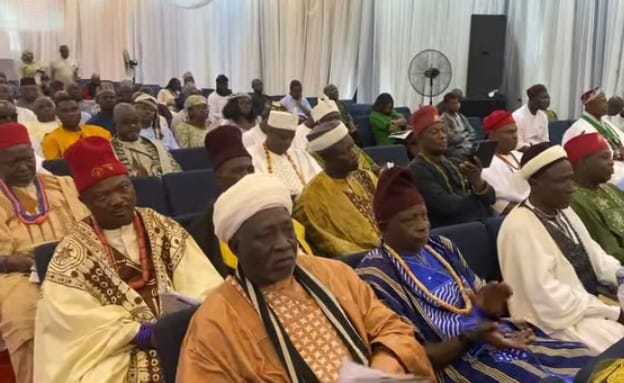
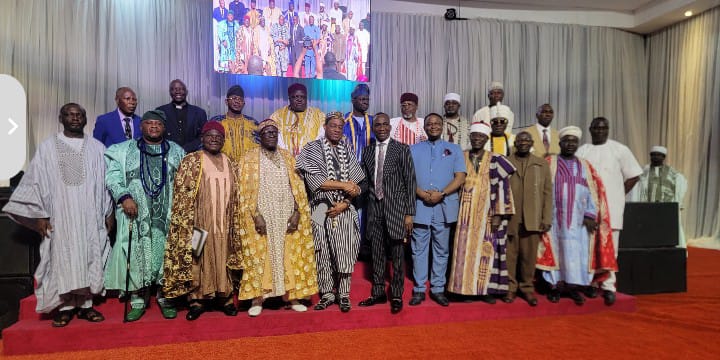
More than 500 Christian traditional rulers, clerics, diplomats and other influential leaders from across Northern Nigeria recently converged at the Glory Dome of the Dunamis International Gospel Centre, Lord’s Garden, Airport Road, Abuja, for the second Northern Christian Stakeholders Solemn Assembly.
The gathering featured prayers, worship sessions and lectures, and also witnessed the inauguration of new executive members of the Northern Nigeria Christian Traditional Rulers body.
Held on July 10, 2026, the summit was organised by the Stefanos Foundation with the theme, ‘The Persecution of Christians in Nigeria’.
Among the notable participants were the Senior Pastor of Dunamis International Gospel Centre, Dr Paul Enenche; the Convener and Programme Manager of the Stefanos Foundation, Engr. Mark Lipdo; keynote speaker, Prof. Yusuf Turaki of the Yusuf Turaki Foundation; the founder of Living Faith Church Worldwide, Bishop David Oyedepo; President of Throneroom Trust Ministry, Apostle Nuhu Kure; Rev. Ezekiel Dachomo; and the Vice Chairman of Northern Christian Traditional Leaders, among others.
Why the summit mattered
According to Lipdo, the security summit was convened to explore practical strategies for addressing the worsening insecurity affecting Christian and other vulnerable communities across Nigeria.
He recalled that the maiden summit, held in 2025, brought together Christian leaders from Northern Nigeria to speak with one voice against attacks on their communities while equipping traditional rulers to promote justice and serve as peacebuilders.
“As the security situation in Nigeria worsens and continues to target mostly Christians in Northern Nigeria, we held the first summit on December 14, 2025, where over 100 Northern Christian traditional and religious leaders converged in Abuja to seek divine intervention over the prevailing security challenges,” he said.
Lipdo explained that one of the major outcomes of the maiden summit was the consensus that Nigeria’s security challenges could only be effectively addressed if traditional and religious leaders united and collaborated with Nigerians and international partners.
“Currently, different prominent Nigerian leaders have expressed their support for this initiative, hence the need for the second gathering of Nigerian Christian stakeholders,” he added.
According to him, since the introduction of Shari’a in 1999, violence ranging from mob attacks to insurgency and banditry has left many Christians killed, injured, traumatised and displaced from their churches, homes, schools, businesses and communities.
Presenting figures compiled by the organisation over more than two decades, Lipdo said the foundation had documented more than 9,000 deaths, over 79,000 injuries, about 8,000 kidnappings and the displacement of residents from 17,404 communities affected by attacks on Christians.
According to him, the 10 most affected states are Borno, Plateau, Kaduna, Benue, Zamfara, Niger, Rivers, Delta, Katsina and Yobe.
Traditional rulers, security concerns, calls for justice
Traditional rulers remain vital grassroots stakeholders, serving as a bridge between communities and government.
Although they lack constitutional powers over security matters, many rely on local intelligence networks, mediation and community engagement to help address insecurity, including insurgency, banditry and communal violence.
However, the absence of formal constitutional authority often limits their effectiveness. Several traditional rulers have themselves become victims of insecurity through attacks, kidnappings and killings.
Speaking during the opening ceremony, the newly elected Chairman of the Northern Christian Traditional Rulers and Tor Tiv, Prof. James Ayatse, called for peaceful coexistence and an end to the bloodshed across the country.
He urged Nigerians to set aside ethnic, religious and political differences and work collectively to confront extremism, kidnappings and other threats to national stability.
He pledged to provide purposeful leadership for the body while advocating greater recognition of Christians in the region and sustained efforts to end terrorism.
Participants also examined the broader security situation in Northern Nigeria and the Middle Belt, describing it as one of the country’s most pressing humanitarian challenges.
Communities continue to face threats from Boko Haram, armed bandits, violent extremists and recurring conflicts over land and resources, resulting in widespread displacement, loss of lives and destruction of churches, homes and farmlands.
Delivering the keynote address titled, ‘Misunderstanding, Misinterpretation and Misapplication of the Concept of Persecution in Nigeria’, Prof. Yusuf Turaki stressed the need to preserve the identity of Northern Nigerian Christians while challenging narratives that deny the persecution of the Church.
He argued that understanding the history of violent attacks, kidnappings and insurgency in the Middle Belt and Northern Nigeria requires an honest examination of historical injustices.
Turaki cautioned against ethnic profiling, misconceptions surrounding the Usman dan Fodio jihad and the indiscriminate use of terms such as “unknown gunmen,” arguing that such descriptions often complicate efforts to address insecurity.
Similarly, the Senior Pastor of Dunamis International Gospel Centre, Dr Paul Enenche, lamented the persistent insecurity across Northern Nigeria, saying it has increasingly affected Christians’ freedom to worship.
He called on Christians to remain united in preserving their faith, urged greater humanitarian support for victims of violence and encouraged stronger collaboration with security agencies in combating insurgency and criminality.
Resolutions, the way forward
Among the major resolutions adopted at the summit was a renewed commitment by church leaders and traditional rulers to speak with one voice on justice, advocacy and the protection of vulnerable communities.
Participants agreed that Nigeria’s security challenges require greater unity among traditional and religious leaders if meaningful progress is to be achieved.
They resolved to put aside political differences and work collectively against extremism while encouraging Christians and traditional rulers to mobilise their communities to participate actively in the electoral process.
According to the participants, greater participation in governance is essential to protecting their interests and influencing the country’s future.
The summit also emphasised that the protection of human life must take precedence over political and sectarian considerations.
Participants recommended stronger regional security cooperation involving Nigeria and international partners to address the persistent violence affecting communities across the North and the Middle Belt.
They also endorsed the establishment of state police and called for increased investment in education, agriculture and youth empowerment as long-term measures to address insecurity.
Apostle Nuhu Kure led a special prayer session and advocated sustained dialogue among government officials, religious leaders and traditional institutions as part of broader efforts to restore peace.
He also encouraged Christian leaders to remain steadfast in preaching the gospel despite prevailing challenges.
Security experts, international observers and community leaders who participated in the discussions proposed a multi-layered strategy for tackling insurgency and violence.
Their recommendations included comprehensive security sector reforms, addressing the underlying economic and land-related causes of conflict, strengthening community-based early warning systems and modernising intelligence gathering, surveillance technology and rapid response capabilities to prevent attacks by extremist groups such as Boko Haram, ISWAP and other armed militias before they occur.