



In this reflective intervention, CHRISTIAN BISKA examines the contradiction between Nigeria’s enormous public spending on Christian and Muslim pilgrimages and the country’s persistent struggles with corruption, insecurity, poor infrastructure and underdevelopment. He argues that while pilgrimage remains a deeply personal act of faith, government sponsorship of religious journeys has produced little measurable public benefit and should be reconsidered in favour of investments that directly improve citizens’ lives
A pilgrim is a person who travels to a holy place for religious reasons. Pilgrimage is a journey undertaken by a believer to a sacred location associated with someone or something deeply revered. It is a global religious practice observed by people from different cultures and nations.
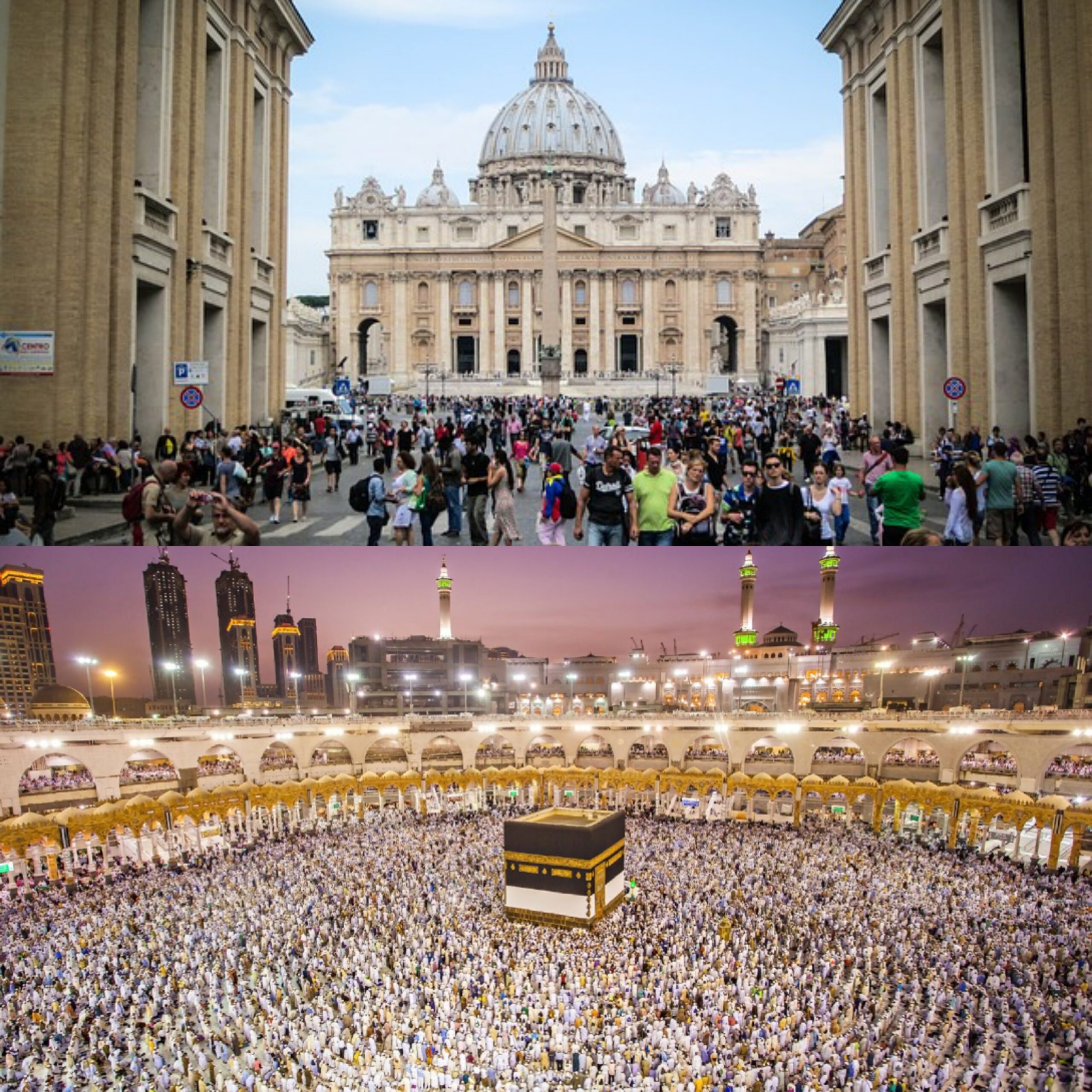
In Nigeria, pilgrimage by Christians and Muslims is regarded as a highly spiritual exercise undertaken annually to visit places considered sacred by the two dominant faiths. Christians travel to Israel, while Muslims undertake pilgrimage to Mecca.
These destinations occupy a central place in the religious consciousness of millions of Nigerians.
Although Christianity and Islam are the two most dominant religions in the country, Nigeria is also home to traditional worshippers and atheists, many of whom do not undertake any foreign pilgrimages.
Their religious practices differ in nature and organisation. Yet, the Constitution of the Federal Republic of Nigeria guarantees every citizen the freedom to practice his or her religion.
As sacred as pilgrimage may be, there is no constitutional provision or appropriation law that expressly mandates government to finance what is essentially a personal religious exercise. Religious practice is fundamentally a matter of individual conviction.
For believers, however, Christianity and Islam are not merely systems of worship but ways of life that provide moral guidance and shape personal conduct. Both faiths encourage pilgrimage as a spiritual exercise rooted in their sacred texts and historical traditions.
But, the decision to undertake such a journey is generally understood to be voluntary and dependent on an individual’s willingness and ability to finance it. The purpose of pilgrimage and the public expectation
The perceived benefits of pilgrimage are enormous. It is believed to deepen a person’s relationship with God, increase spiritual awareness and encourage moral transformation. Those who return from pilgrimage are often expected to become better citizens, role models and agents of positive change within their communities.
Society expects pilgrims to demonstrate renewed integrity, discipline and compassion. They are seen as ambassadors of their faith whose conduct should inspire others and contribute to social harmony and national development.
It is on this assumption that many governments in Nigeria have continued to spend substantial public funds on sponsoring pilgrimages. The underlying expectation is that such investment will produce morally upright citizens who, in turn, will help build a better society.
However, the evidence appears less convincing. Despite decades of government-funded pilgrimages across local, state and federal levels, Nigeria continues to experience widespread moral decline, corruption, insecurity and institutional decay. Many of those implicated in financial crimes, abuse of office and other societal ills profess one of the two dominant religions.
This is not to suggest that traditional worshippers are immune from wrongdoing. Rather, it raises a broader, more fundamental, question: if billions of naira have been invested in religious pilgrimages with the expectation of moral transformation, why has the country not experienced a corresponding improvement in public ethics and governance?
A costly tradition with limited public returns
Successive governments have spent enormous sums on pilgrimage sponsorship. Yet, Nigeria remains burdened by underdevelopment, unemployment, corruption, armed robbery, drug trafficking, kidnapping, terrorism, banditry, religious intolerance and other forms of social disorder.
The education sector continues to struggle with inadequate facilities and declining standards. Infrastructure remains insufficient, healthcare services are overstretched, roads are dangerous, electricity supply is unreliable and agriculture is still largely practised at a subsistence level.
Even the petroleum sector, which should be a major source of national prosperity, continues to suffer from dysfunctional refineries, import dependence, exchange-rate pressures and mounting public debt.
This paradox has often led observers to describe Nigeria as a deeply religious country characterised by many of the indicators of poor governance and social dysfunction. If government sponsorship of pilgrimage has not significantly contributed to national transformation, should it continue in its present form?
Therefore, the National Assembly and state legislatures should revisit the policy framework surrounding pilgrimage funding. What was intended as a spiritual undertaking increasingly appears to function as political patronage, official tourism and a reward mechanism for public office holders and their associates.
In many cases, pilgrimage has become less about spiritual renewal and more about titles and status. For some, it is the acquisition of honorifics such as Alhaji, Hajiya or JP rather than the moral obligations that should accompany such recognition.
Faith should remain personal, while government serves the public. Pilgrimage would arguably command greater respect if individuals financed it from their own resources.
A spiritual journey often carries deeper meaning when it involves personal sacrifice and commitment. It is also not uncommon to hear of beneficiaries selling their pilgrimage slots rather than undertaking the journey themselves.
Because religion is ultimately a personal relationship between an individual and their Creator, government should reconsider the scale of its financial involvement in pilgrimage sponsorship.
Rather than devoting billions of naira to religious travel, public resources should be directed towards education, healthcare, security, infrastructure, agriculture and manufacturing — sectors capable of improving the living standards of millions of Nigerians.
Government may choose to regulate, facilitate or complement pilgrimage activities where necessary, but full sponsorship should no longer be treated as a priority expenditure. At a time of economic hardship and competing developmental needs, public funds should be invested where they can deliver measurable benefits to society.
The question is no longer whether pilgrimage is spiritually valuable. The real question is whether taxpayers should continue to finance a personal religious obligation that has shown little evidence of transforming the nation in proportion to the resources devoted to it.