



Words such as dominance, domination and dominate are powerful because they imply superior power exercised over others. Political representation, which ought to be anchored on equality, equity, geography, numbers, commonality and shared interests, is increasingly being interpreted through the prism of religion and dominance.
Unless this trend is checked, it risks undermining the foundations of Nigeria’s democratic experiment.
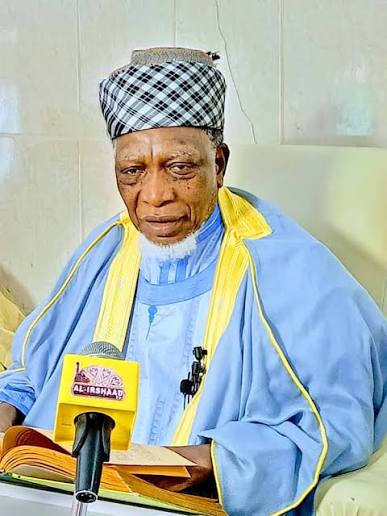
The recent remarks attributed to Islamic cleric, Sheikh Yaya Jingir, who reportedly endorsed a Muslim-Muslim ticket for the 2027 election and referred to non-Muslims as ‘infidels’, have intensified concerns about the relationship between religion and political power in Nigeria.
Whether or not he speaks for the president, his comments have been interpreted by many as reflecting a broader philosophy that links political leadership with religious superiority.
Such statements inevitably raise questions about whether governance is intended to serve all citizens equally in a secular state or whether it is becoming a vehicle for religious domination. They also revive long-standing anxieties about exclusion, identity politics and the erosion of the constitutional principle of equality among citizens.
Understanding dominance
According to the Merriam-Webster Dictionary, dominance refers to having power, control or authority over others, or being the most important, strongest or most common element in a group. The concept appears in several fields, including genetics, animal behaviour and music, but its political meaning centres on the ability to assert power over others.
Applied to politics, dominance suggests the capacity to control resources, influence institutions and determine outcomes. The question, therefore, arises: are Nigerians who do not belong to a particular religious group less entitled to political participation than those who do? When political power is interpreted as a religious weapon, governance risks becoming an instrument of exclusion rather than inclusion.
Psychological theories suggest that dominance is rooted in what researchers call the Dominance Behavioural System, a drive that motivates individuals to seek higher social status and control over resources. Healthy leadership may involve confidence and assertiveness, but dominance becomes dangerous when it manifests as intimidation, coercion and inflexible control.
Psychologists also distinguish between dominance and prestige. Dominance relies on fear and coercion to secure obedience, while prestige is earned through competence, expertise and contributions to society. Democratic leadership is generally expected to be grounded in prestige rather than domination.
Psychology of political dominance
Research in political psychology indicates that political dominance is closely associated with the desire to control institutions, shape public agendas and establish group hierarchies. A concept often discussed in this context is Social Dominance Orientation, which reflects a preference for inequality between groups and the belief that some groups are naturally entitled to rule over others.
Studies also show that followers frequently support dominant leaders during periods of perceived threat or conflict, believing that strong leaders will protect their group from rivals. Such leaders often exploit fear, identity and division, simplifying complex political realities into narratives of “us versus them”.
Some psychologists associate extreme forms of political dominance with personality traits commonly referred to as the ‘Dark Triad’ — narcissism, Machiavellianism and psychopathy.
These traits are characterised by manipulation, emotional coldness and an intense desire for power and control. While the Dark Triad is not a formal mental health diagnosis, it highlights the risks posed when political systems reward domination rather than accountability and service.
Secularism, federal character
Nigeria’s constitutional order is based on secular governance and a federal structure designed to accommodate religious, ethnic and regional diversity. A secular state is expected to remain neutral in matters of religion and to treat all citizens equally regardless of faith.
The Federal Character principle exists to promote inclusion and prevent domination by any region, ethnicity or religious group. Institutions such as the Federal Character Commission are intended to ensure that appointments, opportunities and public resources are distributed fairly across the federation.
Against this background, debates surrounding a Muslim-Muslim ticket inevitably extend beyond electoral strategy. They touch on broader questions of representation, inclusion and the perception of fairness within a plural society. Whether such an arrangement promotes or undermines national cohesion remains a legitimate subject of public debate.
The central issue is whether political arrangements that appear to concentrate power within a particular religious or social group strengthen democracy or encourage dominance. Does such concentration of power deepen trust among citizens, or does it create fear and resentment among those who feel excluded?
These questions do not necessarily have simple answers, but they deserve serious consideration by political leaders and citizens alike. Nigeria’s diversity is one of its defining characteristics, and any political project that appears to privilege one group over another risks weakening the sense of national belonging that democracy requires.
If democracy is to thrive, political competition must remain rooted in equality, constitutionalism and respect for pluralism rather than in narratives of religious superiority or exclusion.
The challenge before Nigeria is not merely who governs, but whether governance continues to reflect the principles of justice, inclusion and equal citizenship upon which the republic is founded.