



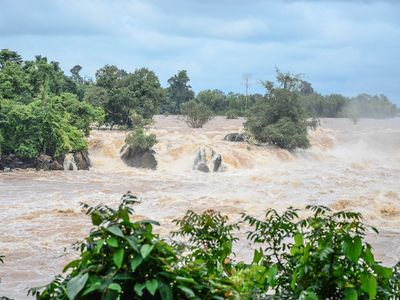
Plateau’s recurring floods are becoming less a story of nature’s fury and more a reflection of human choices, poor planning and weak enforcement. DAWANG BENJAMIN argues that the state can no longer afford to wait for another disaster before acting. He calls for the protection of waterways, stricter development controls, better drainage systems and stronger preparedness to ensure that heavy rainfall does not continue to become a preventable tragedy
Every August, the story seems to repeat itself. After three days of heavy rain in Jos, videos of vehicles being swept through flooded streets begin circulating on social media.
Soon after, emergency agencies start counting displaced families and assessing damaged property. Then the rains subside, the headlines disappear and life returns to normal until the next rainy season.
But the problem is not simply that Plateau receives heavy rainfall. The deeper problem is that, over the years, we have built homes, shops and other structures on land that nature reserved for water.
Water is only doing its job
Water obeys gravity. For centuries, rivers such as the Delimi and N’gell and their tributaries had floodplains that served as natural buffers. These areas absorbed excess water and provided room for rivers and runoff to spread without destroying homes and businesses.
Today, some of those natural channels and floodplains have been occupied by houses, shops, filling stations and other structures. Waterways have been filled with sand, concrete and blocks, while drainage channels have been narrowed or covered completely.
When heavy rainfall comes, the water has nowhere to go. It simply follows the path of least resistance, often ending up in homes, shops and streets.
The Nigerian Hydrological Services Agency has repeatedly identified parts of Plateau, including Jos North, Jos South, Bassa, Riyom and Barkin Ladi, as areas at risk of flooding.
These warnings should not be treated as routine announcements. They are opportunities to prevent disasters before they happen.
Cost goes beyond property
The damage caused by flooding goes far beyond broken walls, damaged vehicles and ruined furniture.
Lives can be lost, particularly among children, older people and those who are unable to escape quickly. Families can lose their homes and livelihoods within hours. No amount of relief material can compensate for a life lost to a disaster that could have been prevented.
There are also serious public health consequences. Floodwater is rarely clean. It can mix with sewage, chemicals and household waste before entering wells, boreholes and streams. The contaminated water can expose communities to diseases such as cholera, hepatitis A and typhoid.
The economic consequences are equally severe. A single flood can wash away farms, cut off roads, destroy homes and wipe out businesses worth millions of naira. Resources that should be invested in schools, healthcare and infrastructure are instead diverted to emergency response, relief materials and reconstruction.
Then there is the emotional cost, which rarely appears in official statistics. Imagine having to wake your children in the middle of the night because floodwater has entered your bedroom. Imagine spending every rainy season wondering whether your home will survive the next downpour. Such experiences can leave lasting trauma on families and communities.
This is the difficult question that is often raised whenever government talks about removing structures from waterways.
Land in Jos is expensive. Housing is in short supply, and desperate people sometimes buy cheap plots without knowing that they are located in flood-prone areas. In some cases, developers may deliberately sell such plots to unsuspecting buyers.
But allowing people to build in dangerous places is not a solution to the housing problem. The cost of rebuilding after a flood, treating injuries and illnesses, replacing destroyed property and mourning lost lives is far greater than the cost of proper planning.
Other cities have faced similar challenges and taken difficult decisions to protect their residents. Plateau must now demonstrate the same political will.
What must be done?
First, government must enforce existing laws and clear waterways where necessary. It will be difficult and unpopular, particularly where families have invested their life savings in properties. But protecting lives must come first.
The Greater Jos Master Plan already identifies floodplains and natural water channels. The relevant authorities should clearly demarcate these areas, issue adequate notices and, where necessary, remove structures built illegally on waterways. The law must apply equally to everyone, regardless of social status, political connections or influence.
Second, drainage channels must remain open, while those who deliberately block them must be held accountable. A walk through many parts of Jos during heavy rainfall tells the story. Plastic bags, bottles, sand and other refuse clog drainage channels and prevent water from flowing freely.
Waste management and environmental sanitation cannot be treated as seasonal campaigns. They must become a permanent part of urban management. People who deliberately dump refuse in drains should face appropriate penalties because such actions can endanger entire communities.
Third, Plateau must learn to work with nature rather than continually fighting it. Flood management cannot be limited to emergency response after disaster has occurred. Government should consider retention basins in flood-prone areas to temporarily hold excess water, encourage tree planting to reduce surface runoff and strengthen early-warning systems.
Timely alerts from relevant agencies should reach residents through SMS and other accessible channels. Developers of new estates should be required to provide adequate drainage, while communities in high-risk areas should have clear evacuation plans that residents understand before emergencies occur.
We cannot stop the rain, but we can stop the rain from becoming a disaster.
Building on a waterway is like building a house in the middle of a highway and blaming vehicles when they crash into it. Water has a natural path. If we block that path, it will eventually find another route through our homes, markets and communities.
Before the next heavy rainfall, government, traditional rulers and community leaders must work together to identify and mark waterways, educate residents about the risks and support the relocation of people living in the most dangerous areas.
The people of Plateau are resilient. But resilience should not mean accepting tragedies that can be prevented.
True resilience should mean building once, building right and, above all, building where water is not waiting to reclaim its space.