



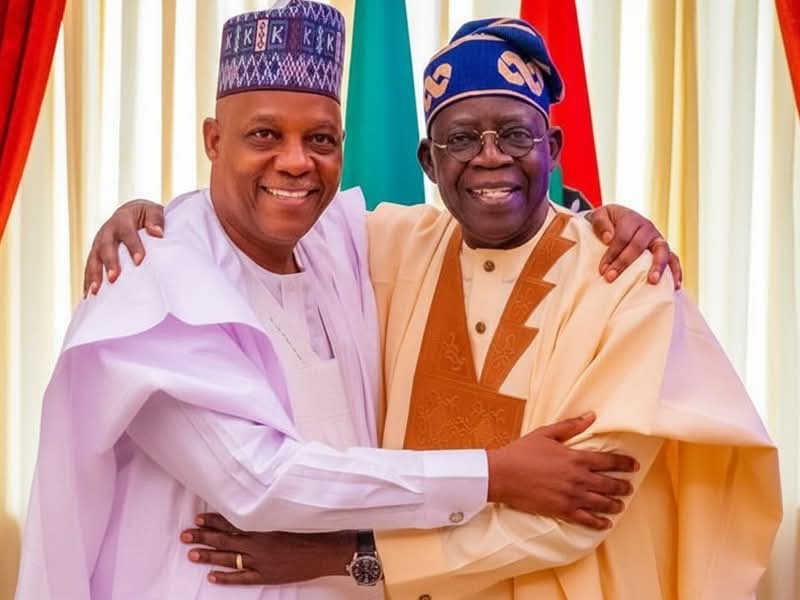
As Nigeria moves towards another fiercely contested presidential election, the choice of a running mate is proving to be much more than a constitutional formality. For ABDULRAHMAN IBRAHIM, the political calculations behind these choices reveal how presidential candidates are attempting to widen their appeal, consolidate regional support and strengthen their chances at the ballot box
In the process of elections, the nomination of running mates is strategic. It is aimed at spreading the support and popularity of political parties and the candidates on joint tickets in order to enhance their chances of winning elections.
Part of the constitutional requirement for a candidate to win a presidential election in Nigeria is voting strength and geographical spread. A candidate must secure at least 25 per cent of the total votes cast in not less than two-thirds of the 36 states and the Federal Capital Territory.
With such a constitutional requirement, a candidate must have broad support across different regions to be declared the winner of a presidential election.
Therefore, presidential flag bearers have to nominate qualified, popular and acceptable running mates who can motivate the electorate to come out en masse to vote for the candidate and the political party.
In the case of President Tinubu, he has retained Kashim Shettima as his running mate, with whom he won the 2023 election on the same platform.
The president’s decision to nominate Shettima was influenced by his past achievements as governor of Borno State. As governor, Shettima recorded a number of achievements despite the Boko Haram insurgency. He established Borno State University to expand access to tertiary education and constructed numerous modern residential schools to accommodate orphaned children and displaced students from insurgency-hit local government areas.
As governor, the VP also built public buildings, markets and homes destroyed in towns and villages recaptured by the military, facilitating the safe return of displaced citizens.
He also completed major urban projects in Maiduguri, including road expansion and the construction of bridges such as the Lagos Street Bridge and flyovers, while distributing tractors, fertilisers and improved seedlings to farmers and reviving extension services to boost food production and local economic resilience in rural districts.
These achievements earned him the support of his people and admiration from others who witnessed his contributions to the development of the state.
President Tinubu and VP Shettima won the 2023 presidential election with 8,794,726 votes, the highest of all the candidates, while meeting the constitutional requirement of securing at least 25 per cent of the votes cast in two-thirds of the states and the Federal Capital Territory.
Atiku and Amaechi: Changing the rotation calculation
For the African Democratic Congress presidential candidate, former Vice President Atiku Abubakar has picked Rotimi Amaechi as his running mate for the January 16, 2027 vote.
The choice of Amaechi is attributed to the several political offices he has occupied and the region he comes from, which could help the ticket mobilise support and strengthen its chances in the presidential election.
Rotimi Amaechi served as governor of Rivers State from 2007 to 2015 and contributed to the development of the state by building more than 500 modern primary schools and 24 secondary schools across various communities.
He provided free tuition, textbooks, school bags, sandals and uniforms for students, while hiring more than 13,000 teachers in a single recruitment exercise to boost learning standards.
He also awarded numerous local and overseas scholarships to indigenes of the state for higher education.
As governor, Amaechi constructed more than 150 primary healthcare centres across rural and urban wards, established specialised medical and maternity hospitals, and implemented free medical care programmes for vulnerable groups, particularly children under five and the elderly.
He was also said to have recruited thousands of health workers and medical doctors, equipping them with official vehicles to ease mobility.
Amaechi initiated the Greater Port Harcourt Master Plan and development project to expand the capital city, while confronting cultism, militancy and kidnapping in an effort to restore security to the state.
He also boosted the state’s internally generated revenue through economic reforms and promoted sustainable farming initiatives, including fish farms and the Songhai Farms project, to create employment opportunities.
As Minister of Transportation under the late President Muhammadu Buhari, Amaechi oversaw the construction and completion of the Lagos-Ibadan Standard Gauge Railway and the Abuja-Kaduna rail line, which was completed and commissioned as part of the country’s modern standard gauge rail services.
He also revived and completed the Itakpe-Warri rail line project, which had been abandoned for more than 30 years.
The former minister also initiated and built the University of Transportation in Daura, Katsina State, to boost local technical capacity in rail engineering.
He supported the Nigerian Ports Authority in introducing the electronic call-up system to manage traffic and ease cargo movement around Lagos ports.
Amaechi also led the reconstruction of the long-abandoned Wharf Road in Apapa, Lagos State, secured sea-time berths for hundreds of cadets through NIMASA and upgraded the Maritime Academy of Nigeria in Oron.
Atiku Abubakar, who contested the 2023 presidential election alongside his running mate, Ifeanyi Okowa, secured 6,984,520 votes to come second in the election.
Obi and Kwankwaso: Building a broader coalition
Another strong contender in the 2027 presidential election is Peter Obi, the flag bearer of the National Democratic Congress, who has settled for Rabiu Musa Kwankwaso as his running mate.
The decision is presented as a strategic move aimed at strengthening the party’s chances in the 2027 general election, given Kwankwaso’s reputation as a grassroots mobiliser and his considerable influence, particularly in Kano State.
Kwankwaso was Governor of Kano State from 1999 to 2003 and again from 2011 to 2015.
He was also a presidential candidate in the 2023 general election under the New Nigeria People’s Party, polling 1,496,687 votes to finish fourth behind Peter Obi of the Labour Party.
Kwankwaso recorded several achievements as governor of Kano State, which contributed to his emergence as one of the state’s most influential political figures.
During his tenure, he sponsored thousands of indigent students for local and international scholarships for undergraduate and postgraduate studies in foreign universities in 14 countries.
He established the Kano University of Science and Technology, Wudil, and the North West University, now Yusuf Maitama Sule University.
He also built more than 230 secondary schools, including technical colleges and French and Chinese colleges, alongside thousands of primary school classrooms, while introducing a free school-feeding programme for primary school pupils.
His achievements also included the modernisation of Kano City through the construction of flyover bridges and underpasses to ease traffic congestion.
He initiated and constructed dual-carriage, illuminated roads across all 44 local government areas of the state and developed modern housing projects, establishing dedicated residential areas known as Kwankwasiyya, Amana and Bandirawo cities.
He also covered major open drainages and the Jakara River with interlocking tiles to improve sanitation and urban aesthetics.
In healthcare and social welfare, Kwankwaso constructed numerous primary healthcare centres and supplied fleets of ambulances, while establishing the Kano State Cancer Treatment Centre to boost specialised medical services.
He also created more than 26 specialised vocational and technical institutions aimed at training women and youths for self-reliance, among other initiatives.
Peter Obi and his running mate, Yusuf Datti Baba-Ahmed, who contested the 2023 general election under the Labour Party, came third with 6,101,533 votes, making Obi one of the most prominent presidential contenders from that election.
Ultimately, the presidential candidates have studied the quality, experience and political pedigree of their running mates before their nominations, with the objective of mobilising bloc votes and broadening their appeal ahead of the 2027 election.
Nigerians will ultimately decide which political option to support, based not only on the personalities presented on the various tickets but also on the contributions, records and programmes of the parties and candidates seeking their mandate.