



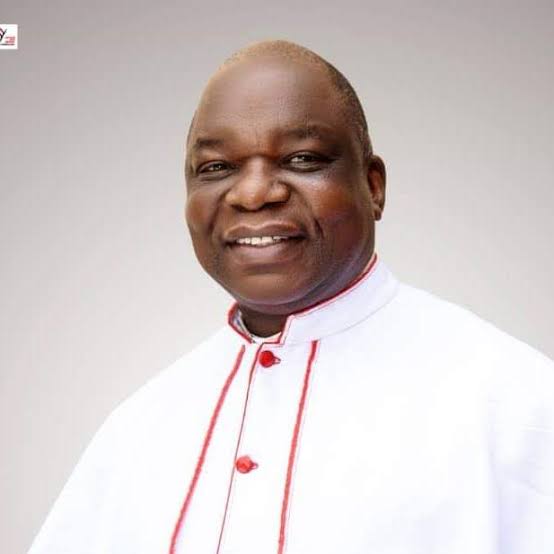
Rt Rev. CLETUS GOTAN
Plateau State has always been called ‘The Home of Peace and Tourism’. Its beauty, diversity and hospitality have been a symbol of Nigeria’s unity in diversity. Yet, over the years, the State has been defined in headlines by what divides and not what unites us.
The question, therefore, is simple: who is telling the story of Plateau? We have seen moments when peace seemed distant, when politics divided rather than united us, and when leadership became more about positions than about purpose.
We remember with pain the tragic moments when the Jos crises of 2001, between Christian and Muslim communities, shattered the long-standing image of peace on the Plateau. What began as a political dispute over the appointment of a local coordinator in Jos North escalated into widespread ethnic and religious violence. The crisis revealed how fragile peace can become when political leadership fails to mediate differences constructively.
We have also witnessed how politics, rather than being a noble contest of ideas, has too often become a struggle for control and self-preservation. Leadership contests have been reduced to power games, from election litigations and impeachment threats to defections and factional loyalties. Instead of uniting our people around shared development goals, such rivalries have deepened old divisions and distracted us from service to the common good.
Constructive politics demands vision, dialogue, courage and the willingness to place the interests of the people above personal or sectional gain. It is the kind of politics that transforms leadership from the mere holding of office into the building of a community.
The 2008 and 2010 crises turned neighbours against neighbours, and the Home of Peace and Tourism became, for a time, a place of fear, curfews and displacement. These were not just communal clashes; they were symptoms of deeper fractures in our political and social foundations — fractures that leadership failed to heal.
The impeachment threats, political defections and court litigations after governorship elections have distracted leaders from governance and public service and illustrated how politics divided rather than united us, as the focus shifted from service delivery to power retention.
Today, the challenge is not merely to lament these failures but to seek a new moral compass for leadership and embrace the imperatives of constructive politics as a sustainable path to peace, development and justice. It is politics that builds instead of breaks and heals instead of hurts.
J. D Gomwalk and the moral purpose of leadership
The legacy of Joseph Dechi Gomwalk provides an appropriate point of departure for this conversation. He understood that leadership was not about power but about service — service to his people, to the state and to the broader Nigerian nation.
His tenure was marked by efforts to build institutions, promote peace among diverse ethnic groups, and invest in human capital and infrastructure. These efforts were not fleeting; they established a legacy of governance that transcended his time in office.
Beyond his administrative accomplishments, Gomwalk was a symbol of integrity and courage. He stood firmly for justice and unity even in the most challenging circumstances. Plateau State, often described as a microcosm of Nigeria, benefited immensely from his commitment to fostering harmony and national cohesion.
The late J.D. Gomwalk was not just the first Military Governor of the old Benue-Plateau State, but also a visionary, a patriot and a man of uncommon humility. He believed in service above self, unity above division and integrity above convenience. Through his commitment to education, infrastructure and human development, he laid the foundations of modern Plateau and yet remained deeply human, accessible and fair to all.
His leadership transcended mere administration; he was a pioneer who sought unity amidst diversity and invested deeply in the development of his people and state. His legacy is a testament to courage, integrity and the kind of leadership that puts community and nation above self. If leadership has a moral face in our history, it is the face of Joseph Dechi Gomwalk.
Although his life in this world was brief, cut short at 41, appreciated or not, he left a legacy no one can deny.
As we remember Gomwalk, the more important question is what kind of Plateau we are building in his memory. His example challenges this generation to renew its commitment to a Plateau defined by unity in diversity, leadership with integrity and politics rooted in service.
The generation of leaders must rise above narrow interests and rediscover the higher call of stewardship. Plateau can lead, not through power, but through example; not through division, but through dialogue; not through slogans, but through sincere service.
Public Relations is also central to this task. Public relations is not just about image. It is also about truth and trust. In this age of misinformation, professional communicators have an important role to play in reshaping public discourse and rebuilding social trust.
Communicators are not merely messengers; they are also nation-builders. Their words can bridge divides, their messages can heal communities and their professionalism can help turn politics from destructive to constructive.
Their work can shape narratives, correct distortions and promote peace. As communicators and reputation managers, they are key actors in nurturing constructive politics because their voices can amplify what unites rather than what divides us.
Plateau and the need for constructive politics
Statistics show that Plateau is home to more than 50 ethnic groups, Christians and Muslims, farmers and herders. The State stands as both a symbol of Nigeria’s beauty and a reflection of her contradictions.
We are blessed with fertile land, stunning topography, a resilient people and a legacy of peace-loving communities. Yet, we have also endured deep pain: cycles of violence, ethnic mistrust, political fragmentation and the slow erosion of public confidence in governance because destructive politics weaponises difference.
From its earliest days, our beloved Plateau State was built on values of hospitality, unity and hard work and attracted people of diverse ethnic and religious backgrounds who lived and worked together in relative harmony. However, in recent decades, we have witnessed the erosion of these values. Political competition has too often been poisoned by ethnic polarisation, mistrust and short-term interests.
This is certainly neither the Plateau we inherited nor the Plateau we would want to pass on or bequeath to the next generation. If the late J.D. Gomwalk were to speak to us today, he would likely remind us that leadership without moral courage and inclusiveness cannot build a lasting peace.
Our duty, therefore, is to rebuild the Plateau spirit — a spirit of hospitality, fairness and shared destiny which rises above narrow interests and works for a vision greater than ourselves.
In 2026, as we stand at another crossroads in our political history, the call is clear: Plateau needs leadership that heals, politics that builds and institutions that last. The old politics of division, patronage and ethnic arithmetic must give way to constructive politics — politics that unites, transforms and creates value for every citizen regardless of tribe, faith or party.
No one doubts that Plateau State occupies a special place in Nigeria’s history. But in recent years, our politics has often mirrored the deep fractures within our society. Too often, elections have been treated as battles rather than opportunities for service. The pursuit of power has overshadowed the pursuit of purpose.
The crisis of our politics reflects a deeper moral crisis — a loss of collective purpose. We have allowed politics to become a marketplace for survival instead of a sanctuary for service.
As home to some of Nigeria’s most visionary leaders — people who have demonstrated that leadership rooted in justice, inclusivity and fairness can transform society — Plateau can rise again if we rediscover constructive leadership and inclusive politics. We can rise if we rediscover the moral courage to place people before profit, truth before tribe and integrity before interest.
Public communicators also have a role in this process. Members of the public relations profession must deliberately frame Plateau stories around shared identity. They should profile joint initiatives and cooperatives, reject language that labels “us versus them” and remain image-makers of one Plateau.
Politics is not a dirty word and it must not be seen as a dirty game. It is the sacred art of ordering society for the good of all. But politics becomes destructive when it divides rather than unites and when it exploits fear rather than inspires hope. It then becomes poison to the soul of society.
Politics at its best is a covenant through which a leader is betrothed to the people. It should not be a contract for four years, but a covenant of love and compassion. That means loyalty even when it is hard.
In his letter to the Church at Philippi, St Paul says: “I consider everything loss because of the surpassing greatness of knowing Christ.” For leaders, the “surpassing greatness” must be the common good of Plateau. Not tribe, not party, not self. When that is lost, politics becomes a waste.
Constructive leadership is relational. Jesus led by friendship, by dialogue and by truth spoken in love. No wonder Mother Teresa of Calcutta reminds us: “It is not how much we do, but how much love we put into what we do.” A press statement, a campaign or a crisis response — if love is not in it — will only add to the noise.
Constructive politics should not be a slogan. It is a mindset, a moral compass and a leadership strategy. It means politics that builds bridges instead of burning them; listens before leading; seeks consensus instead of conquest; and measures success not by personal gain, but by public good.
Constructive politics demands that leaders think beyond elections and govern for generations. It insists that we channel political competition into innovation, not destruction. This is the kind of politics Plateau needs and must pursue.
Leadership, security, the architecture of reform
Plateau State has repeatedly experienced moments when peace seemed distant, when politics divided rather than united us, and when leadership became more about positions than purpose. We have witnessed painful periods when neighbours turned against neighbours and the Home of Peace and Tourism became a place of fear, curfews and displacement.
These were not just communal clashes; they were symptoms of deeper fractures in our political and social foundations — fractures that leadership failed to heal.
In early 2025, when violent clashes once again rocked parts of Mangu and Barkin Ladi, homes were burnt, families displaced and lives lost. Each time, government responds with relief materials, security deployments and inquiries. But the question remains: when will our politics rise above firefighting?
In February 2025, the Plateau State governor convened a Stakeholders’ Dialogue on Peace and Security, bringing together traditional rulers, religious leaders, youth groups and security agencies. That meeting was a positive step.
It showed that the path to peace is not through decrees, but through dialogue. However, such dialogues must not end with photo opportunities. They must birth policy actions, funded programmes and measurable outcomes.
Similarly, in mid-2025, the Plateau State Government called for the creation of state police, arguing that only locally accountable security architecture can effectively manage the peculiar nature of our communal conflicts. This call is a constructive political move, a shift from mere complaint to structural reform. But the success of such a proposal will depend on how leaders build consensus across political parties, civil society and the Federal Government to ensure that the reform does not become politicised, but institutionalised.
In the same period, probe committees were set up to investigate attacks and assess the needs of displaced persons. The establishment of those committees is always commendable, but true leadership will be measured not by the number of committees we create, but by how faithfully we implement their recommendations.
Leadership, dear friends, is the fulcrum on which constructive politics turns. Leadership is not merely the possession of power or position; it is, above all, the moral compass of society. Leadership is not a privilege but a responsibility, not a position but service.
It has often been said that a people can rise no higher than the vision and integrity of those who lead them, and true leadership — especially in a diverse and sensitive environment like ours — must be built on character, empathy, vision and accountability.
It was John Maxwell who once said, “Everything rises and falls on leadership.” Today, Plateau State faces, among other things, the challenges of insecurity, youth unemployment, poverty and mutual suspicion. To overcome them, we need leaders who can unite rather than divide, who see beyond party lines and who understand that the common good must always come first.
In Plateau, leadership must now evolve from commanding authority to earning trust, from political control to moral credibility. We cannot preach peace in public and practise prejudice in private.
We cannot lament youth restiveness while our governance excludes them. We cannot promise inclusion while appointments are determined by narrow loyalties rather than competence. Leadership must lead by example, not just through words.
To institutionalise constructive politics in Plateau State, five pillars of action, among many others, are proposed.
First, inclusive governance. We must ensure that every ethnic, religious and gender group has a voice at the table. Inclusion is not charity; it is strategy. The youth of Plateau, from Langtang to Jos North, from Bokkos to Shendam, must not only be mobilised for campaigns; they must be empowered for governance. The women who have held families together during crises must also help rebuild the peace architecture of our state.
Second, economic empowerment and social justice. Security cannot survive where hunger reigns. Constructive politics must therefore tackle unemployment, revive smallholder farming, expand agro-value chains and attract responsible investment in mining and tourism. When every community sees economic dividends, grievances lose traction. Let us invest in acha processing, horticulture and creative industries, turning Plateau’s comparative advantage into inclusive prosperity.
Third, truth, justice and reconciliation. No society heals by forgetting. Constructive politics must confront the truth, acknowledge past wrongs and offer justice to victims. The Plateau Peace Building Agency must be strengthened with statutory funding and independence. Its reports should guide policymaking, not gather dust.
Fourth, institutional continuity. Each administration must see itself as a steward, not a monarch. Projects that serve the public interest must outlive political tenures. Constructive politics values continuity over credit. The next government should complete what the previous one started if it benefits the people.
Fifth, civic education and political culture. We must deliberately re-educate our people about politics itself: that it is not war, but service. Our schools, churches and mosques must preach political tolerance, not tribal triumphalism. Let our young people learn that disagreeing politically is not enmity and that governance is about ideas, not insults.
A leadership vision for a Plateau of possibilities
Imagine a Plateau where Jos becomes the technology and peace capital of North-Central Nigeria; where Mangu’s farmlands feed the sub-region; where Barkin Ladi’s hills draw global tourists; where Bassa’s youth run agri-tech start-ups instead of fleeing from conflict zones; and where political leaders compete to deliver results, not to divide citizens.
This is not a dream too far. It is possible if we embrace constructive politics, guided by visionary leadership that can see beyond the ballot box — leaders who will choose peace over power, purpose over popularity and people over politics.
As Nelson Mandela reminded us, “A real leader uses every issue, no matter how serious and sensitive, to ensure that at the end of the debate we emerge stronger and more united.” This is the kind of leadership Plateau State needs and the kind every Plateau son and daughter must demand.
Let every leader in Plateau, whether political, traditional, religious or civic, be committed to listening before legislating; uniting before campaigning; serving before seeking; and building before boasting.
When we practise politics that heals rather than hurts, politics that builds rather than breaks, Plateau will rise again as the Home of Peace and Tourism, not only in name, but in truth.
The imperative of constructive politics in Plateau State is not optional but essential — for our peace, our development and our very survival as one people. We must build a new political culture anchored on, but certainly not limited to, several fundamental principles.
The first is to reclaim the purpose of politics — the common good. For too long, our political contests have revolved around individuals and ethnic blocs rather than ideas and shared goals. We must now return politics to its ethical centre: a means to serve and uplift our people.
Constructive politics demands that leaders govern with fairness and inclusion, make decisions grounded in truth and justice, and focus on issues — peace, education, security and jobs — rather than personal gain, tribal or sectional loyalties. Leadership must be measured not by the offices we hold, but by the lives we improve.
The second is healing historical wounds. Plateau has, no doubt, faced painful moments of conflict that have shaken our sense of community. Constructive politics must now become a healing force and not a means of reopening wounds.
We must tell the truth about our past without turning it into a weapon, build reconciliation into our governance structures, and foster inclusion so that no community feels excluded or forgotten. Our peace cannot be built on silence; it must be built on justice, forgiveness and mutual respect.
The third is building institutions, not empires. The strength of a society lies not in its leaders’ charisma but in the resilience of its institutions. Plateau must deliberately shift from strong men to strong institutions — functional local governments, transparent budgeting and credible electoral processes. When institutions are strong, people begin to trust again. Justice becomes predictable. Governance becomes less about who is in power and more about what is being achieved.
The fourth is constructive engagement between citizens and government. Constructive politics is not the task of politicians alone. Citizens must be active participants: informed, disciplined and responsible. Plateau’s youth must rise from the politics of complaint to the politics of contribution.
They must use their creativity not only for protest but for policy; not only to demand change but to become the change. The public square belongs to us all. Democracy is sustained not only by votes but by vigilance, participation and accountability.
The fifth is the imperative of peace and security. Without peace, politics is impossible; and without justice, peace is unsustainable. The future of Plateau depends on integrating peacebuilding into governance. Security must be community-based and intelligence-driven.
Faith leaders, traditional rulers and civic groups must work together for dialogue and reconciliation, while government policies must be rooted in fairness and human dignity. The true test of leadership is the ability to maintain peace without suppressing truth and to pursue justice without fuelling revenge.
The sixth is leadership for the common good. Constructive politics cannot flourish without leaders who are grounded in character, compassion and vision. We need leaders who govern with integrity and humility, build bridges across divides and lead with empathy. When leadership is ethical and inclusive, politics becomes a tool for transformation rather than domination.
Towards a new political culture
The future of this beautiful and gifted land will not be secured merely by the abundance of our natural resources or the eloquence of our political speeches, but by the quality of leadership we produce and the character of politics we practise.
Leadership is not a stage for self-display; it is a stewardship of trust. It is the art of transforming public office into public service. And politics, in its noblest sense, is not a contest of bitterness but a conversation for the common good; the will to disagree constructively, to compete without destroying and to serve without scheming.
Our Plateau of today is still recovering from the wounds of division, mistrust, insecurity and the slow erosion of civic confidence. But those wounds can heal if leaders rise above the politics of accusation and embrace the politics of collaboration.
Constructive politics calls for humility to listen, courage to compromise and faith to build together across our ethnic, religious and party lines.
Let us never forget that Plateau State has always been a symbol of Nigeria’s possibility — a place where diversity once flourished into harmony. We owe it to our forebears and to the next generation to rediscover that spirit.
Leadership at every level — political, traditional, religious and civic — must therefore become a moral vocation grounded in truth, justice and service. If our leaders lead with conscience and our citizens engage with civility, then Plateau will once again stand tall — not as a theatre of conflict, but as a laboratory of constructive politics, a beacon of hope for Nigeria and for Africa.
So let each of us, in our own sphere of influence, resolve to lead rightly, speak responsibly and act justly. For in the end, leadership and politics are not about the next election but about the next generation.
The future of Plateau State depends on our collective decision to embrace constructive politics — politics that builds bridges, strengthens democracy, restores dignity and recognises that politics was never meant to be a war of attrition. It is designed to be a platform for the common good, a sacred trust for building human dignity and societal harmony.
If we get such leadership right and if we get politics right, then everything else will fall into place. Let us rise above the bitterness of yesterday and embrace the possibilities of tomorrow.
Together, we can build a Plateau where justice reigns, where unity thrives and where peace endures.
The future of Plateau is not in Abuja, not in Jos, not even in Government House alone. It is in the collective conscience of all who dare to lead constructively.
If we lead with wisdom, govern with humility and build with sincerity, generations yet unborn will rise and call us blessed.
May Joseph Dechi Gomwalk’s example continue to challenge and inspire us to lead with courage, govern with integrity and build institutions that outlast any one person. Let us carry his vision into our work and our communities as we go forth determined to live the values of unity, foresight and selfless service.
Let us honour him, not just in words but also in deeds, as we commit ourselves to mentoring emerging leaders, strengthening our institutions and working tirelessly for unity and accountable governance so that his vision becomes the lasting reality for our people.
May God bless the Federal Republic of Nigeria, Plateau State, and grant us leaders who lead to heal and politics that builds to last.
Rt. Rev. Msgr. Prof. Cletus T. Gotan, Vicar General and Chairman of the Nigeria Christian Pilgrims Commission (NCPC), presented this keynote address at the 6th Edition of the J.D. Gomwalk Leadership Series organised by the Nigerian Institute of Public Relations (NIPR), Plateau State Chapter, on September 17, 2026, at the Eliel Centre, Jos.I can also integrate this attribution naturally into the full keynote address once you upload the complete material