



By Rev JOHN OKWII
There are two sentences in Judah’s story that deserve to be placed side by side. The first is, “Sell him.” The second, spoken years later, is, “Take me instead.” Between these two sentences lies one of the greatest pictures of moral transformation in Scripture.
In Genesis 37, Judah sees his brother Joseph and asks, in effect, “What profit is it if we kill our brother? Let us sell him.” Joseph becomes merchandise, a brother becomes a commodity, and a human being is reduced to a price.
After selling Joseph, his brothers dip his garment in blood and present it to their father, Jacob, allowing him to believe that a wild animal has killed his beloved son. Joseph is alive, but his father is left to mourn him as dead. The brothers do not merely commit evil; they also manufacture a lie to conceal it.
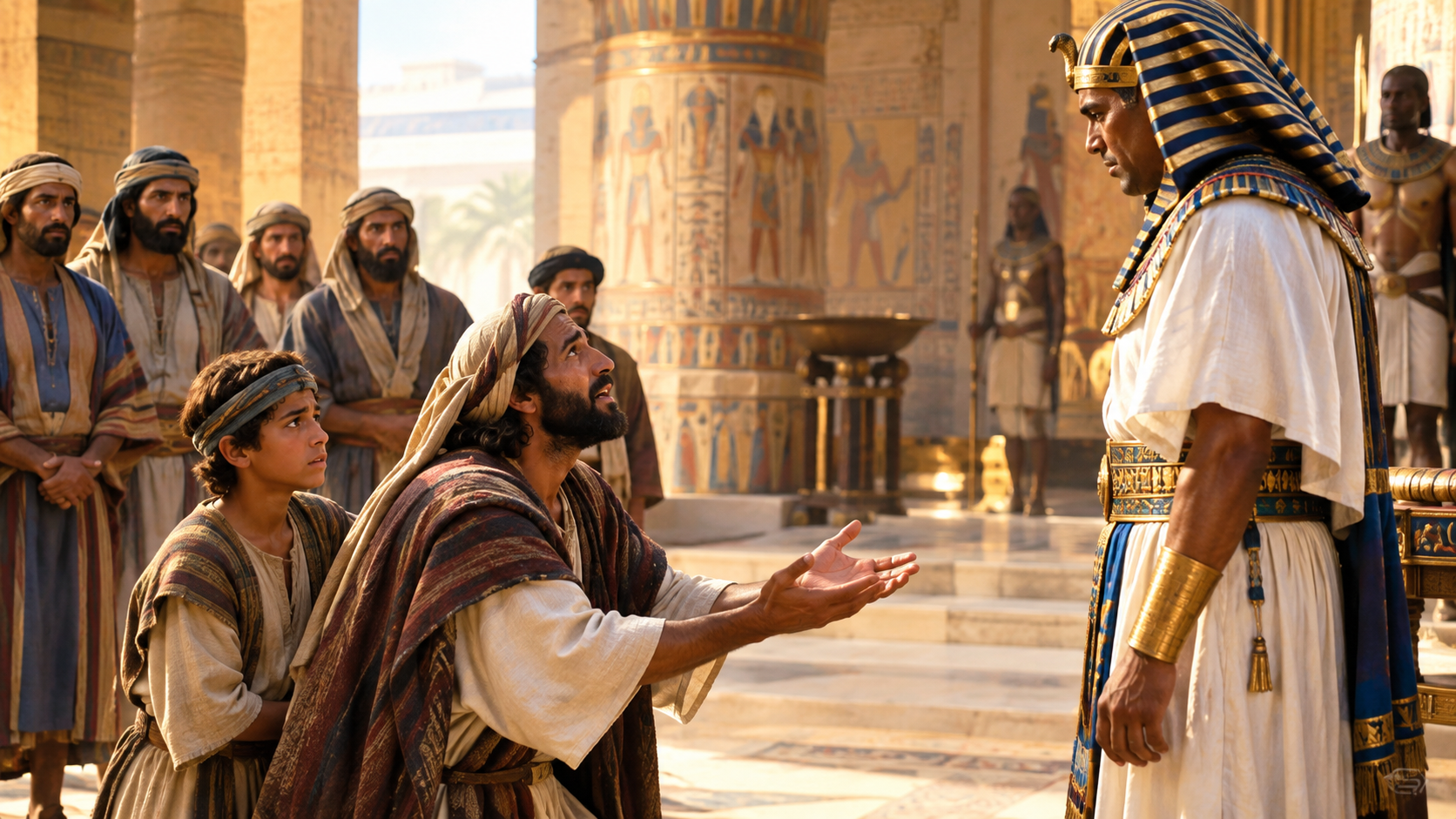
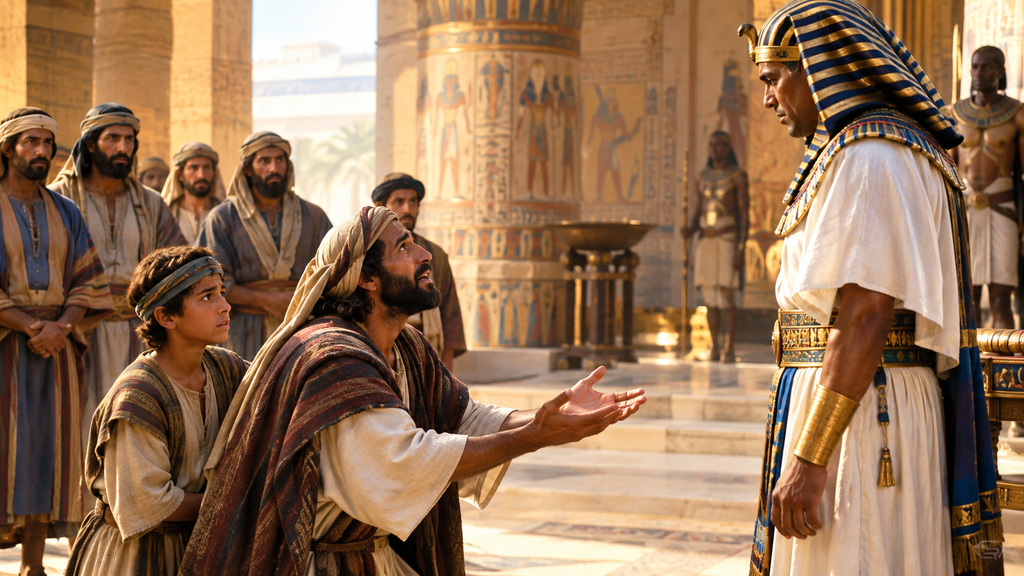
Years later, Judah stands before a man he does not recognise as Joseph. This time, Benjamin’s life is at stake, and Judah makes a remarkable declaration: “Let thy servant abide instead of the lad as a bondman to my lord” (Genesis 44:33). What happened to the man who once said, “Sell him”? How did he become the man who said, “Take me instead”? His transformation reveals the possibility of a changed heart, which is central to the Gospel.
This message speaks directly to us as Nigerians, Africans and Christians, particularly as communities in Plateau State and elsewhere continue to mourn sons, daughters, fathers, mothers, pastors, farmers, travellers and children lost to violence.
From dehumanisation to repentance
Judah’s first statement is frightening because it sounds practical. He does not begin by saying, “Let us murder him.” He asks, “What profit is it?” and proposes selling his brother. He has begun to calculate the value of another human being.
This is often where violence begins. Before someone can kill another person, that person must first stop seeing the victim as a fellow human being. The victim becomes “one of them”, whether identified as a farmer, herder, Christian, Muslim, settler, native or member of another ethnic community.
But Scripture establishes a more fundamental truth: “God created man in his own image” (Genesis 1:27).
Before Joseph belonged to a family, tribe or community, he was an image-bearer of God. The same is true of every Nigerian. Every Plateau farmer and herder, every child killed in a village attack and every widow mourning a loved one bears the dignity of a human life created in God’s image. The Church, therefore, cannot mourn only when “our people” die. Christian compassion must transcend ethnic, religious and political boundaries.
There is also a second lesson in Joseph’s story. His brothers sold their father a false account of his death. In the same way, a killing in our society can be followed by rumours, accusations, propaganda and collective blame. Revenge then produces another killing, another funeral and another round of hatred.
The Church must resist this cycle by becoming a community of truth. Not every social media post, photograph, voice note or accusation is reliable. Christians must refuse to add falsehood to tragedy because a lie can deepen a wound and fuel further violence.
We cannot preach this message as though it concerns only an ancient family. Plateau State has continued to experience deadly attacks. Reports in September 2026 described killings in communities across Mangu, Barkin Ladi, Riyom and surrounding areas. An attack was also reported in Kassa, Barkin Ladi, on September 24, prompting condemnation from the Plateau State Government. Other reports concerned the killing of young herders and cattle in Aloghom, Mangu.
These incidents remind us that every innocent life matters. We must ask who committed the crimes, why they occurred, who failed to protect the victims, who supplied the weapons and who spread falsehood. We must also demand accountability and help affected communities rebuild their lives.
Christian compassion must have both eyes and feet. We weep, but we also seek truth. We pray, but we also pursue justice. We forgive, but we do not call evil good.
Judah’s transformation shows that repentance is more than an expression of regret. In Genesis 37, he was willing to sacrifice Joseph to protect his interests. In Genesis 44, he offered himself to save Benjamin. The difference is profound.
Regret says, “I feel bad about what happened.” Repentance says, “I will change what I do.” Regret points to tears, but repentance is demonstrated by a transformed life and a willingness to repair the harm one has caused.
Judah’s story shows that grace can change the kind of person we are. God is interested not only in changing circumstances but also in transforming hearts.
Nigeria needs security operations, but it also needs citizens who no longer regard another Nigerian’s blood as cheap. It needs honest public officials, courageous judges, responsible traditional rulers, faithful religious leaders, ethical journalists and communities willing to reject revenge.
‘Take me instead’: Mercy, justice, reconciliation
Judah’s declaration, “Let thy servant abide instead of the lad,” marks a dramatic reversal. The man who once helped sell his brother now offers himself for another. He moves from calculating profit to accepting personal loss, from abandoning a brother to protecting him.
His transformation also points beyond Judah to Jesus Christ, who said that the Son of Man came “to give his life a ransom for many” (Mark 10:45). Judah offered himself for Benjamin, but Christ gave Himself for sinners. The cross demonstrates that sin matters and that grace is costly. Forgiveness does not mean pretending that evil never happened.
This raises an important question for Nigeria: how should society respond to people who claim to have repented after participating in violence, including members of Boko Haram?
The Bible offers principles of transformation, not a simplistic security policy. Genuine repentance should open a path to change, but surrender alone cannot erase criminal responsibility or disregard the suffering of victims. Nigeria’s rehabilitation and reintegration efforts must therefore take account of truth, accountability, justice and the protection of affected communities.
First, those who repent must abandon violence and surrender their weapons. Second, they must tell the truth about what happened and provide relevant information. Third, they must answer for their actions in accordance with the law. Forgiveness by a victim or religious community does not automatically remove criminal responsibility.
Repentance should also involve restitution wherever possible and lawful. Zacchaeus did not merely declare his faith; he offered to restore what he had taken. Similarly, those who have caused harm should contribute towards repairing it where they can, whether by helping rebuild damaged facilities, returning stolen property or supporting victims’ recovery.
Finally, genuine transformation must be demonstrated through changed conduct. Reintegration should include appropriate safeguards, monitoring and community participation.
Reconciliation must never be forced upon victims. A widow cannot be compelled to embrace the man accused of killing her husband, and a survivor cannot be ordered to forget the past.
Sometimes reconciliation begins with a smaller but significant decision: “I will not kill you because of what another person did.”
Joseph’s own response to his brothers offers further wisdom. He did not immediately reveal himself when they appeared before him. Their conduct was tested, and the truth gradually emerged. Only after this process did he fully reveal his identity.
Joseph eventually declared, “You meant evil against me; but God meant it for good” (Genesis 50:20). He did not excuse his brothers’ actions. He acknowledged their evil but refused to let it determine the end of the story.
That is Christian forgiveness. It does not rename evil as good or demand that justice be abandoned. Rather, it refuses to allow evil to have the final word.
Nigeria needs truth, justice, mercy and reconciliation. Peace without truth is fragile, forgiveness without justice can create another wound, justice without mercy can become revenge, and mercy without accountability can become impunity.
The Church must also examine its own conduct. Whenever we destroy another person’s reputation for political advantage, spread unverified accusations, discriminate on the basis of ethnicity or teach children to hate another community, we are repeating the spirit of “Sell him”.
When we turn another person’s death into an opportunity for political mobilisation or use religion to justify hatred, we betray the faith we profess. The Gospel calls us to stop treating people as disposable objects.
Instead, Christians must learn to say, “Take me instead.” This means standing with widows, supporting orphans, visiting displaced families, helping farmers return to their fields, caring for the wounded and comforting traumatised children. It also means refusing retaliatory violence, mediating between communities and telling the truth even when our own people are wrong.
To the mothers whose sons did not return, the fathers whose children were taken, the widows mourning their husbands and the communities that have buried their children, the message is this: God sees you. And to those who commit violence, God’s patience must never be mistaken for approval.
You do not know the Joseph you are creating. The child whose father you killed may become the doctor who saves your child. The girl whose village you destroyed may become the lawyer who defends your rights. The boy whose education you interrupted may become the leader who helps rebuild the nation.
Therefore, stop the violence. Lay down your weapons, return those who have been abducted, tell the truth, help recover what can be recovered, accept lawful consequences and seek genuine transformation.
At the same time, those who have suffered must resist the temptation to become what they hate. If someone kills our brother, we must not become murderers. If someone burns our home, we must not burn the home of another innocent person. We can oppose evil without becoming evil.
David refused to kill Saul when he had the opportunity, and Joseph refused to destroy his brothers when he had the power. Jesus prayed, “Father, forgive them.” As Christians, we pursue justice while surrendering vengeance to God: “Vengeance is mine; I will repay, saith the Lord” (Romans 12:19).
Which sentence will define us?
Church, let us make a covenant. We will not sell people by reducing them to their tribe, religion or political identity. We will not sell lies by forwarding unverified information, and we will not sell hatred by teaching our children to inherit it. Neither will we present revenge as justice.
We will protect the vulnerable, pursue lawful accountability, distinguish genuine repentance from public relations and forgive without abandoning prudence or public safety. We will build bridges without pretending that the wounds between communities do not exist.
Judah’s life illustrates the great reversal that God can bring about in a human heart. At first, he said, “Sell him.” Later, he said, “Take me instead.” At first, he asked how much he could gain; later, he considered how much he could sacrifice. That is repentance, transformation and discipleship.
One day, people will ask what Christians did when Nigeria was bleeding, when Plateau was grieving, when villages were attacked and when hatred became fashionable. They will ask what we did when we had the opportunity to retaliate.
Will history hear us say, “Sell him,” or will it hear us say, “Take me instead”? Will we continue passing wounds from one generation to another, or will we become the generation that declares, “The cycle stops here”?
Joseph’s brothers thought they had determined his future, but they had not. They sold him, yet God raised him. They wounded him, yet God positioned him. They lied about him, yet God vindicated him. When they finally stood before him, Joseph had the power to destroy them, but he chose mercy, not because their evil was good, but because God was greater than evil.
Therefore, to the killers: stop. To the wounded: God sees you. To the Church: stand in the gap. To the state: protect the people and pursue justice. To communities: do not turn grief into collective revenge. To those who genuinely repent: demonstrate it through truth, accountability, restitution and a transformed life.
And to all of us, let us move from “Sell him” to “Take me instead”.
The Gospel is the story of a God who saw a world trapped in sin and did not say, “Sell him.” Instead, God came in Christ and said, “I will take their place.”
Crux sola est nostra theologia. Solus Christus! Ipsum esse existent!
Amen.
Rev. Prof. John Brown Okwii, the
Serving Pastor, Assemblies of God Church, Hwolshe, opposite Model Academy, along Yakubu Gowon Way, Jos, writes via johnbrownokwii@gmail.com