



From AMEDU JOSEPH, Lokoja
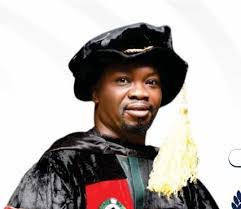
A Professor of Organic Chemistry at the Federal University, Lokoja, Olalekan Wasiu Salawu, has lamented the state of scientific research in Nigeria, calling on the government and well-meaning individuals to renew their commitment to reversing the trend.
Professor Salawu made the call while delivering the 33rd Inaugural Lecture Series of the university at its Adankolo Campus in Lokoja recently.
In his lecture titled, ‘Hidden Recipe for Life: How Tiny Complex Compounds Run the Sun’, Professor Salawu identified the lack of access to essential research facilities as the major obstacle to scientific advancement in Nigeria.
He said these facilities were often inaccessible due to high maintenance costs, leaving young researchers deprived of critical learning opportunities.
According to him, “The root cause? A systemic neglect of research funding. True research funding involves competitive, merit-based allocation to projects with transformative potential. Globally, such support flows from government bodies and corporate research and development departments, supplemented by philanthropic efforts in areas like disease eradication.”
“In Nigeria, however, public universities, the primary hubs of scientific inquiry, rely almost entirely on government funding, which remains woefully inadequate.”
He continued, “I therefore advocate passionately for prioritising basic research. While it may not yield immediate commercial returns, basic research lays the groundwork for future breakthroughs. Consider mathematics: foundational theories developed centuries ago underpin today’s digital revolution.”
Professor Salawu further decried what he described as the politicisation of higher education.
“The proliferation of federal universities driven by regional quotas rather than academic need has stretched resources to breaking point,” he stated.
He questioned, “How can we justify establishing new institutions when existing ones languish in neglect?” and emphasised that “Redirecting these funds to strengthen current universities would yield far greater dividends for scientific research.”
Turning his attention to the nation’s leaders, he urged, “I urge you to stop paying lip service to science. Transform rhetoric into action.”
He also commended the Academic Staff Union of Universities (ASUU) for its dogged advocacy.
“To the Academic Staff Union of Universities (ASUU), I extend gratitude. Your relentless advocacy has secured the meagre facilities we have today,” he said.
Addressing parents, Professor Salawu added, “Sceptical parents, I invite you to witness firsthand the conditions under which your children learn. The struggle for better funding is not mere agitation; it is a fight for Nigeria’s future.”
On the way forward, he called for “moving beyond empty promises and allocating budgets transparently.”
He recommended “the creation of at least one cutting-edge research hub per geopolitical zone, equipped with state-of-the-art instruments accessible to all institutions.” He also suggested launching targeted intervention funds to revitalise basic science departments, ensuring they have the tools for both teaching and groundbreaking research.
Salawu maintained that “publicly funded research must remain in the public domain, subject to peer review and free from secrecy. Science is not mysticism; it demands rigour, transparency, and collective effort.”
He concluded: “The time for change is now. Let us rebuild Nigeria’s scientific landscape into one that inspires innovation, fuels progress, and secures our place on the global stage.”
Earlier in his welcome address, the Vice Chancellor of the Federal University, Lokoja, Professor Olayemi Akinwumi, described the institution’s inaugural lecture series as one of its most cherished academic traditions, where accomplished scholars shared the results of years of research, teaching and reflection with both the academic community and the general public.
He commended Professor Olalekan Salawu for being the first academic from the Department of Chemistry to present an inaugural lecture.
“Professor Salawu has set a remarkable example, and his achievement today will no doubt motivate other members of the department to strive for similar excellence,” he said.
He also noted that the title was presented in Yoruba, which he described as “both profound and symbolic.”
“Another fascinating aspect of today’s lecture is that the title is being presented in an indigenous language—Yoruba. The title, ‘Èròjà ìṣèmí tó fárasín: Bí àpapọ̀ àwọn èròjà àkérèlójú (bíntìn) ṣe ń ṣíṣe ìṣèmí,’ translated as ‘Hidden Recipe for Life: How Tiny Complex Compounds Run the Show,’ is both profound and symbolic.
“This creative choice highlights the importance of indigenous languages as valid and powerful tools for expressing complex academic ideas. It also reflects the beautiful connection between culture and science — the true essence of scholarship,” he explained.