



By Sekyen Walshak
The University of Jos (UNIJOS) has inducted about 260 engineering graduates from the 2019 to the 2025 sets, marking the institution’s first-ever oath-taking and induction ceremony for engineering graduates.
Speaking at the ceremony, the Vice-Chancellor of the university, Prof. Tanko Ishaya congratulated the inductees and urged them to uphold professionalism and integrity in the discharge of their duties.
He noted that the engineering profession carries enormous responsibility, stressing that the safety, development, and technological progress of every society depend largely on the competence of engineers.
Prof. Ishaya encouraged the graduates to remain committed to excellence, continuous learning, and ethical conduct in their professional practice.
He also charged them to be good ambassadors of the university wherever they find themselves, stressing that the knowledge and training they received must translate into practical solutions that contribute to national development.
Also speaking, Engr. Lukeman Sani of the Engineering Regulation, Monitoring and Enforcement Department at the Council for the Regulation of Engineering in Nigeria (COREN), charged the newly inducted graduates to uphold professionalism and strictly adhere to global best practices in engineering practice.
Sani explained that engineering training does not end at graduation but continues through structured professional development, mentorship, and certification.
According to him, there are currently about 114 universities offering engineering education in Nigeria, with over 500 engineering programmes capable of producing thousands of graduates annually if properly managed.
He, however, stressed that beyond the number of graduates produced, the critical issue remains the competence and practical skills of engineers entering the profession.
He emphasised the importance of proper professional processes, including student indexing, regulated admission quotas, adequate industrial training through the Students Industrial Work Experience Scheme (SIWES), and the mandatory one-year Engineering Internship Programme (EIP) coordinated by COREN and relevant stakeholders.
“The engineering profession requires integrity, discipline, and dedication to lifelong learning. As professionals, you are expected to make meaningful contributions to national growth and technological advancement,” he said.
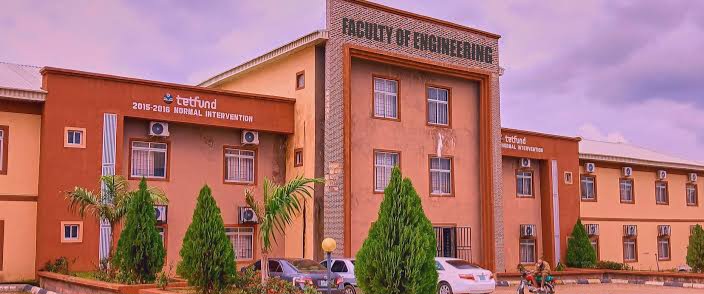
Delivering the keynote address titled “Closing the Four Decades of Non-Existence of the Faculty of Engineering at the University of Jos: The Journey of Resilience, Perseverance and Endurance,” the pioneer Dean of the faculty, Prof. Stephen J. Mallo traced the long journey leading to the establishment of the faculty.
He explained that although the university was established decades ago, the Faculty of Engineering only began to take shape after sustained efforts that started in 2008.
According to him, the faculty received its first accreditation from the National Universities Commission (NUC) in 2013, while its dedicated engineering complex was completed in 2018.
Mallo noted that with the latest graduating sets, the faculty has now produced over 600 engineers who are contributing to Nigeria’s economy and technological development.
“Today marks your formal transition from students to professionals—from theory to responsibility, and from learning engineering to practising engineering,” he said.
He stressed that engineering remains one of the few professions where human lives directly depend on the competence and ethical conduct of practitioners.
Mallo, therefore, urged the newly inducted engineers to uphold professional ethics, develop sustainable technical skills, and contribute meaningfully to national development.