



BY MARIE-THERESE NANLONG
The familiar honking sound of tricycles weaving through traffic has become a defining feature of urban transport in many Nigerian cities.
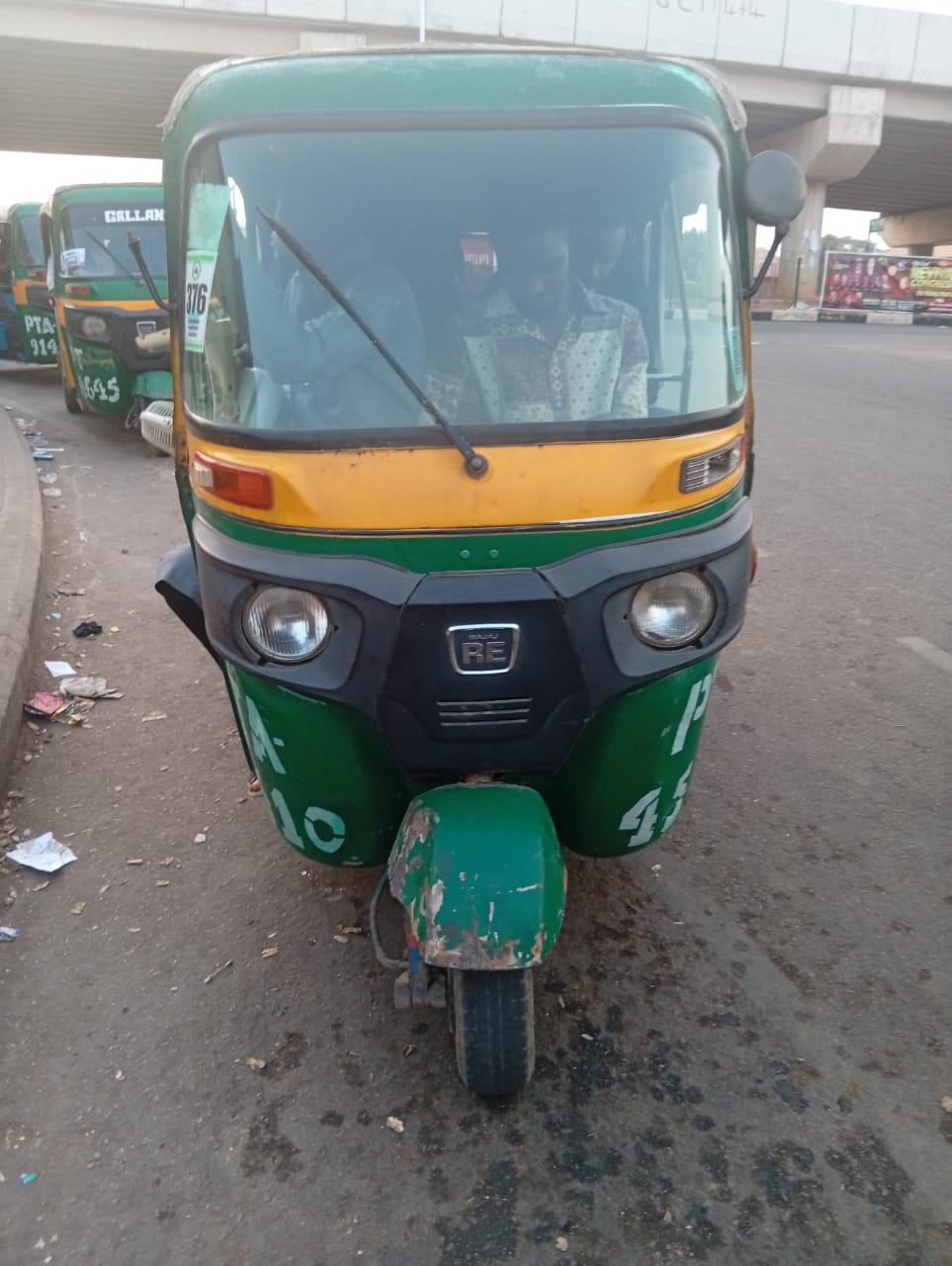
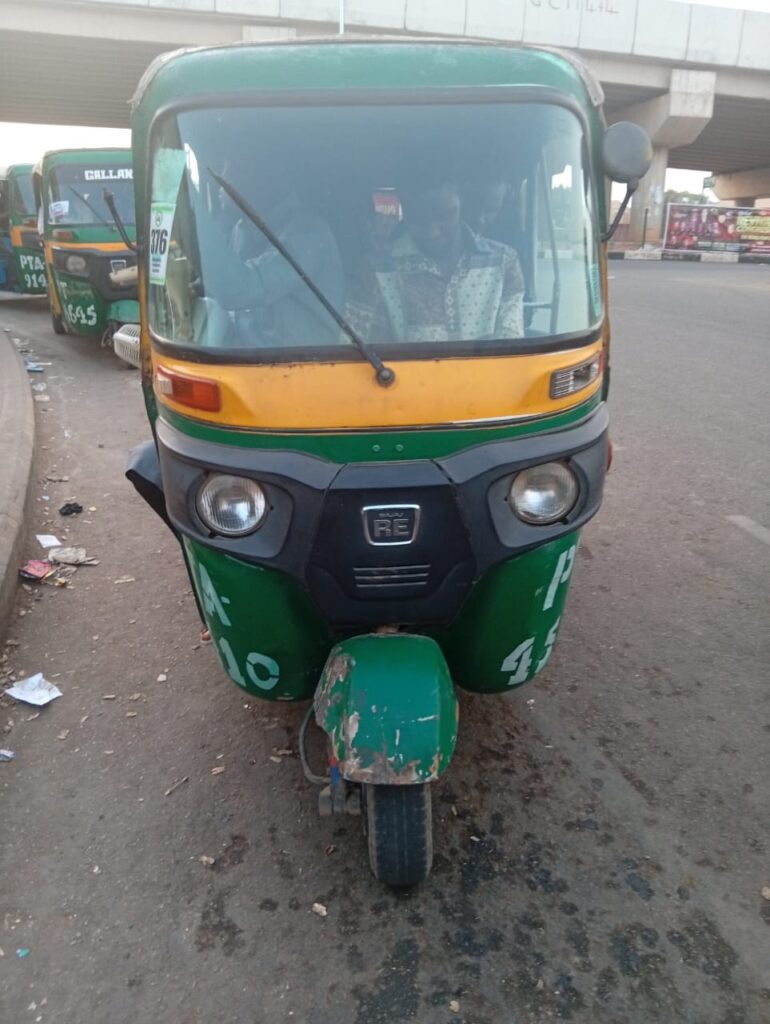
In Jos, Plateau State, the three-wheeled vehicles, popularly known as Keke provide quick and affordable transport for thousands of commuters daily.
Yet behind their convenience, and supposed safety, lies a growing concern – the widespread practice of overloading.The origin of the rickshaw, from which modern tricycles evolved, can be traced to Asia where it was widely used as a two-wheeled carriage for transporting people.
The word rickshaw is believed to derive from the Japanese jinrikisha, meaning “human-powered vehicle.”In the 1800s, rickshaws spread rapidly across Asia as an efficient and low-cost means of transportation before becoming motorised in Japan in the 1930s.
Originally designed for transporting goods, rickshaws gradually evolved into passenger vehicles as their popularity increased during the 1940s and 1950s.
Decades later, the concept found its way to Nigeria.In the late 1990s, tricycles were introduced in Lagos State by then Military Administrator, Colonel Buba Marwa, to address transportation shortages and rising unemployment.
The vehicles quickly became known as Keke Marwa.During the administration of former President Olusegun Obasanjo in the early 2000s, the tricycles were incorporated into a federal poverty alleviation initiative under the National Poverty Eradication Programme (NAPEP), leading to the widely recognised name Keke NAPEP.
Over time, other States adopted the system as a practical way to move passengers over short distances within cities.
In Plateau State, the administration of former governor Jonah Jang introduced tricycles largely to curb the menace of commercial motorcycles, whose reckless riding had led to numerous road accidents.
At the beginning, the operational model was simple, the rider sat in front while three passengers occupied the rear seat. The design allowed for a relatively safe and comfortable ride.
However, economic realities have gradually altered that arrangement.With rising petrol prices and the increasing cost of maintaining vehicles, many operators have resorted to carrying extra passengers in order to maximise daily earnings.
Today, it is common to see tricycles in the Jos–Bukuru metropolis carrying not only three passengers at the back but also one or even two additional passengers squeezed beside the rider in front.
In extreme cases, a vehicle designed to carry four persons, one rider and three passengers, now transports as many as six people at a time.Some riders argue that the practice is a survival strategy in a difficult economy.

Bitrus Nyam, a tricycle operator in Jos, admits that overloading occurs but says many riders feel they have little choice.
Nyam explained, “For some of us, it is common to carry an extra passenger in the front. Personally, I sometimes carry one person there because my seat is small. But with the newer tricycles that have bigger seats, some riders take two passengers in front with the rider making three.”
He added that while enforcement officers like the Vehicle Inspection Officers, VIO sometimes arrest riders for overloading, authorities should consider the economic hardship operators face.
“I don’t blame the officials when they arrest us,” he said. “But they should also understand the economic challenges many riders are going through.”
Another operator, Umaru Abdullahi, said the pressure to remit daily earnings to tricycle owners pushes many riders to take risks on the road.
“Many riders do not even own the tricycle they drive,” Abdullahi noted. “You must remit a fixed amount to the owner every day. After paying that, you still have to feed your family. That is why some people carry extra passengers.”
However, the Tricycle Riders Union of Nigeria (TRUN) insists it does not support the practice.Comrade Dahiru Hassan, Chairman of TRUN in Jos North and a member of the Central Working Committee on tricycles in the area, said the Union has repeatedly warned members against violating safety regulations.
Hassan said, “As a union, we do not encourage overloading. Even the newer tricycles with larger seats in front are designed to carry only one passenger beside the rider according to the manufacturer’s manual.”
He acknowledged that many riders complain about the high cost of acquiring tricycles and the financial pressure associated with repayment agreements.
He said, “In the past, a tricycle could be purchased for about ₦350,000. Today, the price is around ₦3 million. That makes it difficult for riders to own one outright, so they operate under agreements that require daily remittance to the owner.”
Despite these economic pressures, Hassan maintained that risking lives on the road is unacceptable.
He added, “No matter the challenge, we should not endanger our lives by carrying two passengers in the front. Our task force will continue to sanction anyone caught violating the rules.”
Regulatory authorities have also raised serious concerns about the practice.Mrs Anna Mwoltok, the Chief Vehicle Inspection Officer (VIO) in Plateau State, said many drivers deliberately ignore road safety regulations.
She explained, “The road worthiness specification for tricycles allows only four persons in total, the rider and three passengers. But many operators disregard this and overload the vehicle.”
Mwoltok warned that passengers who willingly board overloaded tricycles also share responsibility for the risk.
According to her, “When people see a tricycle already overcrowded and still enter, they are endangering their lives. Safety should be the priority. Everyone who leaves home wants to return safely.”
The Federal Road Safety Corps (FRSC) also echoed similar concerns.Superintendent Route Commander Peter Longsan, spokesperson of the Corps in Plateau State, explained that overloading occurs not only in terms of passenger numbers but also through excessive weight.
Longsan noted, “The National Road Traffic Regulations permit a passenger-carrying tricycle to convey a maximum of four persons including the rider. Anything beyond that is a violation of the law.”
He further stated that tricycle tyres are designed to carry a maximum load of about 250 kilograms, a limit often exceeded when riders carry multiple passengers along with heavy goods.
His words, “When vehicles carry more than the recommended weight, it increases the risk of crashes and reduces the lifespan of the vehicle. Overloading also makes it harder for the rider to manoeuvre properly.”
Despite repeated enforcement efforts, the practice continues across many parts of Jos.A commuter, Gloria Bulus says tricycles remain an essential part of daily life but a combination of economic hardship, weak compliance and high transport demand fuels the trend of overloading.
She warns that unless riders, regulators and passengers collectively prioritise safety, the convenience of the popular three-wheeler could continue to come at a dangerous cost detrimental to both the riders and commuters.