



From AMEDU JOSEPH, Lokoja
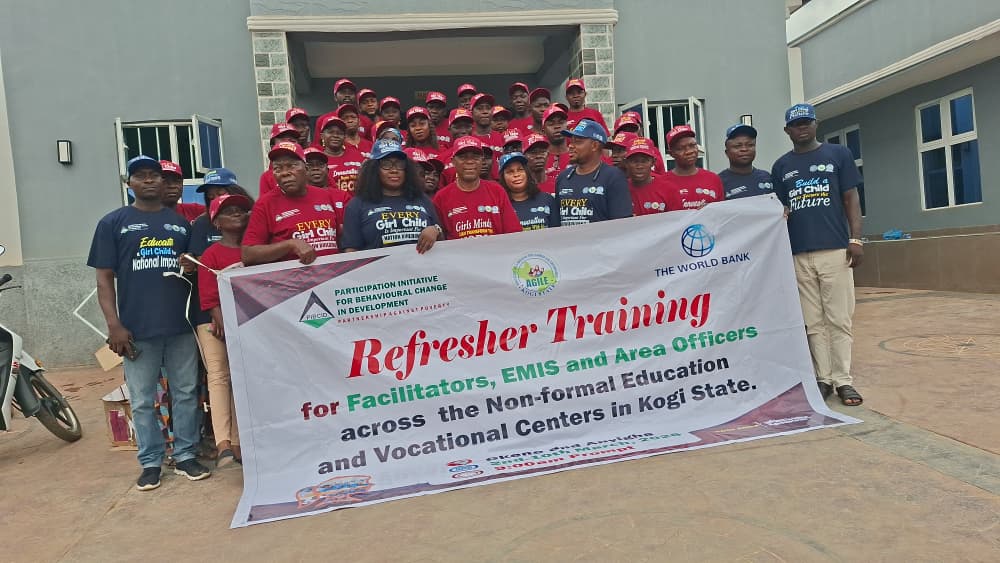
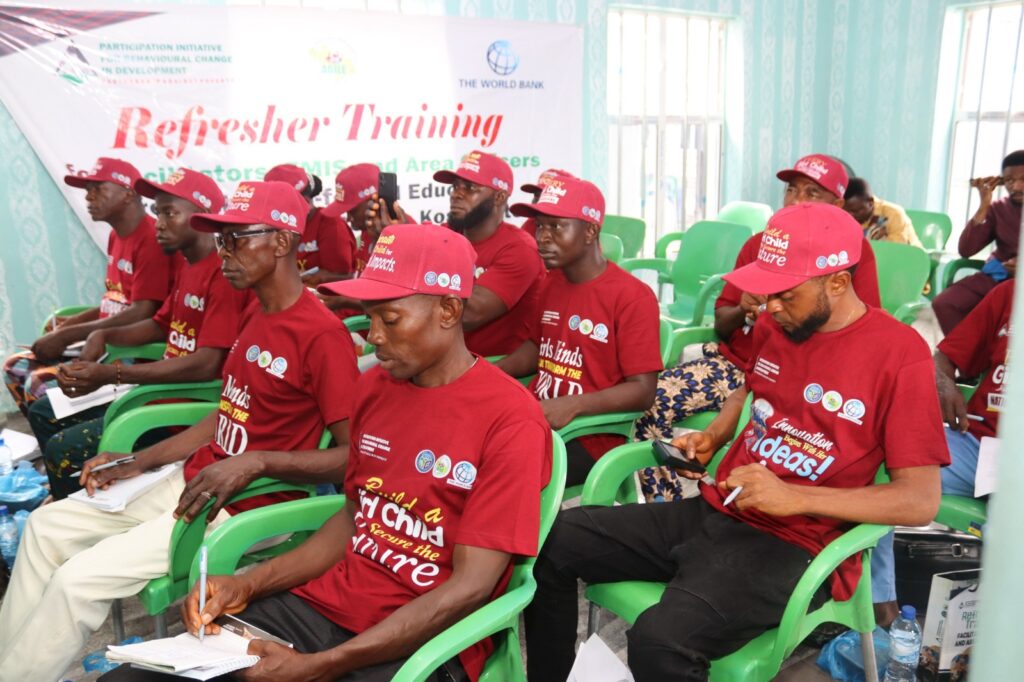
No fewer than 200 facilitators, Education Management Information System (EMIS) officers and area officers across non-formal education sectors and vocational centres in Kogi State have benefited from a comprehensive refresher training aimed at improving data collection and service delivery.
The training was organised by the Kogi State Adolescent Girls Initiative for Learning and Empowerment (AGILE), in partnership with Participation Initiative for Behavioural Change in Development (PIBCID), the implementing partner under Sub-Component 2.2c for Alternative Education.
The capacity-building programme was held at the Event Hall of Choice Apartment in Adavi Local Government Area and Royal Dome Hotel in Dekina Local Government Area.It attracted participants from the Central, Western and Eastern senatorial districts of the state.
The initiative focused on addressing critical gaps identified during the first quarter monitoring exercises.It was also aimed at strengthening participants’ competencies in data management, instructional delivery and programme implementation across learning centres.
Speaking at the event, the State Project Coordinator (SPC), Alhaji Ahmed Oricha, described the training as a strategic intervention designed to enhance the overall effectiveness of the AGILE project in Kogi State.
He noted that equipping facilitators and officers with the right knowledge and tools remained key to achieving sustainable outcomes, especially in the area of non-formal education targeting adolescent girls.Alhaji Oricha further emphasised that accurate data collection and reporting were fundamental to the success of any development programme.
He stressed that strengthening the capacity of EMIS officers would not only improve accountability but also support evidence-based planning and decision-making across the project’s implementation cycle.
He commended the collaboration between AGILE and PIBCID, noting that such partnerships were essential in delivering impactful and community-driven interventions.
He urged participants to take full advantage of the training and apply the knowledge gained to improve learning outcomes and expand access to quality education across underserved communities.
Earlier in her remarks, the Sub-Component Lead for 2.2c Alternative Education, Hajia Mariam Bello, described the refresher training as a critical step toward strengthening the quality of non-formal education delivery in Kogi State.
She explained that the initiative was carefully designed to address gaps identified during the first quarter monitoring exercise.She added that it also reinforced professional standards through the signing of the Code of Conduct and improved facilitators’ instructional approaches.
According to her, continuous capacity building remained essential in equipping facilitators to meet the diverse learning needs within their communities.
She highlighted the importance of the interactive breakout sessions, saying they provided participants with opportunities to assess and refine their teaching strategies while also enhancing collaboration among facilitators and officers.
Hajia Bello further underscored the critical role of EMIS officers in ensuring accurate and reliable data collection.She noted that quality data was indispensable for informed decision-making, proper planning and overall programme success.
She added that ongoing evaluation exercises would help identify key needs across learning centres, enabling targeted interventions that address specific challenges.
Looking ahead, she expressed optimism about the next phase of the programme, adding that it wouldinclude the introduction of life skills and vocational studies, as well as the translation of learning primers into local languages to promote inclusivity.Also speaking, the Executive Director of PIBCID, Rachael Akande, emphasised the significance of the training.
She noted that it would have a far-reaching impact on the lives of beneficiaries.Participants at the training expressed appreciation for the opportunity.
They highlighted improved understanding of data collection techniques, enhanced teaching strategies and better coordination approaches as key takeaways from the programme.