



By SABASTINE ABU
The lecture topic, ‘Mutating Construction System and the Implications on Production Flow Process’, presented a deep exploration of how rapidly evolving construction systems are fundamentally altering traditional production flow processes within the construction industry.
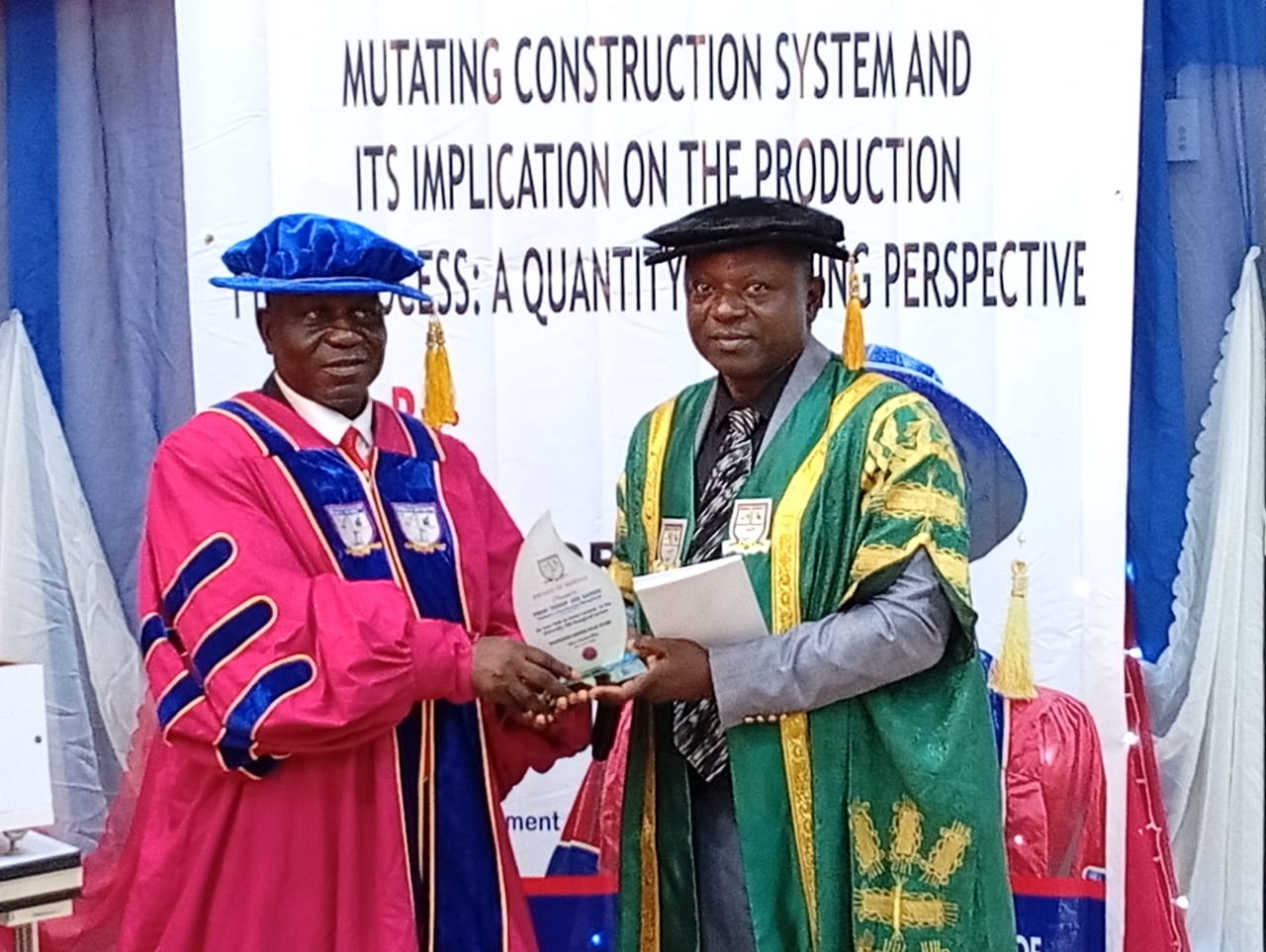
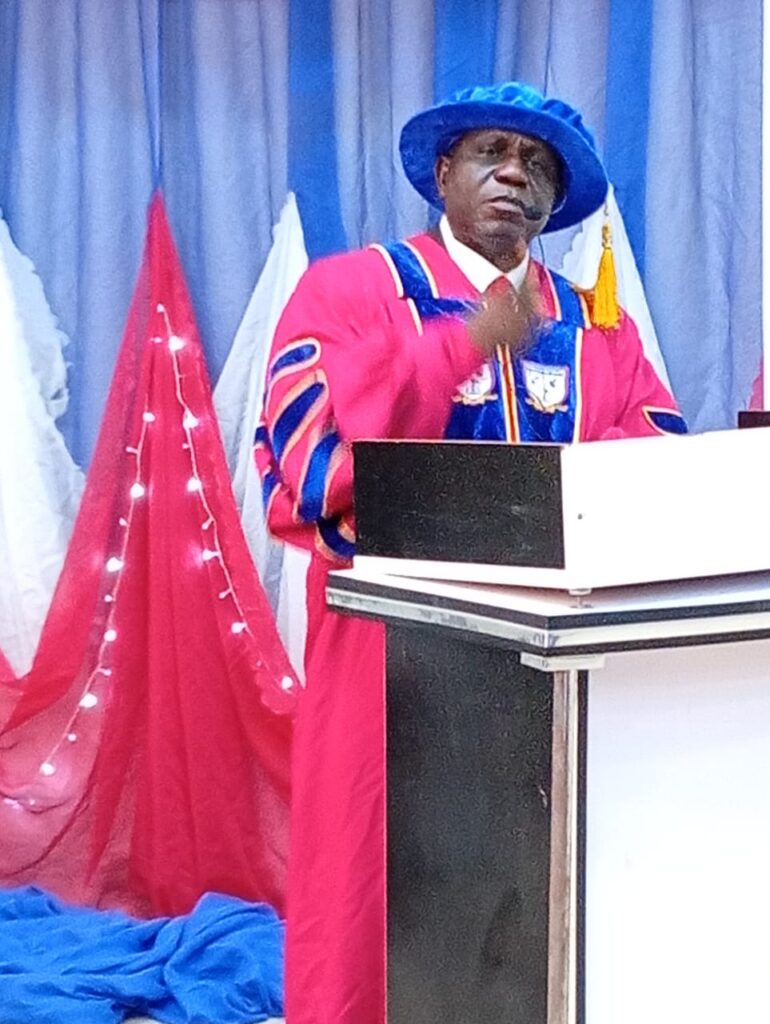
The 12th Inaugural Lecture of Bingham University, Karu, delivered by Professor Yusuf Gandu and viewed through the lens of the Quantity Surveyor, highlighted the significant disruptions that have shaped the construction industry across generations.
Professor Yusuf Joe Gandu, Dean of the Faculty of Environmental Sciences at Bingham University, Karu, Nasarawa State, Nigeria, has made notable contributions to academic and infrastructural construction management in Nigeria and across the African continent.
His scholarly works, including, ‘Proactive Cost Management Model for Building Projects’ (2021), reflected a forward-looking approach to cost management, while his research has also addressed modern project challenges such as the impact of dispute resolution mechanisms on project performance.
This background positioned him as a strong authority to examine how emerging technologies and systems are reshaping the role of the Quantity Surveyor in contemporary construction practice.
Shifting construction paradigms, technological influence
The core argument of Gandu’s lecture centres on the transition of construction from rigid, sequential methods to more dynamic, integrated and technology-driven processes.
He emphasised that this “mutation” required Quantity Surveyors to rethink traditional responsibilities such as Bills of Quantities preparation, cost planning and contract administration.
According to him, the Quantity Surveyor of the future must integrate tools such as Building Information Modelling (BIM), big data and emerging procurement methods to manage real-time information and optimise the entire project lifecycle.
Drawing from contemporary construction management research, the lecturer examined the role of technological advancements, including BIM, the Internet of Things (IoT) and Artificial Intelligence (AI), in transforming cost estimation, progress tracking and supply chain integration.
He noted that the growing digital imperative within the construction sector was accelerating these transformations and redefining professional expectations.
Implications for production flow, professional practice
Professor Gandu further analysed the implications of these changes on production flow, noting a shift from static to dynamic workflows in construction processes.
He explained that the work of Quantity Surveyors was becoming increasingly fluid and data-driven, although the industry continues to grapple with resistance to change and significant skills gaps, particularly within the Nigerian context.
On the evolving skillset required for Quantity Surveyors, he highlighted the importance of data analytics, software proficiency and collaborative working models.
He advocated robust educational reforms aimed at promoting forward-thinking innovations, while cautioning that such reforms must be supported by practical strategies for curriculum development and continuous professional training.
The lecturer also stressed the need to balance reliance on global construction models with a stronger emphasis on local construction techniques, describing contextual relevance as essential to sustainable industry development.
Addressing risk and change management, Professor Gandu identified the limitations of traditional risk frameworks in dealing with fluid construction systems.
He noted that modern Quantity Surveyors often operated within static models, whereas emerging systems demanded adaptive and predictive approaches to risk management.
Institutional reflections, academic significance
By linking construction “mutation” to production flow, Professor Gandu provided a systemic understanding of ongoing transformations within the construction sector.
Earlier in a welcome address, the Vice-Chancellor of Bingham University, Karu, stated that the 12th Inaugural Lecture aligned with the institution’s cherished academic tradition of providing a platform for professors to showcase their areas of expertise.
He commended the inaugural lecturer for rising to the occasion and urged other professors awaiting their turn to do likewise.
In a vote of thanks, the Registrar of Bingham University, Mr. Daburi Misal, expressed appreciation to invited guests from professional bodies, ministries, departments and agencies for attending the event.
He described their presence as a testament to the growing relationship between academia and the wider society.
Dr. Abu is Editor-At-Large, THE NIGERIA STANDARD