



By ZAKNI WUYEP
Across Nigeria, university students are groaning under the weight of skyrocketing accommodation costs as landlords continue to increase rents beyond the reach of the average student who live off-campus.
What was once a manageable part of student life has now become a major source of stress, financial strain and displacement.
“In institutions like the Federal University Lafia, the University of Jos, University of Abuja, and many others, off-campus accommodation has become a major burden,” lamented Queensly Kyari, a student of the Federal University of Lafia who lives off campus.
She explained that self-contained apartments that used to cost between ₦170,000 and ₦180,000 per year now go for around ₦240,000, with little or no improvement in facilities.
“My parents had to pay more just to ensure I maintained the same accommodation,” she said.
Similarly, Emmanuel Dam, a 300-level student of the University of Lafia who resides at Tudun Kwashi, said, “Self-contained apartments in other parts of Lafia have jumped from ₦120,000 to as high as ₦200,000 or more, depending on location.”
“I had to move farther away from campus because I couldn’t afford the new rent,” added Regina Dauda, a 300-level student of the Federal University of Lafia.
“Now I spend more on transportation and it’s affecting my punctuality in class.”
Landlords blame inflation, students cry foul
Several landlords and property agents claimed that inflation, the rising cost of cement, iron rods, labour and other construction materials forced them to increase rents.
While this may be partly true, students and parents insisted that landlords were taking advantage of the situation.
“Landlords are fully aware that students have few choices, and this monopoly has led to unregulated rent hikes,” said Mrs Idaku Samson of Jos, whose son studies at the University of Jos and lives off campus.
Mr Illiya Abednego of the Federal University Lafia added, “The impact on students is significant, as many are forced to live farther from campus to find affordable rent, which means longer commuting hours, increased transportation costs, and exposure to unsafe neighbourhoods.”
Others had been forced into sharing rooms originally meant for one or two people.
“I now live with three other young men in a room built for two,” revealed Mr Petwul Livinus, a 400-level student at the Plateau State University, Bokkos.
“We barely have space to study. It affects our concentration and peace of mind.”
A lecturer who preferred anonymity observed: “The financial burden doesn’t stop at rent. With tuition fees also increasing in many federal and state universities, students are now juggling rent, fees, feeding, and learning materials—all in an economy that isn’t friendly to the average Nigerian family.”
Parents are also bearing the strain.
“Many who send more than one child to school now struggle to keep up with the rising costs. Some resort to loans; others cut back on household needs to meet their children’s educational demands,” said Mrs Epmen.
Overcrowded hostels, institutional gaps
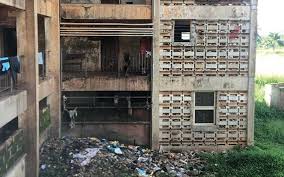
Students believe that universities had not done enough to tackle the problem of inadequate and unaffordable accommodation.
“Tertiary institutions’ authorities are aware of the crisis but have made only limited progress. Hostel facilities in many schools are either overcrowded, ageing, or insufficient for the growing population—as in my school,” said Ernest Vincent of the Plateau State Polytechnic.
Attempts by some universities to partner with private developers have yielded little relief.
“The hostels built under such partnerships are not enough to meet demand, and their prices often match or exceed off-campus rents,” lamented Nina Nasir, a fresh graduate of Veritas University, Abuja.
Stakeholders, including student unions and advocacy groups, called for urgent government and institutional intervention.
Many proposed rent regulation in student-dominated areas or subsidies for landlords who provided affordable housing.
Others urged universities to prioritise the construction and renovation of school-owned hostels to reduce reliance on private accommodation.
A growing threat to access, academic success
For now, students continue to adapt, often sacrificing convenience, safety and comfort for the sake of education.
“I have to trek almost 40 minutes to school every day because I can’t afford the closer apartments anymore,” said Miss Peace Andrew, a 300-level student of the University of Jos.
“We understand inflation is real, but what are we paying for? Most houses have no water or light and are still going for over ₦100,000,” lamented Mr George, a 400-level student of the Federal University of Lafia.
“I’ve taken loans twice just to pay my daughter’s house rent. It’s more than her school fees,” complained Mr Audu Wuyep, a parent.
Observers warn that the hike in house rents around university campuses had gone beyond a simple economic issue.
It now threatened students’ academic performance, mental health and safety.
“The dream of quality learning is being undermined by rising living costs,” said Mrs Ojlee Attah.
“While landlords attribute the increase to inflation, the lack of regulation leaves students vulnerable to exploitation.”
“If universities and government authorities do not intervene through improved hostel provision, rent control policies, or student housing support, the situation may worsen,” advised Mr Ndubisi, another parent.
“It is crucial that urgent, student-focused solutions be implemented to ease this burden, protect students’ welfare, and preserve the value of education as a right—not a privilege,” he added.