



RANDOM MUSINGS

Traversing the Jos/Mangu–Payam–Shendam and Yelwa–Shendam roads in Plateau State has become an exhausting and costly ordeal. What should ordinarily be a routine journey has turned into a nightmare defined by anxiety, discomfort and frequent visits to the mechanic. The major source of this frustration is not only potholes or erosion, but the proliferation of illegal and poorly constructed speed bumps erected by villagers along the road.
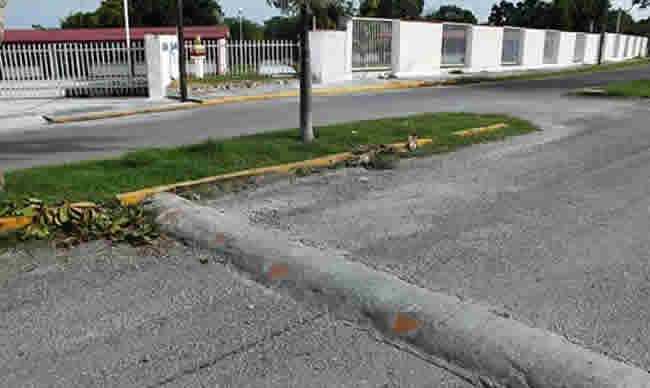
These bumps are not the conventional traffic-calming structures designed by road engineers. Instead, they are makeshift ridges formed with piles of stones, sand and, in some cases, tree trunks. Some rise sharply from the road surface like miniature walls, forcing drivers to slow down almost to a complete halt before attempting to cross. For smaller vehicles, the experience is even worse, as the undercarriage often scrapes against the hard surfaces, causing mechanical damage.
Every few kilometres, motorists are confronted with another of these obstacles. The cumulative effect is not only physically exhausting but financially draining. Shock absorbers, brake systems, wheel alignments and exhaust components are particularly vulnerable.
Many drivers report that repeated exposure to these bumps shortens the lifespan of their vehicles’ suspension systems. Commercial drivers, who depend on their vehicles for daily income, are among the hardest hit. The frequent repair costs eat deeply into their earnings, making an already difficult economic environment even more challenging.
Why communities resort to self-help
To be clear, the intention behind these bumps is not entirely misguided. Residents of roadside communities often complain about reckless drivers who speed through their villages without regard for pedestrians, especially children. In rural settlements where people walk along the road to farms, markets, schools and places of worship, speeding vehicles pose a genuine threat to lives. In the absence of effective traffic enforcement and official speed-calming infrastructure, villagers resort to constructing their own bumps as a defensive measure.
Their fears are understandable. Road accidents involving pedestrians have left painful memories in many communities. For villagers, these makeshift bumps represent a form of self-help, a way to force motorists to slow down and pay attention to their surroundings. In their view, it is a necessary intervention to protect lives where government presence is minimal or nonexistent.
Dangers of poorly constructed road barriers
However, while the objective of improving safety is commendable, the method employed raises serious concerns. These illegally constructed bumps lack uniformity, engineering design, and safety markings. Many are too high, too steep, and too abrupt. They do not have reflective paint, warning signs, or gradual slopes that allow vehicles to pass safely.
At night, they become even more dangerous, as drivers may not see them until it is too late. This exposes motorists to accidents, especially those unfamiliar with the road. Beyond vehicle damage, these bumps also slow down the movement of goods and services. Commercial transport operators spend more time navigating the route, increasing travel time and fuel consumption. This inefficiency ultimately translates into higher transportation costs, which are passed on to ordinary citizens through increased fares and higher prices of goods.
Emergencies present an even more troubling scenario. Ambulances, security vehicles, and other emergency responders may be forced to slow down repeatedly, losing precious time that could mean the difference between life and death. A patient in critical condition being transported to the hospital cannot afford unnecessary delays caused by poorly constructed road obstacles.
These roads are an important link connecting several communities and facilitating economic activities. They serve farmers transporting produce, traders moving goods, civil servants commuting to work, and families travelling for social and cultural obligations. When movement along such a vital route is hindered, the effects ripple across the entire local economy.
Need for regulation, government action
The core of the problem lies in the absence of proper regulation and government intervention. Traffic-calming measures are a legitimate part of road safety management, but they must be properly designed and approved by relevant authorities such as the Federal Road Safety Corps (FRSC), state ministries of works and local government engineering departments.
Standard speed bumps are constructed with specific dimensions, gentle slopes and visible markings to ensure safety for both motorists and pedestrians. Allowing individuals or communities to construct arbitrary road barriers creates chaos and undermines road safety standards.
While villagers may mean well, road construction and traffic management require professional expertise. Without it, the result is a patchwork of hazardous obstacles that create more problems than they solve.
What is needed now is a balanced and proactive approach. Government authorities must engage with affected communities to understand their concerns and provide appropriate solutions. Where speeding is a genuine problem, properly engineered speed bumps, rumble strips, pedestrian crossings, and warning signs should be installed. In addition, public awareness campaigns should educate motorists on the importance of obeying speed limits in residential areas.
Law enforcement agencies must also play their part by enforcing traffic laws and penalising reckless driving. When drivers know there are consequences for speeding, the need for communities to resort to self-help measures will diminish.
At the same time, communities must be discouraged from erecting illegal bumps. Such actions, though driven by fear and frustration, ultimately create more harm than good. Collaboration between residents and authorities is the only sustainable way to ensure safety and smooth transportation.
These roads should be a symbol of connectivity and development, not a corridor of frustration and mechanical breakdowns. Motorists deserve roads that are safe and navigable, while villagers deserve protection from reckless driving. These two objectives are not mutually exclusive.
With proper planning, regulation and cooperation, it is possible to achieve both. The time has come for the relevant authorities to act decisively to address the menace of illegal speed bumps and restore sanity, safety and convenience to this important road.