



POLITY
The February 21, 2026, Federal Capital Territory Area Council elections revealed troubling voter apathy, logistical lapses, allegations of political interference and the persistent menace of vote trading, while also offering the Independent National Electoral Commission a critical opportunity to recalibrate ahead of future off-cycle governorship contests and the 2027 general elections, writes NICK DAZANG
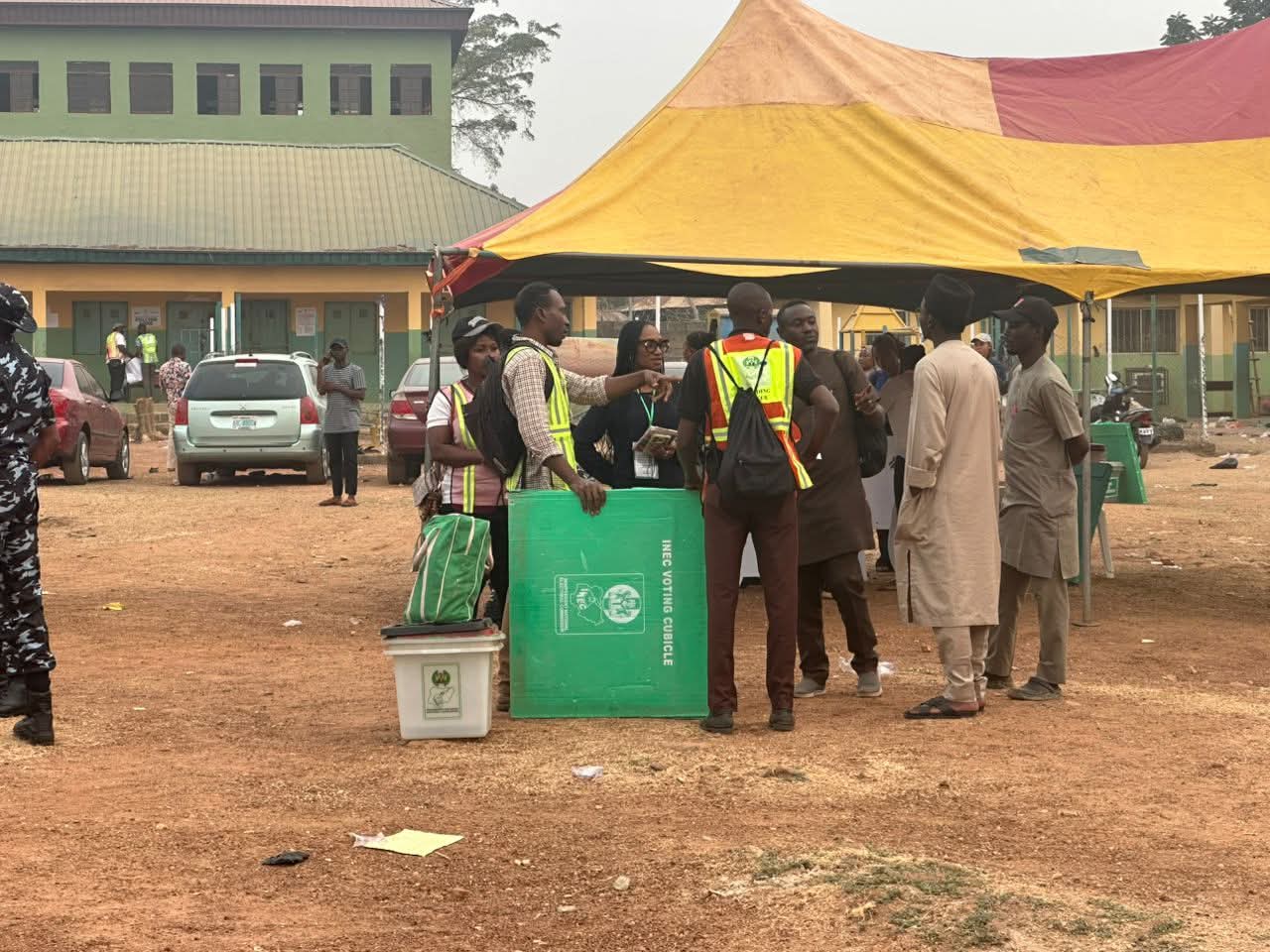
The Federal Capital Territory (FCT) Area Council elections, which took place on Saturday, February 21, 2026, elicited more than casual interest from stakeholders. This was evident in the number of observers and journalists accredited for the polls. Eighty-nine observer groups and 700 journalists from 72 media organisations were accredited by the Independent National Electoral Commission (INEC) to cover the elections.
Stakeholders, especially political parties, are cognisant of the pivotal place of the FCT in their political calculations. In a presidential election, a winner, apart from scoring the highest votes cast, is required to secure a minimum of 25 per cent of the votes cast in at least two-thirds of the states of the Federation and the FCT. This explains each party’s quest to make a significant mark on the FCT’s electoral map.
In the past, the FCT Area Council elections have provided indications of how the general elections would pan out. They have also served as a barometer for gauging INEC’s preparedness for impending general elections.
This year’s polls were unique because they took place after the expiration of the first four-year tenure of elected FCT officials. Previously, and since 1999, chairpersons and councillors had served three-year terms. This changed in 2022 following the amendment of the Electoral Act.
The elections also coincided with the emergence of Professor Joash Amupitan as Chairman of INEC. They, therefore, offered him a propitious opportunity to learn first-hand lessons that will inform the conduct of the forthcoming off-cycle governorship elections in Ekiti and Osun states and the 2027 general elections.
The elections were relatively peaceful, thanks largely to the professionalism of the security agencies and INEC staff.
Logistics, voter apathy
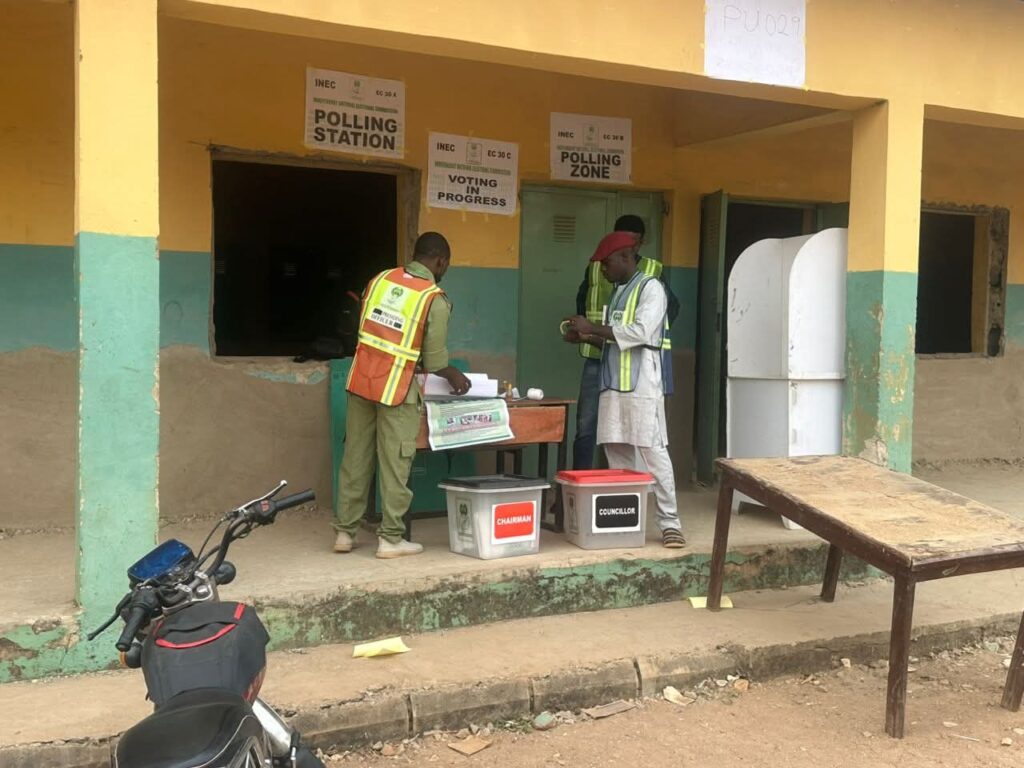
Logistics, a perennial challenge, however dogged the FCT Area Council elections. A number of polling units, including some in the Municipal Area Council, did not open until 10.00 a.m. By the Commission’s admission, only 45 per cent of polling units had opened as at 8.30 a.m. on election day. Others opened at 10.00 a.m.
Although the FCT has 1,680,315 registered voters and 1,587,025 — representing 94.4 per cent — had collected their Permanent Voter Cards (PVCs), only a paltry 243,677 were accredited to vote.
Voter turnout across the area councils varied. Abaji recorded the highest at 34.27 per cent; Bwari, 11.48 per cent; Gwagwalada, 22.25 per cent; Kuje, 26.84 per cent; Kwali, 28.65 per cent; and the Municipal Area Council, which came last, recorded 7.80 per cent. The overall turnout for the FCT stood at 14.50 per cent.
Compared with the 9.4 per cent turnout recorded in 2022, the latest elections may be said to have moved the needle, albeit marginally.
The dismal voter turnout, reflective of the national trend, is concerning. It diminishes the lustre of our democracy.
Since 1999, when the Fourth Republic commenced, elections in Nigeria have been characterised by declining voter participation. This trend speaks, among other factors, to a yawning disconnect between the leadership and the led, as well as lingering trust issues between voters and the Election Management Body (EMB).
Even though a number of arrests were made, vote trading remained a menace. In many jurisdictions where it thrived, security agencies appeared to look the other way.
Political controversies, interference
The elections were not helped by the FCT Minister’s alleged attempts to meddle in the process. He was reportedly said to have pressured some candidates of the Peoples Democratic Party (PDP) to step down at the last minute.
Mr Nyesom Wike, known for straddling political divides by remaining in the PDP while “aligning” with the governing All Progressives Congress (APC), also appeared to have overreached himself. A day before the election, he delivered a broadcast that effectively imposed a curfew on the FCT.
He also usurped the role of the Police, which, as the lead security agency for elections, is mandated to announce movement restrictions before and after polls. As if that were not enough, he reportedly embarked on monitoring the elections — a role not provided for under the electoral laws.
The way forward for INEC
Arising from the challenges encountered, INEC needs to undertake a thorough review of its logistics framework.
The Commission’s plan was for vehicles conveying staff, security agents and election materials to depart Registration Area Centres (RACs) as early as 6.00 a.m., in order to arrive at polling units between 7.00 a.m. and 7.30 a.m., facilitating the opening of polls at 8.30 a.m. In reality, only 45 per cent of polling units opened at the scheduled time.
Going forward, vehicles should depart RACs earlier — between 4.30 a.m. and 5.00 a.m. — to cater for mechanical breakdowns, distant polling units and difficult terrains.
Before deployment, vehicles should be inspected for roadworthiness several days in advance by staff of the Federal Road Safety Commission (FRSC). Only vehicles certified roadworthy by the FRSC should be used. This would reduce instances of breakdowns on election day.
Members of the National Union of Road Transport Workers (NURTW), the National Association of Road Transport Owners (NARTO) and the Marine Workers Union (MWU) should also be reminded that elections are not opportunities for profiteering, but moments of national duty requiring sacrifice, commitment and patriotism. Since INEC has a Memorandum of Understanding (MoU) with these organisations, it should be reviewed to provide clear consequences for wilful non-compliance.
The Commission deserves commendation for notifying voters whose polling units were split, in order to reduce congestion, via SMS and e-mail ahead of the elections. It also activated digital platforms — pula.inecnigeria.org and inecnigeria.org/location — several days before the polls to assist affected voters. However, these commendable efforts required more robust publicity. This should be factored into future elections to address complaints of disenfranchisement.
It is not enough that vote traders were apprehended. They must be prosecuted and punished to the full extent of the law. Their punishment should be widely publicised to serve as a deterrent.
According to the Commission, 93 per cent of polling unit results had been uploaded as at 2.00 p.m. on Sunday — the day after the election. This level of upload ought to have been achieved on election day. Timely uploads are critical to dispelling suspicion and reinforcing public confidence and trust in the process.
Dazang, OON, writes from Abuja via nickdazang@gmail.com