



By Marie-Therese Nanlong, Jos
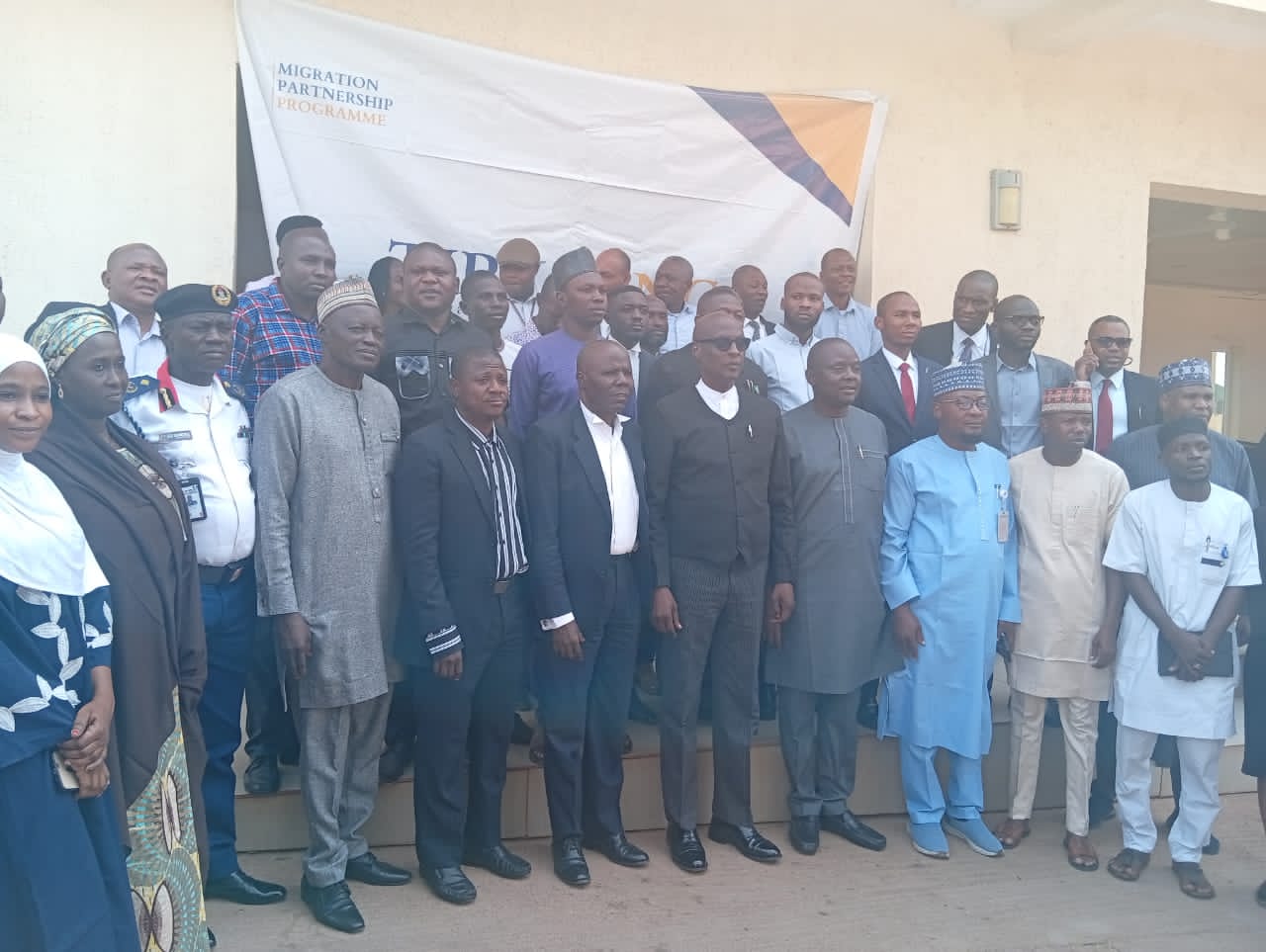
Justice sector stakeholders from Plateau and Zamfara states, as well as the Federal Capital Territory (FCT), have converged on Jos for a strategic workshop aimed at strengthening investigative and prosecutorial responses to trafficking in persons and violence against persons amid rising cyber-enabled crimes.
The week-long capacity-building workshop is organised by the International Centre for Migration Policy Development (ICMPD) in partnership with the National Agency for the Prohibition of Trafficking in Persons (NAPTIP) and funded by the Kingdom of the Netherlands’ Ministry of Justice and Security under the Justice and Security Migration Partnership Programme.
The project, tagged Building an Environment Free of Trafficking in Persons and Violence Against Persons in Nigeria (TIPVAP-NG),is designed to bolster Nigeria’s resilience by enhancing criminal justice responses, improving coordination mechanisms, strengthening survivor support services, and promoting community awareness and reporting.
In his remarks, the Project Manager, Matthias Esene of ICMPD, represented by the Project Officer, Selbol Langyi, said the Jos training holds particular significance as the fourth and final workshop in a series of cascade capacity-building sessions implemented across eight targeted states.
He said, “We began with Edo and Delta states, followed by Lagos and Ogun states, then Benue and Enugu states, and today we conclude this cycle here. Following a special request by NAPTIP, participation was extended to Zamfara State to ensure that more states benefit.
“This workshop is therefore not an isolated activity. It represents the consolidation of a structured, nationwide effort to promote standardised, professional and coordinated practice in the fight against trafficking in persons and violence against persons.
“It represents a deliberate shift toward sustainability, ownership and institutional strengthening. By empowering experienced NAPTIP officers to train their peers and partners at the state levels, we are institutionalising knowledge within national structures, reducing dependency on external expertise, ensuring contextual relevance grounded in operational realities, and promoting consistency in operational standards across states.”
Esene stressed that inconsistency in handling trafficking and violence cases comes at a high cost.
“When investigative standards differ from state to state, evidence handling is uneven, and collaboration between investigators and prosecutors is fragmented, cases suffer, victims lose confidence, and justice is delayed,” he observed.
Providing an overview of the project, Langyi explained that the objective of the workshop is to upskill state-level operatives and strengthen collaboration with NAPTIP in order to establish and promote a common standard of practice across the targeted states.
According to him, “Despite ongoing efforts to combat trafficking in persons (TIP) and violence against persons (VAP), Nigeria continues to face systemic challenges, including weak referral mechanisms for victims, limited technical capacity among investigators and prosecutors, inconsistent investigative standards across states, inadequate handling and preservation of evidence, and low levels of community reporting due to socio-cultural barriers.
“The growing complexity of cyber-enabled trafficking and sextortion further underscores the need for improved digital investigative capacity and inter-agency coordination.
“The project seeks to strengthen Nigeria’s resilience to trafficking in persons and violence against persons by enhancing criminal justice responses, improving coordination mechanisms, strengthening survivor support services, and promoting community awareness.”
In his address, the Plateau State Attorney-General and Commissioner for Justice, Philemon Daffi, warned that traffickers are increasingly exploiting digital platforms, encrypted channels and social media to prey on vulnerable persons.
He said, “Our enemies do not use stones; they use the ‘miracles’ of technology. They believe that because they operate in the digital wilderness, the light of justice cannot track, trace and locate them. But the sleep of the watchman is over.”
Daffi disclosed that the state government had activated the Plateau State Anti-Human Trafficking Taskforce as a specialised unit to dismantle exploitation networks and strengthen enforcement of the Violence Against Persons (Prohibition) Law.
“We are no longer waiting for the enemy to come to us; we are hunting the wolves in the digital forests they call home,” he added, urging participants to master the technological tools required to disrupt cyber-enabled trafficking and sextortion networks.
Also speaking, the Executive Secretary of the Substance Abuse Control and Prohibition of Human Trafficking Agency (SACPA) in Zamfara State, Ishaq Anka, noted that “trafficking thrives where vulnerability, weak coordination and procedural gaps exist.”
Highlighting efforts to curb the menace, he said, “Our approach emphasises community engagement, inter-agency synergy and institutional integrity. In collaboration with NAPTIP, the Nigerian Police, NSCDC, Immigration, the Ministry of Justice and other stakeholders, we work to strengthen referral systems, promote accountability and ensure coordinated responses.
“Successful prosecution depends not only on rescue operations but also on proper documentation, strong institutional collaboration and coordinated responses.”
Participants are expected to deepen their understanding of digital evidence gathering, inter-agency collaboration and victim-centred prosecution strategies as stakeholders push for a more coordinated and technologically responsive justice system to confront the evolving threat of trafficking in Nigeria.