



By AFOSEH HAMZA
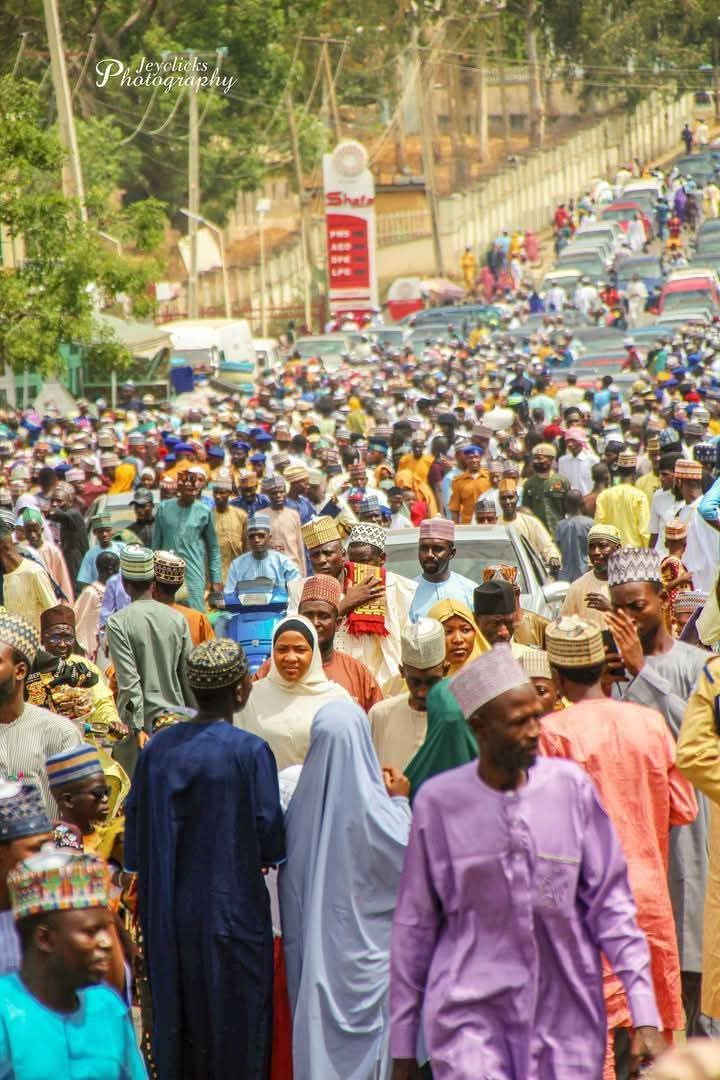
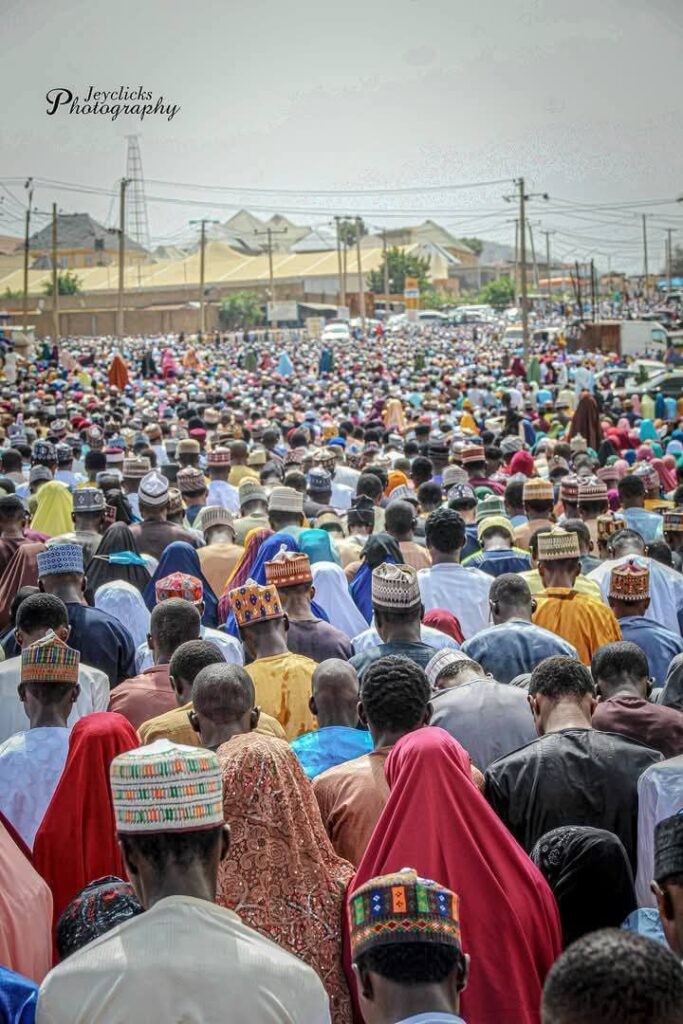
Jos Muslim faithful gathered at the Almohap Eid Ground in Jos to perform Eid-el-Fitr prayers marking the end of the Ramadan fasting exercise.
The prayer ground, located at Bauchi Road Junction, witnessed a large turnout of worshippers.Worshippers from Angwan Rogo, Angwan Rimi, Kwanan Shagari, Zinariya, Filin Sukuwa, Naraguta, and Ring Road, among others, converged to celebrate the occasion with devotion and unity.
The supplications marked the subtle conclusion of one month of fasting, reflection and prayers observed by millions around the world.Eid-el-Fitr was observed on March 20, 2026, following confirmation of the sighting of the Shawwal moon.
Although often described as the end of fasting, the occasion carries broader religious significance. It reflects continuity in worship, self-discipline, and responsibility towards others developed during Ramadan.
In his Khuduba (sermon) prior to the main prayers, Mallam Nasir Abdulmumin charged Muslims to sustain the various deeds, values and religious supplications beyond the holy month of Ramadan for sustainable growth and development.
He also urged parents to ensure the proper upbringing of their children and wards.Abdulmumin maintained that, “For us to get it right here and in the hereafter, we must continue to intensify prayers and support the less privileged in the society at every point in time irrespective of the race, religion and ethnic groups one comes from.”
At exactly 9:00am, the Chief Imam led the congregational prayers by observing two Rakats as tradition demands.He prayed for peace and unity in Plateau and Nigeria as a whole and urged Muslims and Christians, as well as members of the general public, to support security agents with useful information where necessary for lasting peace to continue to prevail in the state and the nation.
In an interview with THE NIGERIA STANDARD, Mallam Bashir Sabitu described the occasion as one of joy and celebration.
He said, “Today is a day of joy and celebration having gotten the privilege to spend Ramadan in Allah’s presence and for fulfilling our duty to the Almighty God to abstain from food, drink and sexual intercourse during daylight hours for a period of thirty (30) days.”
Another respondent, Abduljabbar Mudansir, said the period is a time to appreciate and enjoy the blessings Allah has given.He added that it is also a time to remember the less fortunate who may not have the means to celebrate the occasion.
For Mallama Hafida Kwaplong Halilu, the period is a time for increased worship and devotion to Allah. She added that it was also a time to show happiness and gratitude.
Another female worshipper, Inteesar Badamasi, described the occasion as an opportunity for those who have to assist the less privileged. She said such acts would please Allah and encouraged the Ummah to replicate the teachings and practices of Prophet Muhammad.
She listed visiting relatives, giving gifts, sharing meals and remaining steadfast in prayers as key practices.Young worshippers were seen taking photographs to preserve memories while children also celebrated their newly sewn native kaftans.
The supplications and celebrations were peaceful as security agents were seen deployed across the area.