



By NICK DAZANG
Generals formulate operational and battle plans, articulate strategy, enunciate military doctrines, and issue statements that often resonate through history.
Dwight David Eisenhower, who commanded the Allied Expeditionary Force, successfully led Operation Torch (1942–43) and Operation Overlord (January–August 1944), pivotal campaigns that contributed to the Allied victory in World War II.
Field Marshal Georgy K. Zhukov, awarded four Hero of the Soviet Union medals, fought in fourteen fronts and took Berlin on behalf of the Allies. Field Marshal Bernard Law Montgomery, famously known as ‘Monty,’ designed and participated in Operations Market Garden and Plunder and the Battle of the Bulge.
Field Marshal Erwin Rommel, alias The Desert Fox, predicted that the war between Germany and the Allied Forces would climax with a decisive clash at Normandy. Rommel confided to his aide, Hauptmann Helmuth, on April 22, 1944: “The first 24 hours of this war will be decisive… the fate of Germany depends on the outcome… for the Allies, as well as Germany, it will be the longest day.”
The war correspondent Cornelius Ryan later chronicled these events in the book The Longest Day. It is on account of such martial training, exposure, and the impact of their offices that when generals issue pronouncements, their remarks are subjected to careful scrutiny.
Controversial analogy
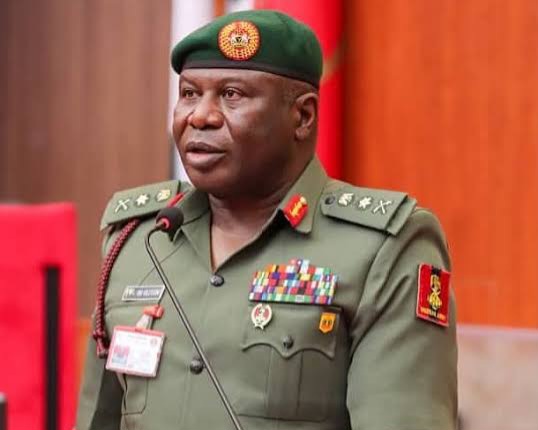
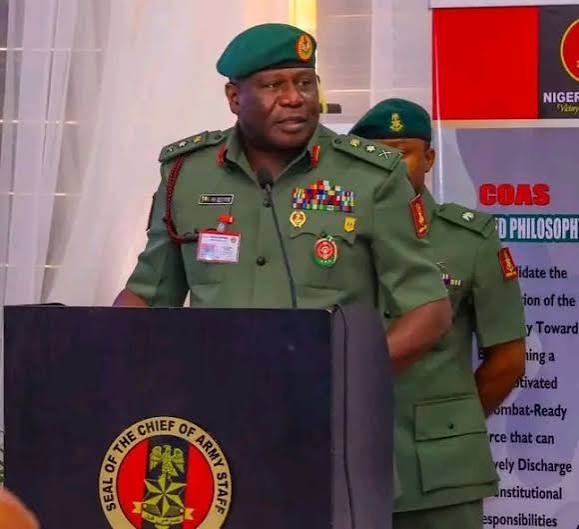
At the inaugural lecture of the newly established Joint Doctrine and Warfare Centre in Abuja, the Chief of Defence Staff (CDS), General Olufemi Oluyede, likened the acts of terror in Nigeria to the failings of the Biblical prodigal son.
He argued that perpetrators of terror deserve rehabilitation because they are Nigerians. He asked rhetorically: “But even in the Bible, we heard about the prodigal son. If there was not that window for the man to come back, would they have come back?”He then answered: “So the point is that these are Nigerians, mostly. And it’s important for us to give them that window to repent, if they want, rather than pushing them to the extreme.”
General Oluyede’s remarks prompted a revisit of the parable in Luke 15:11–32. The prodigal son requested his inheritance, journeyed to a far country, wasted his possessions, and faced famine. Yet, unlike Nigeria’s terrorists, he did not kill, abduct, or maim.
Human cost of terror
Since the Boko Haram insurgency began in 2009, at least 40,000 people have been killed in Borno State alone. Terror has disrupted farming, led to severe food insecurity, and caused cases of Severe Acute Malnutrition (SAM).
Bandits in the North West continue to extort taxes and tribute from local communities. Most local governments in Zamfara and Katsina states remain under the sway of these criminal groups.By early 2026, over 3.6 million Nigerians were in internally displaced persons (IDP) camps, with numbers likely higher given recent attacks.
These events have left enduring trauma across the country.Critics argue that General Oluyede’s comparison of terrorists to the prodigal son is inappropriate and offensive. People responsible for mass killings, kidnappings, and sexual assault should not be offered a window of repentance.
As the Bible warns: “…all who take the sword will perish by the sword.” Those affected by terrorist acts are given no choice or option to repent before suffering violence.
A call for accountability
The analogy also ignores the plight of victims. In the parable, the prodigal son’s faithful brother expressed resentment at his father’s generosity. Similarly, families who lost loved ones to terrorists may find such comparisons deeply offensive.
While generals often issue weighty and considered statements, critics maintain that General Oluyede’s remarks fall below the expected standard.
The Armed Forces, which have distinguished themselves in many theatres of conflict, should not be associated with statements that appear to coddle terrorists.
Until clarified or retracted, the comments risk suggesting that the government is prepared to offer leniency to those responsible for killing Nigerians in their thousands.
Dazang, OON, writes from Abuja via nickdazang@gmail.com