



By MARIAM WILLIAMS
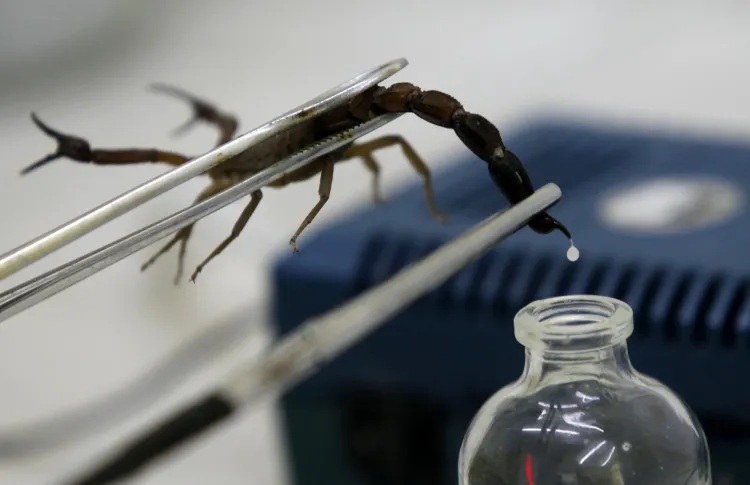
On the rocky fringes of Pankshin, Plateau State, where farmers once crushed scorpions underfoot in fear, a new line of business is unfolding. Today, those same venomous creatures are being carefully collected, bred and “milked” for a valuable liquid.
Scorpion farming is turning an age-old menace into an unlikely source of wealth, drawing rural farmers into an emerging industry at the intersection of agriculture and science.What was once dismissed as a dangerous desert pest is now at the centre of an agricultural enterprise.
A farmer, Swatshak Joseph, is now rearing scorpions under controlled conditions, tapping into global demand for their venom, one of the most expensive biological substances in the world.
Highly prized in the pharmaceutical, biotechnology and cosmetic industries, the venom is used in developing treatments for conditions such as cancer, multiple sclerosis and chronic pain. These resilient arachnids are nurtured from infancy to adulthood by Joseph, not for consumption or trade in hides, but for their potent venom.
Economic potential, farming process
Scorpion farming is translating into real economic opportunity. A well-managed colony can generate between ₦4 million and ₦6 million, offering a compelling alternative to conventional farming in a region where incomes are often uncertain.
For Swatshak Joseph, what began as curiosity has grown into a structured livelihood. Surrounded by an environment naturally suited to scorpions, he recognised potential in their abundance and began rearing them two years ago after learning about the rising demand for venom.
According to Joseph, the process is both delicate and deliberate. Young scorpions are captured and raised in secure, enclosed environments for several weeks before reaching maturity, which typically occurs within six months depending on the species, although some can take up to three years.
He explained that their diet consists of live prey such as grasshoppers, termites, crickets and small lizards, carefully sourced to ensure healthy growth.
However, he cautioned that scorpion farming is far from a casual undertaking and stressed that anyone interested must obtain proper licensing from relevant environmental or agricultural authorities, noting that failure to comply could lead to sanctions.
He also emphasised the importance of maintaining secure enclosures and situating farms away from residential areas to minimise risks.
Challenges, scientific insights
Despite the promise of high returns, the venture comes with its own challenges. Feeding remains a major hurdle, as farmers must consistently source live insects and small reptiles.
In addition, venom extraction, commonly known as milking, is labour intensive and yields only small quantities, meaning farmers must manage large colonies to produce commercially viable amounts.
A scientist, Miracle Udege, noted that scorpion venom contains a complex mix of proteins, enzymes and peptides, many of which are being studied for their therapeutic properties. The effectiveness of the venom often depends on the species, with certain types producing more potent compounds than others.
Among the most sought-after species are the Deathstalker and Emperor scorpions, both prized for the strength and uniqueness of their venom. Their cultivation has become increasingly attractive to farmers aiming to access higher-value markets.
Plateau State’s natural environment provides a distinct advantage. Its rocky terrain and favourable climate create ideal conditions for scorpions to thrive and reproduce rapidly.
A single female scorpion can give birth to between two and 100 offspring, allowing farmers to expand their colonies relatively quickly and sustainably. Beyond its economic potential, experts say scorpion farming could also contribute to public safety.
By reducing the number of wild scorpions in surrounding communities, the practice may help lower the risk of harmful encounters. Globally, thousands of deaths are recorded each year from scorpion stings, particularly in rural areas.
Future outlook, enterprise growth
Even so, the future of the industry is not without uncertainty. Advances in synthetic venom production could eventually reduce reliance on naturally harvested venom, potentially affecting demand and pricing.
For now, however, natural venom remains highly valued, sustaining the growth of the sector.In Pankshin, what began as an unusual experiment is steadily evolving into a viable enterprise. It proves that even the most feared creatures can become drivers of economic transformation if the relevant stakeholders explore the option.
Good morning, I just read your article on scopion farming, and will like to know whether you have scopion that are up to 7 Inc Long, particularly the black desert scopion?