


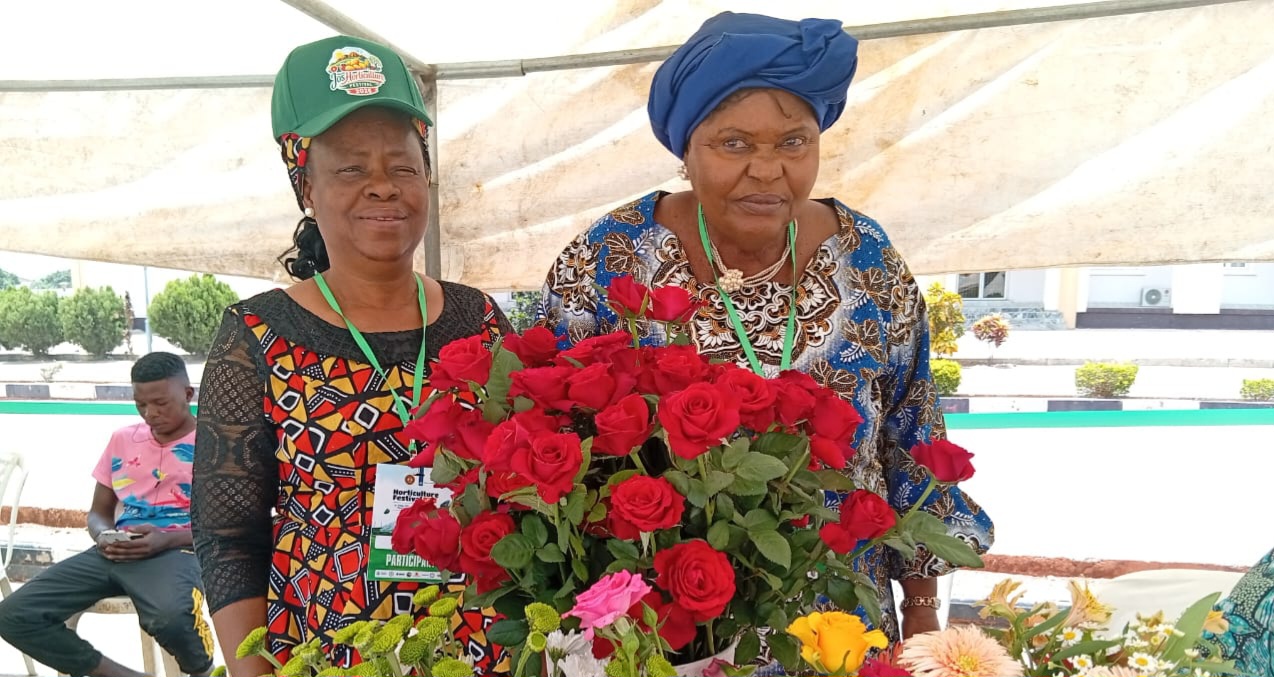

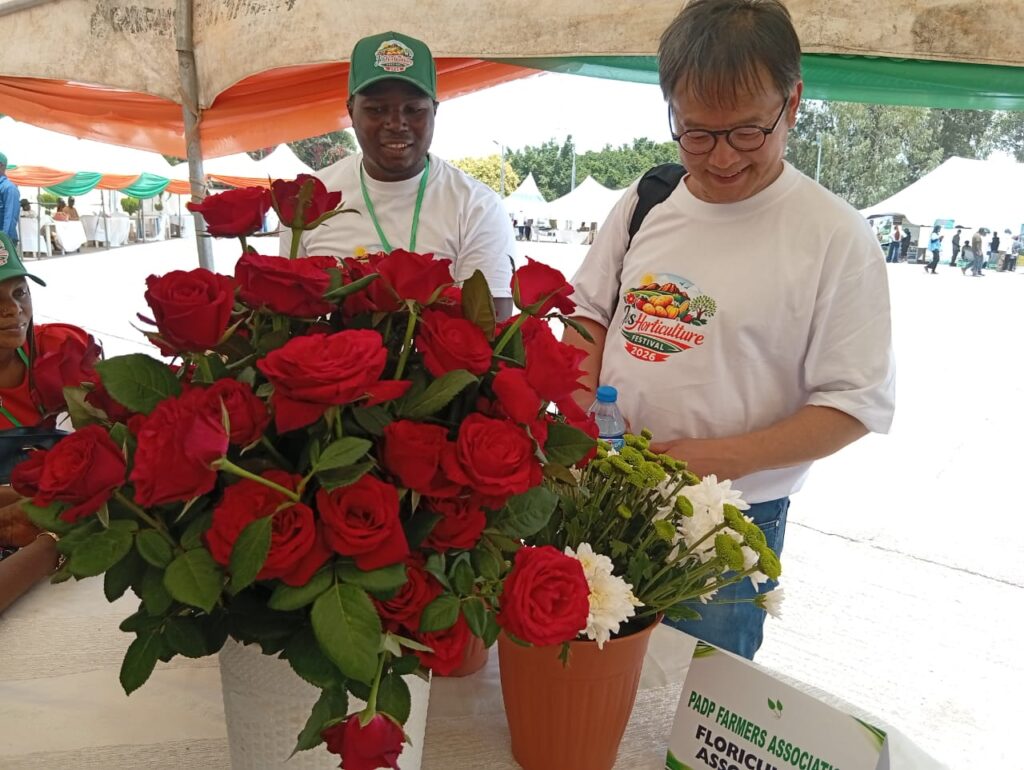
In this report, MARIE-THERESE NANLONG examines how women in Plateau State are breaking new ground in horticulture and floriculture, tapping into lucrative agricultural opportunities despite persistent funding challenges and limited government support
In the past, many people viewed farming as dirty work and avoided engaging in it whenever possible.The venture was often relegated to those with no other options, a perception that has gradually contributed to the food insecurity now affecting many households.
However, recent economic hardship has driven many back to farming, with those possessing the requisite knowledge embracing modern, less stressful approaches.Having realised that no society can thrive without agriculture, more women and youths are now engaging in smart farming, despite facing significant funding constraints.
These women, largely without government support, have diversified from traditional crops such as maize, rice and yam into horticulture and floriculture, which are emerging as key revenue earners.From pomegranates valued between ₦5,000 and ₦10,000 depending on size, to high-demand flowers, these women are tapping into a booming market, although they say the journey remains difficult.
Women driving innovation in agriculture

Speaking at the 2026 Horticultural Festival in Jos, a Plant Breeder and Physiologist, Dr Kyenpia Deshi of the Department of Plant Science and Biotechnology, University of Jos, and founder of Ritdun Integrated Farms and Resources, affirmed that women are redefining agriculture.
She cultivates exotic fruits such as apples, grapes, pomegranates, tamarillo and passion fruit, while also developing seedlings of rare species.
“People are shocked when they see what we produce,” she said.“But the demand is massive. We produce exotic fruits that are highly valued. Take pomegranate, for example; a single fruit sells between ₦5,000 and ₦10,000. We receive orders from Lagos and across the country, but we are unable to meet demand.”
According to her, agriculture has evolved significantly.“This is not the old kind of farming. There is serious money here, especially for women and young people. We sell our produce online and people place orders,” she explained.
“Agriculture is not limited to the traditional maize farming we grew up with. There are high-value crops that young people and women can cultivate and earn significantly from,” she added, urging increased participation in the sector.
However, despite the sector’s potential, coordinated support remains lacking, particularly in reviving the export of flowers, which thrived in the 1970s and 1980s.
Government promises, limited action
In August 2021, former governor Simon Lalong met with French investors in Jos and encouraged Plateau farmers to embrace flower cultivation due to its economic viability and international demand.
He promised support for interested farmers and noted that the Yakubu Gowon Airport had been designated as a cargo airport, which would facilitate seamless export, complemented by the Inland Container Terminal.
At the time, the leader of the French delegation, Yan Fortunato, expressed confidence in Plateau State’s agricultural potential, identifying areas such as potato production, flower export, cashew processing and forest development.
The delegation pledged to relay their findings to partners and return to advance the proposed partnership.
Similarly, in March 2024, Governor Caleb Mutfwang reiterated his commitment to transforming Plateau into Nigeria’s agricultural hub.
“With the current economic situation, we have no option but to return to agriculture,” he said.
“One of the key things we must pursue is the business of agriculture. We must take advantage of our rich potential to make Plateau the agricultural hub of Nigeria. The world is waiting for us to export flowers, strawberries, coffee, vegetables and other items. The market is there for us to explore.”
“Let me encourage our people to go back to agriculture, and as a government we will support this move. But there must be peace for people to farm, which is why we revived the Plateau Peace Building Agency and taken other measures to guarantee farmers’ security.”
Despite these assurances, many stakeholders argue that tangible results remain elusive.
Julie Makama, a floriculturist and owner of Plants Alive Farm, described Plateau State as a goldmine that remains underutilised.
“Flowers are big business worldwide,” she said.“In some countries, it is like oil. But here, it is all talk. We attend seminars and exhibitions, but nothing changes. Government keeps promising export, but there is no action.”
She stressed that the sector requires real investment rather than rhetoric.“We need greenhouses, training and funding. Without that, we cannot compete globally. We are getting weary of seminars and exhibitions with no concrete outcomes,” she maintained.
Briskila Gwashi of Majesty Farms, who specialises in cut flowers, echoed similar concerns, noting that despite growing demand, many farmers struggle to expand.
“We were happy when we heard Plateau would be put on the horticultural map. But talks alone will not build this sector. Government should identify committed farmers, provide greenhouses, bring in consultants and offer training. That is how the sector will grow,” she said.
She revealed that even local demand exceeds supply.“We cannot meet demand in Abuja and Lagos, let alone think of export. That is how big this opportunity is. Yet, many operators are left on their own.”“We need mentorship, capacity building and real support. Right now, we are pushing with what we have,” Gwashi added.
She further noted that the absence of structured support leaves many practitioners navigating the sector with limited guidance.
“Even those of us already in the business need mentorship and capacity building. It often feels like we are operating blindly,” she stressed.
Untapped potential amid persistent challenges
A delegation from the Kingdom of the Netherlands also visited Plateau State, with the country’s Ambassador to Nigeria, Bengt van Loosdrecht, noting that the state’s natural endowments make it well-suited for large-scale horticulture.
Responding to stakeholders’ concerns, the Plateau Agricultural Development Programme (PADP) said efforts are ongoing to attract investors and create opportunities.
Programme Manager Ishaku Jilemsam explained that the focus is on linking farmers to markets and financing rather than direct government investment.“We are creating an enabling environment for private sector growth,” he said, pointing to plans for an agro-processing zone and the utilisation of the cargo airport at Yakubu Gowon Airport in Heipang, Barkin Ladi Local Government Area.
“This is a private sector-driven approach. Our role is to connect farmers with investors and markets,” he added.“These products need to move quickly. With the right infrastructure, flowers harvested at night can reach European markets within hours.”
He emphasised that improving access to investment opportunities and strengthening market linkages would enhance production capacity.
However, for many women in the sector, these plans remain largely unfulfilled promises.Despite the challenges, they continue to push forward, striving to position Plateau State as a hub for horticulture and floriculture.
They have called on more women, youths and investors to explore the sector, noting that while the market is ready, the necessary support is lacking.
Their resilience continues to sustain growth, but unlocking the sector’s full potential will require more than determination—it will demand strategic investment, capacity building and sustained collaboration.