



By MARIE-THERESE NANLONG
In Nigeria’s evolving labour landscape, spanning construction sites, mechanic workshops, farms, transport systems, and other sectors, women in Plateau State are gradually dismantling long-held stereotypes about “men’s work” and carving out spaces in unlikely professions.
Their stories, defined by resilience and determination, stand in contrast to persistent structural inequalities highlighted in global data.
According to the World Bank’s Nigeria Gender Data Landscape 2026, only 10.5 per cent of Nigerian women are engaged in wage and salaried employment, compared to 17 per cent of men.
While female labour force participation stands at 80.7 per cent, most women remain concentrated in informal, low-paying jobs with limited security.
Despite these barriers, many women are redefining narratives through persistence, striving daily to make ends meet and assert their place in the workforce.
Breaking new ground in unlikely professions
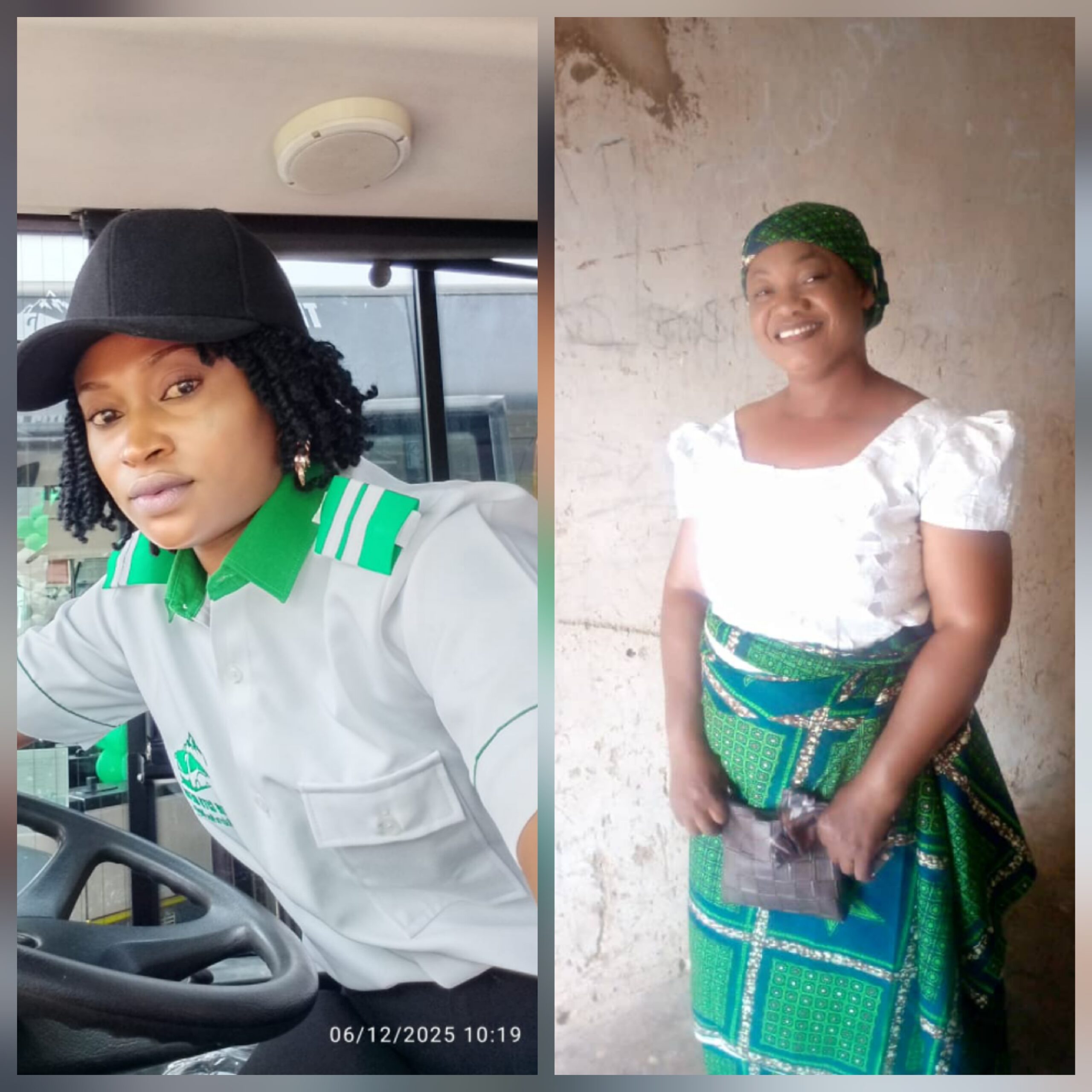
Among the most compelling testimonies is that of Nanbam Luka, a trained mechanic and Metro bus driver in Jos.
Her journey has been anything but linear.
After undergoing technical training in Kaduna, sponsored by the then Chairman of Mangu Local Government Area, now Governor of Plateau State, Caleb Mutfwang, disruptions in local governance stalled planned opportunities.
Undeterred, she sought practical experience at the mechanic village in Apo, Abuja, before eventually returning to Jos, where she secured a role as a Metro bus driver.
Her first application was unsuccessful.
Rather than give up, she reapplied and was eventually employed.
Today, she not only drives but continues to refine her mechanical skills.
She is one of just two women among over 30 drivers engaged.
This disparity persists despite international frameworks such as the United Nations Convention on the Elimination of All Forms of Discrimination against Women, which affirms women’s rights to freely choose professions, access training, and enjoy equal working conditions.
Passengers, she admits, are often hesitant at first.
“They will be scared when they enter,” she said, “but when they see me drive perfectly without any issue, they are happy.”
She noted that her supervisors now commend her performance, a testament to her competence and perseverance.
Her experience underscores a recurring reality: that women often have to exceed expectations to gain the same recognition afforded to men.
“When women put their minds to their jobs, they can give the very best,” she said, urging society to provide equal opportunities.
Challenging stereotypes across communities
Across Plateau State, similar stories are emerging.
Loveth Ugochukwu has built a niche in the production and sale of caskets, an unusual trade for women.
A mother of four who was initially trained in tailoring, she ventured into the business over a decade ago, despite scepticism.
“This is a normal business like any other. Although women are not many in this line of trade, they are welcome if they choose to engage in it. My male colleagues relate well and work with me,” she said.
About five years ago in Bwai, a rural community in Mangu Local Government Area, Mrs. Nanman Nanfwang did not set out to become a vulcaniser.
What began as an effort to support her husband in his mechanic workshop gradually evolved into a full-time trade.
She recalled that she initially faced scepticism, as customers preferred to wait for her husband.
Over time, however, her skill and consistency earned their trust.
A similar story of persistence is found in Blessing Freejob, who specialises in Plaster of Paris, screeding, and painting.
Her interest was sparked while working as a labourer on a building site.
Determined to succeed, she undertook three years of training, despite ridicule from peers and resistance from her family.
Today, those same critics celebrate her success, as her skills attract growing demand.
Fight for equal recognition
Their experiences collectively reinforce a simple message: that dignity lies in honest work, not in conforming to societal expectations.
However, gender advocate Patricia El-sam lamented the uneven acceptance of women in roles traditionally reserved for men.
“There is a persistent need for women to prove themselves. Men in similar roles are rarely subjected to such scrutiny,” she said.
Offering advice, Nanbam Luka emphasised the need to break barriers.
Her words: “There should be no discrimination in work. If women make up their minds, they can do it. There is no job that is the exclusive reserve for men any longer. You do any work that comes your way so that you can meet your needs.”
The growing presence of women in traditionally male-dominated trades across Plateau State signals a gradual cultural shift.
The women’s stories reflect a generation unwilling to be confined by outdated norms, choosing instead to redefine what is possible.
As Nigeria continues to grapple with economic pressures and employment challenges, the resilience of these women proves that talent knows no gender and that equal opportunity can transform lives.