




By MARIE-THERESE NANLONG
In many parts of Plateau State, inheritance is more than a legal process; it is a deeply rooted cultural practice tied to identity, lineage and family continuity.
Yet, for generations, that same system has excluded a significant part of the family—women—from its benefits and privileges.
For widows and daughters, the loss of a husband or father can mark the beginning of another painful experience: being denied access to property they helped build or were born into. Homes are lost, farmlands are taken over and livelihoods are disrupted, often justified by long-standing traditions.
A report from the State Gender Commission illustrated how a family in Jos South sold a property for about N50 million but allocated N500,000 each to the two female members, while the four male members shared the remainder, until the sharing formula was later contested.
Now, a proposed law before the Plateau State House of Assembly is seeking to change that narrative, offering hope to many women whose stories have remained unheard for too long.
Proposed law seeks to redefine inheritance rights
The legislation, titled, ‘A Bill for a Law to Provide for the Protection and Regulation of the Rights of Women and Girls in Plateau State to Inherit the Property, Benefits, and Privileges of Deceased Husbands and Parents, and for Other Related Matters 2025’, is designed to address long-standing inequalities.
More than just a legal document, the bill represents a shift in thinking—one that recognises women as equal stakeholders within the family.
Support for the bill has come from a wide range of institutions and groups, including the Plateau State Gender and Equal Opportunities Commission, the National Human Rights Commission, the Nigeria Union of Journalists, the Public Complaints Commission as well as religious bodies, traditional institutions and government ministries.
Their backing signals a growing consensus that inheritance rights are not only cultural issues but also matters of justice and human dignity.
Olivia Dazyam, Chairperson of the State Gender and Equal Opportunities Commission, emphasised that the proposed law was about fairness within families, reflecting the concerns of many advocates who believe cultural norms must evolve when they conflict with fundamental rights.
From a human rights perspective, Pukuma Uko of the National Human Rights Commission noted that inheritance rights are closely linked to economic security and social inclusion, stressing that women—particularly in rural areas—remained vulnerable without them.
Balancing culture, law, gender equality
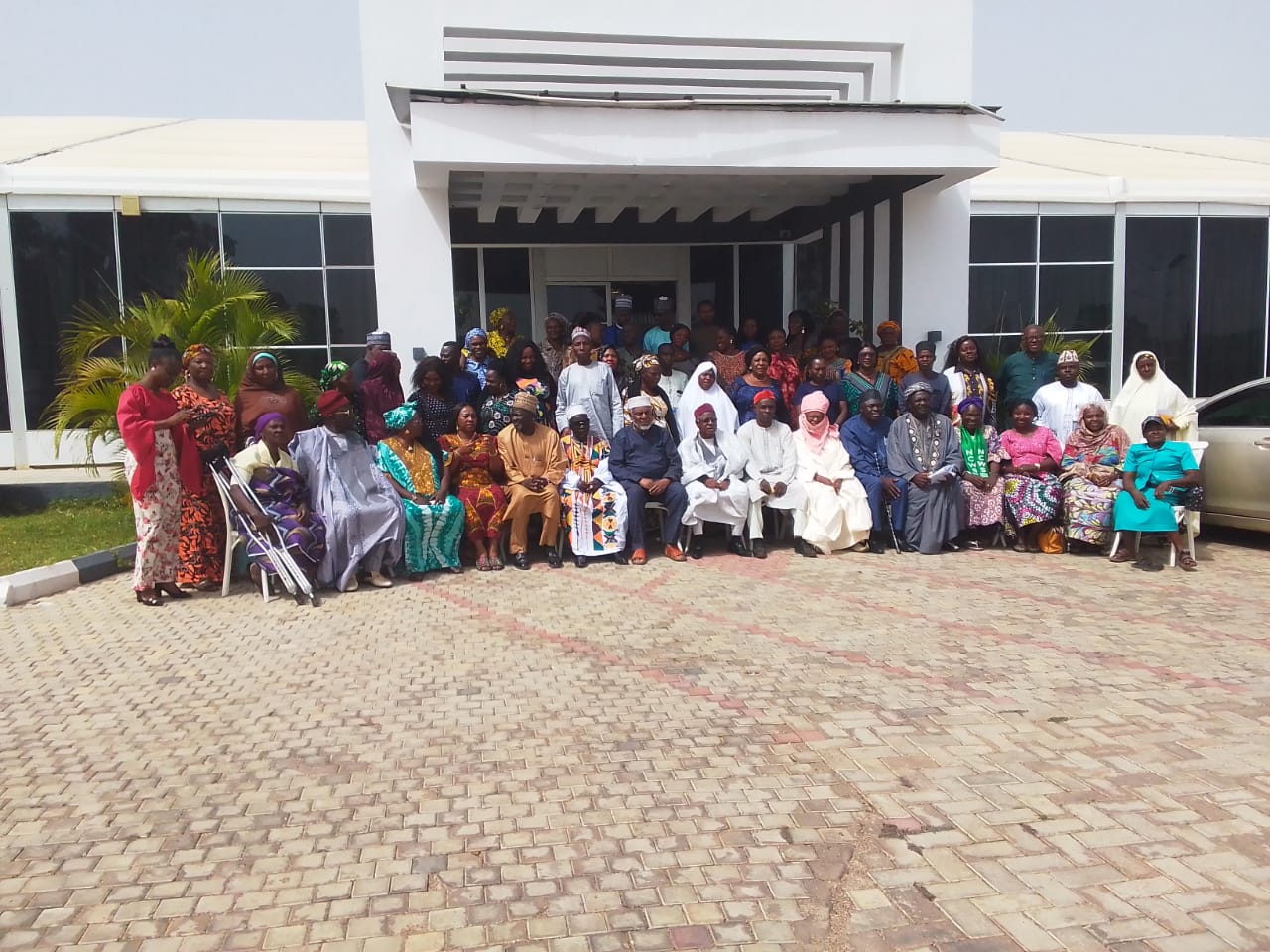
During a public hearing on the bill, stakeholders expressed strong support while also acknowledging the need for careful implementation.
Legal practitioners, including representatives of the Public Complaints Commission, the Nigerian Bar Association and the International Federation of Women Lawyers, stressed the importance of clarity in the law’s provisions to avoid misinterpretation and ensure effective enforcement.
Religious leaders urged respect for established legal frameworks such as Islamic personal law, while traditional rulers called for sensitivity to customary land systems that have long governed community life.
The District Head of Heipang, Da Paul Tok, underscored the importance of balancing reform with cultural realities, reflecting broader concerns about introducing change without disregarding long-held traditions.
Yet many stakeholders maintained that tradition should not be used to justify inequality.
As Itse Izang, a participant at the hearing, observed, fairness must remain the guiding principle if society is to progress.
Law seen as tool for economic empowerment
Beyond questions of rights, stakeholders also pointed to the development implications of reform. Evidence shows that when women have access to property, they are more likely to invest in their families, support children’s education, improve healthcare and enhance overall wellbeing.
Leah Hassan of the Nigerian Bar Association in Jos noted that strengthening women’s economic position ultimately strengthens families and communities.
However, stakeholders stressed that having the law is only the first step.
Awareness and enforcement will play a crucial role in determining its impact, as many women remain unaware of their rights or are reluctant to speak out due to stigma and social pressure.
Ayuku Pwaspo, Chairman of the State Council of the Nigeria Union of Journalists, NUJ, noted that weak legal protections have allowed such injustices to persist largely unnoticed, adding that a stronger legal framework would promote accountability.
Encouragingly, security agencies, including the Police and the Nigeria Security and Civil Defence Corps, have pledged to enforce the law once enacted, offering some assurance that it will not remain on paper.
Still, meaningful change will require sustained engagement with communities, as shifting long-held beliefs takes time, dialogue and continuous advocacy.
As the Plateau State House of Assembly moves closer to finalising the bill, expectations continue to rise.
For many women, the proposed law represents more than a policy shift—it is an opportunity to reclaim dignity, security and belonging within their families and communities.
Ultimately, the push for inheritance rights in Plateau State is about more than property. It is about equality, dignity and ensuring that no woman is left without a home simply because of her gender.
If passed and effectively implemented, the law could redefine the future for countless women and girls, making inheritance a right for all rather than a privilege for a few.