



BY DAN MANJANG
In a country where darkness has long overstayed its welcome, the announcement of a ₦3.3 trillion power debt approval feels less like policy and more like a plot twist in a tragicomedy. One would think that with such a staggering sum, the sun itself might be persuaded to clock in for night shifts.
But, alas, in Nigeria, even trillions are no match for the stubbornness of epileptic power supply.
The approval came with the usual fanfare—press statements polished to a mirror shine, officials nodding gravely as though they had just unlocked the secret to perpetual light. Yet seasoned veterans of unfulfilled promises merely adjusted their generators and carried on.
After all, they have heard this song before; only the chorus changes, never the tune.
A trillion-naira mystery
What exactly constitutes a ₦3.3 trillion “power debt” remains a mystery wrapped in bureaucratic poetry. Is it the debt owed to generation companies? Distribution companies? Or perhaps a metaphysical debt owed to darkness itself for daring to challenge its dominance?
In Nigeria, clarity is often sacrificed at the altar of complexity.
Naturally, the announcement has sparked optimism in some quarters. Hope, after all, is the most renewable energy source in the nation. Citizens have begun to imagine a future where they can iron clothes without consulting a generator, or watch television without the suspense of sudden blackouts. It is a beautiful dream—cinematic, even.
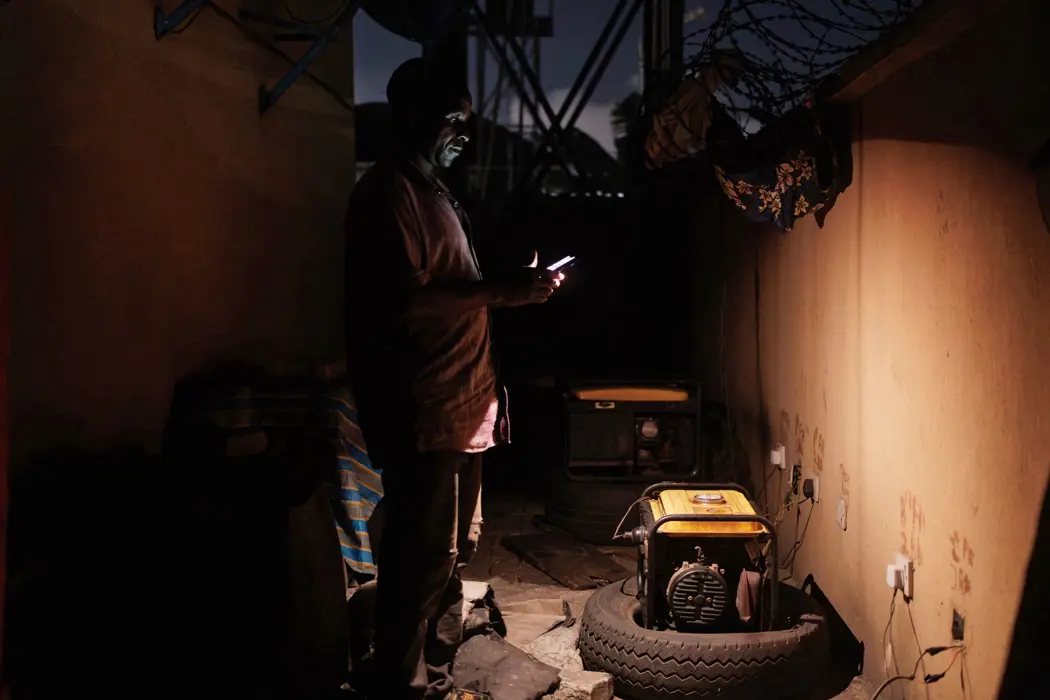
Meanwhile, the generators—those faithful and ubiquitous companions of Nigerian households—watch this development with suspicion. For decades, they have been the true ministers of power, humming tirelessly in backyards and balconies.
One can almost hear them whisper: “₦3.3 trillion? Let’s see who lasts longer.”
Generators, discos, the theatre of blame
The distribution companies, discos, often cast as villains in this ongoing saga, now find themselves in an awkward position. With such a colossal debt being acknowledged, they must decide whether to rejoice or brace for yet another round of public scrutiny. After all, in the absurd theatre of Nigerian electricity, blame remains the most transferable commodity.
And then there are the experts, armed with graphs, jargon and carefully calibrated outrage. They dissect the announcement with surgical precision, explaining how tariffs, subsidies and inefficiencies have conspired to produce this monumental figure.
Yet, for the average citizen, the equation remains painfully simple: light or no light.
Politicians, on the other hand, have seized the moment with characteristic enthusiasm. Speeches are being crafted, promises rehearsed and credit quietly claimed. In the grand tradition of governance, success is anticipated long before it materialises, while failure is pre-emptively reassigned to unnamed predecessors.
One cannot ignore the role of history in this unfolding drama. Nigeria’s power sector has been a revolving door of reforms, each more ambitious than the last. From privatisation to deregulation, from roadmaps to recovery plans, the journey has been long on rhetoric and short on illumination.
Hope, history, the question of impact
Yet there is something uniquely Nigerian about the resilience on display. Businesses have adapted, households have improvised and life continues to grind on, defying darkness. The ₦3.3 trillion debt, impressive as it sounds, must now contend with a population that has mastered the art of survival without reliable electricity.
Of course, the international community watches with mild curiosity. For them, such figures are case studies, data points in reports on emerging economies.
For Nigerians, however, it is a lived reality that affects everything from education to healthcare, from industry to leisure.
As the dust settles, questions begin to emerge. How will the funds be utilised? Who will be held accountable? And, most importantly, will this finally translate into consistent power supply? These questions, like many before them, may linger longer than the outages themselves.
Meanwhile, in the corridors of power, optimism remains the official policy. The approval is framed as a bold step, a necessary intervention, a turning point. Yet outside those corridors, scepticism reigns supreme, tempered only by the faint glow of possibility.
Perhaps the greatest irony is that in a nation so rich in energy resources, darkness has become a defining feature. The ₦3.3 trillion debt is not just a financial figure; it is a symbol of systemic challenges that money alone may not resolve.
And so, the nation waits—half in hope, half in amusement. For in Nigeria, every grand announcement carries with it a hint of satire, a reminder that reality often outperforms fiction.
Whether this latest chapter ends in light or laughter remains to be seen. Until then, the generators will keep humming and the people will keep watching—sometimes in total darkness. But never without a sense of humour.
Manjang, mnipr, MDIV, former Commissioner of Information and Communication, Plateau State, writes from Jos via dmanjang@gmail.com