



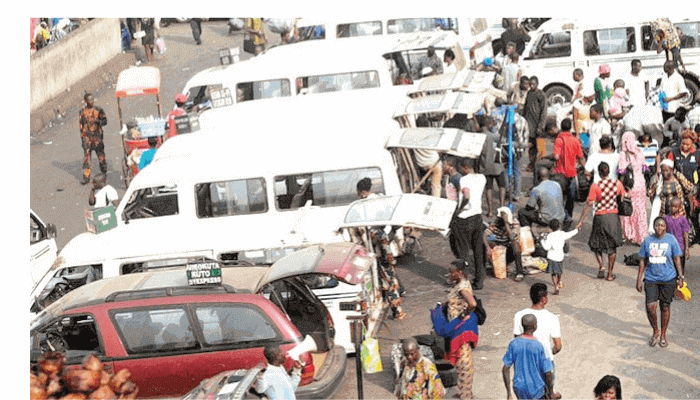
JENNIFER YARIMA writes on how Nigeria’s widely used informal waybill system has become a lifeline for millions seeking cheaper and faster parcel deliveries, while exposing drivers and passengers to growing risks linked to crime, trafficking and insecurity on the nation’s highways
For many Nigerians, the “waybill” system has become a trusted means of sending goods and parcels through commercial drivers from one location to another.
Long travel distances, poor road infrastructure, armed banditry and dangerous highways have pushed many citizens towards this informal but efficient delivery method.
Under the arrangement, parcels are handed to commercial drivers for negotiable fees that are often cheaper than charges imposed by formal courier companies.
For traders, students and families, the system reduces both cost and risk. This is becasuse there is no need to endure repeated checkpoints or pay high logistics fees.
Drivers travel through towns daily, ensuring parcels reach destinations quickly, including remote areas often ignored by conventional courier firms. Many routes rely on familiar drivers and park officials, creating confidence built over years of dependable service.
Growing risks for drivers, passengers
Despite its usefulness, the system is increasingly being exploited by criminal elements. Weapons, ammunition, contraband goods and hard drugs are now reportedly concealed inside grain sacks or sealed cartons.
In many cases, drivers or park officials handling parcels rarely inspect the contents. Some rely on the sender’s word, while others fear losing customers if they ask too many questions.
At security checkpoints, however, innocent drivers risk arrest when illicit items are discovered. Several drivers have reportedly faced detention or prosecution over shipments they knew nothing about.
The system has also allegedly been used for trafficking children and vulnerable adults to unknown destinations under false promises of better opportunities. Some desperate parents hand over their children willingly, while others are deceived by traffickers.
These syndicates often negotiate fares with unsuspecting drivers, drop victims at agreed points and disappear.
Mrs Joyce Kumtap, a retired nurse, said the waybill system helps in emergencies and saves travellers both money and risk.
“It’s sad that some drivers overcharge and exploit people who use this medium, irrespective of distance,” she said.
“This medium is aimed at easing burdens, but sadly, selfish individuals have found it a route to traffic innocent people to unknown destinations. Drivers need to be considerate and charge moderately to assist people during this hard time,” she added.
Voices from the parks, formal sector response
Rotgak Gotau, who operates transport routes across the 17 local government areas of Plateau State and beyond, explained that the system had existed for years, but parcel concealment had become a major concern.
He said: “Some customers don’t disclose the true nature of what they want you to deliver. Most times when you meet security personnel or National Drug Law Enforcement Agency operatives on the highway, they discover an item different from what you were initially told.”
He added that some drivers had to bail themselves with as much as N100,000.00 after being caught with parcels for which they received only one thousand naira.
He also complained about delays by recipients in collecting parcels, saying such behaviour disrupts transport schedules and affects business operations.
At Old Airport Park, Jos, Plateau State, he said, drivers make efforts to investigate any child being moved to another destination by collecting contacts of both sender and receiver.

Meanwhile, Nenfort Andrew Gonpil, Head of Plateau Express Logistics Service under Plateau Express Service Group of Companies, said formal operators were providing safer alternatives.
He explained that waybilling allows senders to move goods without travelling, while the safety of the items remains in the custody of the company.
He maintained that the service was useful during emergencies involving urgent documents or perishable goods.
“Value, size and weight of items such as farm produce, building materials and general household items are analysed to come up with appropriate charges,” he stated.
“We make a thorough check, which is our standard practice, on the content of items to ensure there is nothing harmful or dangerous,” he added.
He disclosed that the subsidiary became operational and extended services to Abuja in August 2025, with plans to expand to other states when necessary arrangements are completed.
Gonpil, however, noted that some drivers still create problems.
“Most drivers love to cut corners and land themselves in trouble; they go out of their way to collect contraband materials to get fast money,” he said.
Need for regulation, awareness
Stakeholders say transport companies must enforce inspection procedures and documentation and urged them to insist on checking parcels before accepting them.
Park unions are also encouraged to register senders properly and maintain manifests that can be produced at checkpoints.
Experts believe government support through regulation rather than raids would help secure a system relied upon by millions of Nigerians.
Until a balance is struck between convenience and safety, Nigeria’s road delivery network may continue to move the economy forward while turning honest drivers into unintended couriers of crime.