



By PALANG KASMI
Since the emergence of Artificial Intelligence (AI), a vast range of users—including children, students, researchers, organisations, security agencies and governments—have embraced it as a major tool for assistance in various tasks. From education and healthcare to communication and security, AI has rapidly become part of daily life.
Yet, beneath its growing popularity lies an increasing concern about how AI technology and social media are affecting the academic performance, reasoning ability and social lives of children and students. Many observers fear that instead of helping young minds to grow, these tools may be weakening concentration, originality and human interaction.
These fears have already prompted countries such as Australia to ban children under 16 from using major social media platforms including TikTok, X, Facebook, Instagram and YouTube. Australia became the first country to take such a step, while others are considering similar restrictions over the health and safety of minors.
According to Encyclopaedia Britannica, AI refers to the ability of a digital computer or machine to perform tasks normally associated with intelligent beings. These include reasoning, learning, problem-solving, recognising patterns and drawing conclusions from experience.
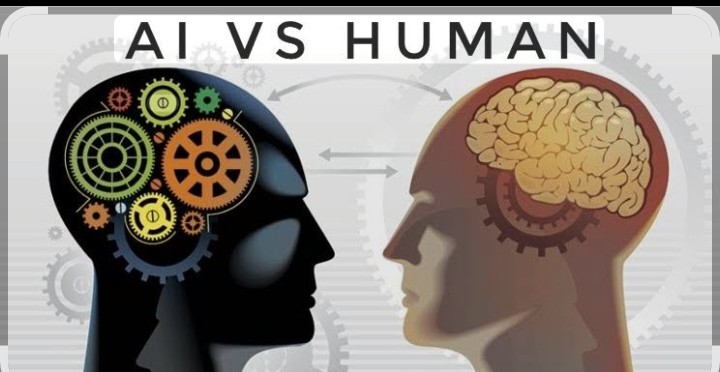
Has AI replaced human thinking?
Since the 1940s, computers have been programmed to carry out highly complex assignments such as proving mathematical theorems or playing chess at elite levels. However, despite dramatic advances in computing power and memory, no machine has yet matched the full flexibility of the human mind across wide areas of knowledge and everyday life.
Even so, specialised AI systems now perform at levels comparable to experts in narrow tasks. They are used in medical diagnosis, search engines, speech recognition, handwriting recognition and chatbots.
Today, the world mainly relies on Artificial Narrow Intelligence (ANI), which is designed for specific functions. Research continues into Artificial General Intelligence (AGI) and Artificial Super Intelligence (ASI), which would go beyond current limitations.
While AI can increase productivity and simplify routine work, it also presents risks such as bias, misinformation and overdependence, especially when systems are trained on poor-quality or unbalanced data.
How students are affected
Experts believe that although AI can add value to Nigeria’s education sector, it also raises serious questions about academic integrity, the role of teachers and unequal access to technology.
Across primary, secondary and tertiary institutions, students are increasingly accused of misusing AI for assignments, tests and research work. Critics warn that this trend is reducing originality and weakening critical thinking skills.
Dr Joseph Tsenkwo, an economist and lecturer in the Department of Economics at the University of Jos, said AI was created to accelerate development but now poses ethical concerns.
“Frankly speaking, though it offers positive advantages and allows one to obtain information and answers instantly, AI has affected our children and students negatively,” he said.
“Rather than treating it as a technology meant to assist, it is being used as a replacement for the innate ability of our students. Remove artificial intelligence from their devices, and they are as empty as snail shells. This over-reliance on AI has deprived them of the ability to think critically and independently,” he lamented.
Dr John Dogara Ogoshi of the Department of Mass Communication at the Federal University of Lafia expressed similar concerns, describing AI as a double-edged sword.
“On the positive side, students can access valuable lecture materials through relevant AI tools to acquire knowledge in their disciplines. AI helps students complete continuous assessments and keeps them up to date with information in their fields of study,” he explained.
However, he warned that AI also encourages laziness.
“Many students do not read nowadays or think critically as they did in the past, before the advent of AI. Consequently, they find it difficult to engage in empirical studies. Most Nigerian students today rely heavily on AI tools to conduct their research.”
He also pointed out that many AI platforms generate false or non-existent citations: “Many of our students are unaware of this and engage in copy-and-paste exercises. They copy whatever the AI produces hook, line and sinker. This attitude severely affects a student’s ability to think critically, which is the very basis of learning.”
According to him, scholarship is rooted in rational and critical thinking, qualities that excessive dependence on AI may gradually destroy.
Addressing the challenge
AI adoption is projected to rise sharply across sectors such as ICT, accommodation, food services and construction. But in education, experts say responsible use must be prioritised.
Dr Ogoshi advised that one major solution is to encourage students to return to reading books and engaging with physical texts. He said lecturers can also design assignments that require personal reasoning rather than machine-generated responses.
He disclosed that some lecturers now deploy AI-detection tools to identify AI-written submissions, while students found guilty are reprimanded or punished.
He further supported restrictions similar to those adopted by Australia and urged the Federal Government to regulate when students should be permitted to use AI tools for academic purposes.
“There should be regulations. Minors have no business with AI tools. Instead, they should be provided with educational materials that facilitate learning at their specific age. The usage of AI tools by minors is a sure way to produce docile children in the future,” he said.
Dr Tsenkwo also called for action at national and household levels.
“First, the government should regulate the use of AI through official policy. Secondly, restrictions should be placed on age limits. It is not just AI, but the mobile devices that harbour these applications that need oversight,” he said.
He added that some lecturers now require students to include local examples in research and defend their work physically in person.
“We also assess students by their ability to interact and demonstrate their capabilities in person,” he said.
A report by the Center for Democracy and Technology titled, ‘Schools’ Embrace of AI Connected to Increased Risks’ found that 85 per cent of teachers and 86 per cent of students used AI during the 2024–25 school year.
Half of the students surveyed said using AI in class made them feel less connected to their teachers. Reduced peer-to-peer relationships were also cited as concerns by teachers and parents.
Another major finding showed that 70 per cent of teachers worry that AI weakens critical thinking and research skills.
The lesson is clear: AI can be a powerful servant, but if left unchecked, it risks becoming a poor substitute for the human mind. This should be a clear warning to society as a whole.