



SEKYEN WALSHAK examines the growing wave of defections into the ruling All Progressives Congress (APC), the changing balance of power across Nigeria and the rising concerns over representation, zoning and insecurity as the country gradually moves towards the 2027 general elections. She argues that while the shifts may appear lawful and strategic, they also raise deeper questions about democratic competition, institutional strength and the future of accountable governance.
Nigeria’s political environment is undergoing significant changes as defections, power consolidation, zoning disputes and concerns over insecurity continue to dominate public discourse ahead of the 2027 general elections. Across the country, a growing wave of defections into the ruling All Progressives Congress (APC) has altered the political balance, while in Plateau State, debates over representation, fairness and democratic accountability are becoming increasingly intense.
The movement of politicians from opposition parties into the APC between 2023 and 2026 has reshaped the national political landscape in ways many observers describe as troubling. What was once seen as routine political migration has now become faster, wider in scope and more consequential.
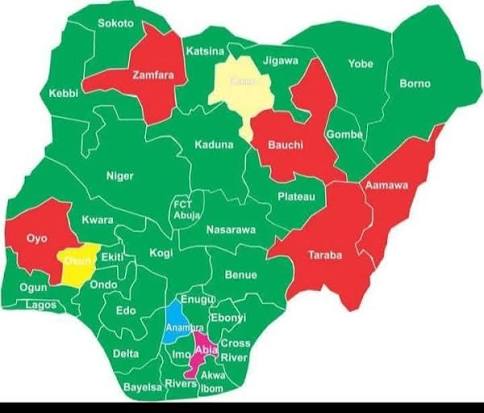
Across Nigeria, prominent politicians have defected from opposition parties such as the Peoples Democratic Party (PDP) and the Labour Party (LP), strengthening the ruling party’s grip on power. At present, the APC controls no fewer than 31 of the country’s 36 states, marking an unprecedented concentration of political influence.
In Plateau State, the political terrain shifted further when Governor Mutfwang formally resigned from the PDP in December 2025 and joined the APC alongside key members of his administration. The move generated widespread debate, particularly over fears that Nigeria may be drifting gradually towards a one-party state as the next elections draw nearer.
Many residents are also expressing concerns beyond party dominance, with issues of zoning, equitable representation and constituency balance resurfacing alongside anxieties over insecurity in Plateau and across the country.
Debate over one-party state claims
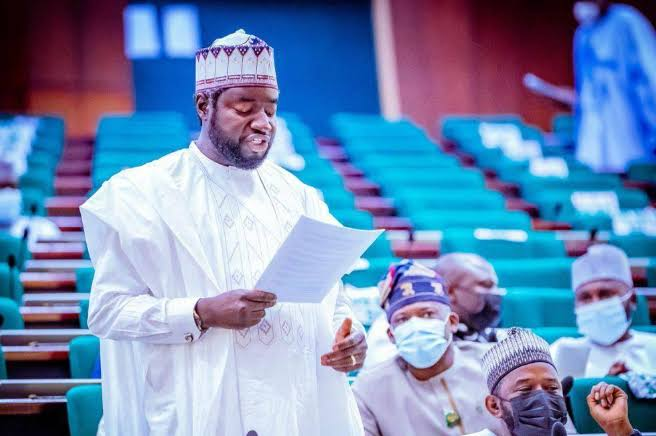
Amid these concerns, the lawmaker representing Pankshin, Kanke and Kanam Federal Constituency, Hon. Yusuf Gagdi, dismissed suggestions that Nigeria was becoming a one-party state.
Speaking during a recent media interaction at his residence, Gagdi argued that defections into the APC were constitutional and that every politician had the right to belong to any party of choice. He cited the continued existence of multiple political parties and the role of the Independent National Electoral Commission (INEC) as evidence that Nigeria remained a multi-party democracy.
“It is their constitutional right to join any party they want. You cannot expect the president to stop governors from exercising that right,” he stated.
He also rejected claims that President Tinubu was orchestrating a political takeover ahead of 2027.
According to him, politicians were joining the APC voluntarily because they believed in the party’s strength and performance.
“Where did you see him tell any governor, ‘You must join APC’? Nobody is forced. People are joining because they believe the party is doing well,” Gagdi added.
However, critics insist that while the defections may be legal, they raise wider concerns about political balance, competition and democratic accountability.
Zoning tensions in PKK constituency
In Plateau’s Pankshin, Kanke and Kanam (PKK) Federal Constituency, zoning has become a major source of controversy.
Recently, hundreds of residents in Pankshin reportedly protested against Gagdi’s alleged third-term ambition, insisting that political power should rotate among the three local government areas.
The protesters maintained that leadership should not remain with one individual beyond two terms and argued that the constituency had long operated on principles of fairness and rotation. They also said there was an earlier gentleman understanding that the seat would rotate after a set period.
But Gagdi strongly disagreed, insisting that zoning had never been formally practised in the constituency. According to him, since 1999, all three local government areas had freely contested elections without restriction.
He also defended his right to seek re-election for a third term, describing the protests as politically motivated.
“The Constitution does not limit how many times I can contest. The real protest is at the ballot box. Go and convince the people. Those who organise protests are those who lack the capacity to win elections,” he said.
The lawmaker further argued that all parts of the constituency had benefited under his tenure, saying development and opportunities were not limited to any one area.
He cited federal appointments secured for constituents in agencies such as the Nigerian Communications Commission (NCC), the Nigerian Maritime Administration and Safety Agency (NIMASA) and the Asset Management Corporation of Nigeria (AMCON), noting that the constituency previously had little or no presence in those federal institutions.
Insecurity, the future of Plateau politics
On insecurity, both nationally and within Plateau State where banditry and violent attacks remain serious concerns, Gagdi advanced a controversial view, attributing much of Nigeria’s security crisis to foreign elements.
“Eighty percent of Nigeria’s insecurity, to me, is created from outside. It is not entirely domestic,” he said.
He questioned how sophisticated weapons continue to enter the country undetected and suggested that external interests may be fuelling instability.
“Who is funding them? Where are they getting these weapons from?” he asked.
While acknowledging that poor governance contributes to insecurity, he maintained that it is not the principal cause. He called for stronger regional cooperation, especially with neighbouring countries, to curb the flow of arms across Nigeria’s borders.
Overall, the developments reflect a Plateau political system in transition. Constituency representation is becoming increasingly personalised, development is more closely tied to individual political actors and electoral competition is shaped as much by perception as by party structures.
Political legitimacy now appears to be negotiated through three key arenas: community delivery, party alignment and media narrative.
The challenge for Plateau’s democracy is not merely the existence of these dynamics, but their continued consolidation without strong institutional safeguards.
When roads become personal achievements, when defections are viewed as structural shifts and when zoning becomes optional rather than collectively negotiated, the danger may not be immediate instability but the gradual weakening of shared political rules.
Yet Plateau also presents a more hopeful picture: an electorate that remains politically conscious, deeply engaged and increasingly willing to measure claims of performance against lived realities.
Ultimately, politics in Plateau is not only about who builds roads or who wins elections. It is about how power is defined, who gets to define it, and whether institutions remain stronger than the personalities who temporarily occupy them.