


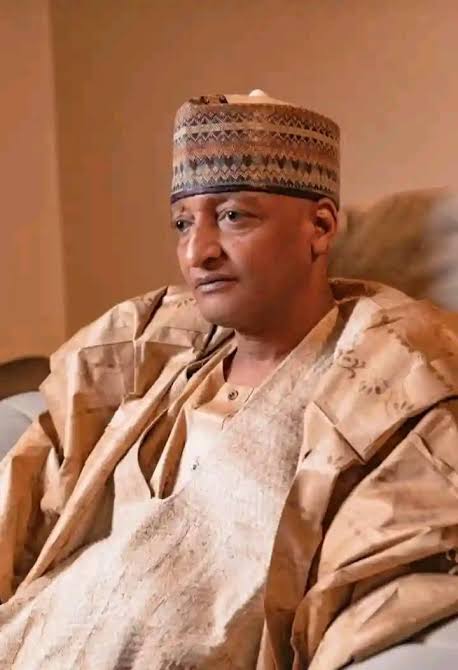
By Lucy Chindaba
A Bauchi State governorship aspirant on the platform of the All Progressives Congress (APC), Alhaji Abdullahi Usman, popularly known as Danchina, has called for a shift towards self-reliance, agricultural transformation, stronger community participation in security, responsible governance and national unity as essential steps to address Nigeria’s socio-economic challenges.
Danchina stated this in an interview at his residence in Jos, where he argued that Nigeria’s worsening economic conditions required citizens and communities to become more productive and less dependent on government, while urging leaders to adopt sustainable economic and governance practices.
He said Nigeria’s current economic challenges, including inflation and declining purchasing power, had made many citizens focus only on survival rather than meaningful development.
He noted that sustainable progress could only be achieved when individuals actively contributed to nation-building.
According to him, “No single individual can solve Nigeria’s problems. Our population is growing, yet we continue to manage resources with outdated systems. That approach is no longer sustainable.”
He described agriculture as a major untapped opportunity, lamenting that despite Nigeria’s vast fertile land, poor planning and weak implementation had limited its potential.
He added that if elected governor, his administration would prioritise grassroots productivity, especially by engaging young people in agriculture and reducing overdependence on white-collar jobs.
Danchina also linked rising insecurity to economic hardship and unemployment, stressing the need for stronger community participation in security management.
He stated that local involvement was essential due to the country’s large population and limited security personnel.
According to him, “Insecurity thrives when the economy is weak. Communities must take part in safeguarding their environment while government strengthens its structures.”
On governance, he stressed accountability and integrity in public service, urging leaders to place national interest above personal gain.
He also warned against Nigeria’s increasing reliance on borrowing, describing it as unsustainable and a threat to the country’s future.
“Continuous borrowing without clear repayment strategies risks mortgaging the nation’s future. We must build systems that generate internal revenue,” he emphasised.
On religion, he urged Nigerians to see faith as a force for unity and peace rather than division.
“No one has the right to kill in the name of God. True faith unites people and promotes peaceful coexistence,” he stated.
On mining, he observed that although Nigeria was richly endowed with mineral resources, illegal mining, weak regulation and lack of local processing had prevented the sector from delivering maximum economic benefits.
He called for stricter enforcement of mining laws and greater emphasis on value addition within the country.
Danchina therefore urged Nigerians to embrace unity, disciplineband shared responsibility, insisting that national development required collective sacrifice from both leaders and citizens.