



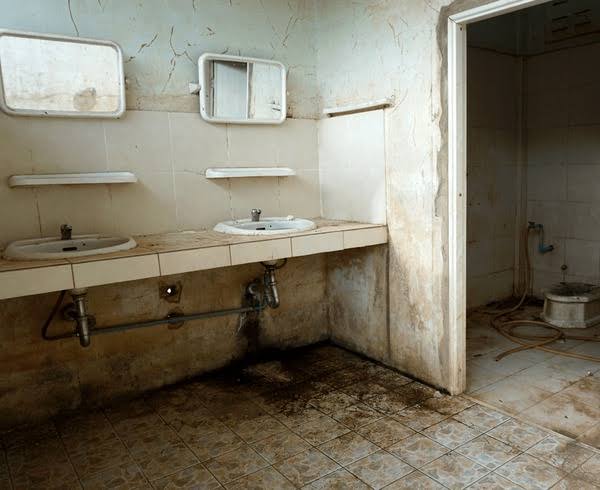
If there is any sight that leaves a lasting and unpleasant memory, it is the sight of a filthy toilet. Such images linger in the mind long after the moment has passed, often returning with disturbing clarity at mealtimes or in quiet moments of reflection.
Across Nigeria, dirty and poorly maintained toilets remain an all-too-common reality. For many who attended boarding schools, the memory of overflowing conveniences and unbearable stench is one they would rather forget.
“I remember the first unforgettable sight I came across was on my first morning in secondary school,” narrated Candida Manje.
She added: “The bell rang at about 5:30 am, waking the girls to prepare for the day. By the time I and the Form Two student guiding me arrived at the common bathroom, it was already full.
“I noticed one bathroom that appeared unused and quickly headed there with my sponge case and bucket. But as I dropped my water, I saw a heap of excrement sitting right in the middle of the bathroom. I ran out immediately, but the ugly image has remained in my head till today.”
Lydia Ray, who attended an all-girls school in Jos, also recalled the daily ordeal.
“Opposite each bathroom was a toilet. The worst mistake anyone could make was to peep inside early in the morning. It was often filled to the brim and overflowing onto the floor. Those who used them during the night never bothered to flush. All this added to the terrible smell around the area,” she said.
Burden of poor maintenance
According to Mrs Ray, the task of cleaning the toilets fell not to professional cleaners but to junior students being punished for offences.
“The cleaners were stubborn girls in the junior classes, supervised by Labour Prefects who had to certify the toilets were neat by 7:00 am. Yet by afternoon, they were dirty again and had to be washed by other students serving punishment,” she added.
Being assigned to clean the main common toilet was considered one of the harshest punishments in many boarding schools. Yet the deeper issue was not merely discipline but poor hygiene culture, inadequate facilities and the absence of accountability. Because the toilets were communal, many users felt no responsibility for keeping them clean. In truth, the number of toilets available for students was often grossly inadequate.
The same ugly pattern appears to persist beyond school walls.
Stories emerging from National Youth Service Corps orientation camps speak of appalling sanitary conditions. A young woman posted to the Niger State orientation camp in Minna said she resumed while on her menstrual period and was horrified by what she met.
She described the bathroom as an eyesore, with stains of excrement on the walls and white maggots crawling about. According to her, she had to first wash the bathroom thoroughly with detergent and disinfectant before taking her bath.
She added that while the facilities were structurally sound, the problem lay in maintenance and the fact that they were far too few for the number of corps members deployed there.
Public facilities in decay
A young man, Greg Zi, narrated a similar experience at the International Stadium in Bauchi, a story corroborated by Amira Ibrahim, who also visited the venue during secondary school basketball finals representing Plateau State.
Both said the condition of the toilets was beyond description. Greg used the male section while Amira used the female side at different times, yet both encountered scenes they described as nightmarish.
Whether the problem stems from unrestricted public access, poor supervision, or neglect, it is unacceptable that such an important public facility should carry such disgraceful sanitary conditions. Authorities must address the matter urgently.
Another unforgettable example was the toilet of a Christian hospital in Vom. A patient admitted there was asked to provide a stool sample for medical tests. On opening one of the toilets, the sight was said to be worse than the dirtiest conveniences seen in school hostels.
Excrement was reportedly smeared everywhere, making it difficult even to identify the toilet seat. That such conditions existed in a hospital made the experience even more shocking.
These examples reveal a troubling disconnect between administration and maintenance. Those entrusted with leadership often fail to inspect or monitor basic but essential facilities such as toilets. If those in authority approached sanitation with the seriousness once displayed by Labour Prefects in boarding schools, even limited facilities would be more manageable.
Time for a national response
Credit must be given to many churches that keep their toilets clean and presentable. However, the same cannot always be said of motor parks, where users are required to pay before using the facilities.
A recent visit to the new Talatu Jang Park in Bukuru, Jos South LGA, toilet before embarking on a journey left much to be desired. The facility was already emitting foul odour, with thick cobwebs visible in several corners. Nearby, stagnant greenish water had gathered beside the toilet block, likely contributing to the stench.
There is also the widespread issue of shared toilets in compound accommodations across urban Nigeria, a subject vast enough for separate discussion.
The time has come for government at all levels to declare a state of emergency on sanitation and toilet facilities. Poorly maintained conveniences may well be contributing to the frequent infections suffered by many women and children.
Indeed, this is not a minor inconvenience. It is a public health crisis hiding in plain sight.