



BY SAMSON ILIYA
Politics is ultimately about how people with different interests, identities and ambitions choose to live together under agreed rules. It determines how power is shared, how resources are allocated and how collective decisions are made. In Plateau State today, that delicate process is under visible strain. With party primaries drawing near, the escalating controversy over zoning has reopened old anxieties and exposed new fractures that cannot be ignored.
Political zoning, by design, is a power-sharing arrangement in which offices are rotated among regions, ethnic groups or political blocs. Its purpose has always been practical rather than theoretical: to promote inclusion, calm tensions, create opportunities for minorities and sustain unity in a diverse society. At its core, zoning is a gentleman’s agreement. It is not a statutory command but a political understanding entered into for the sake of stability.
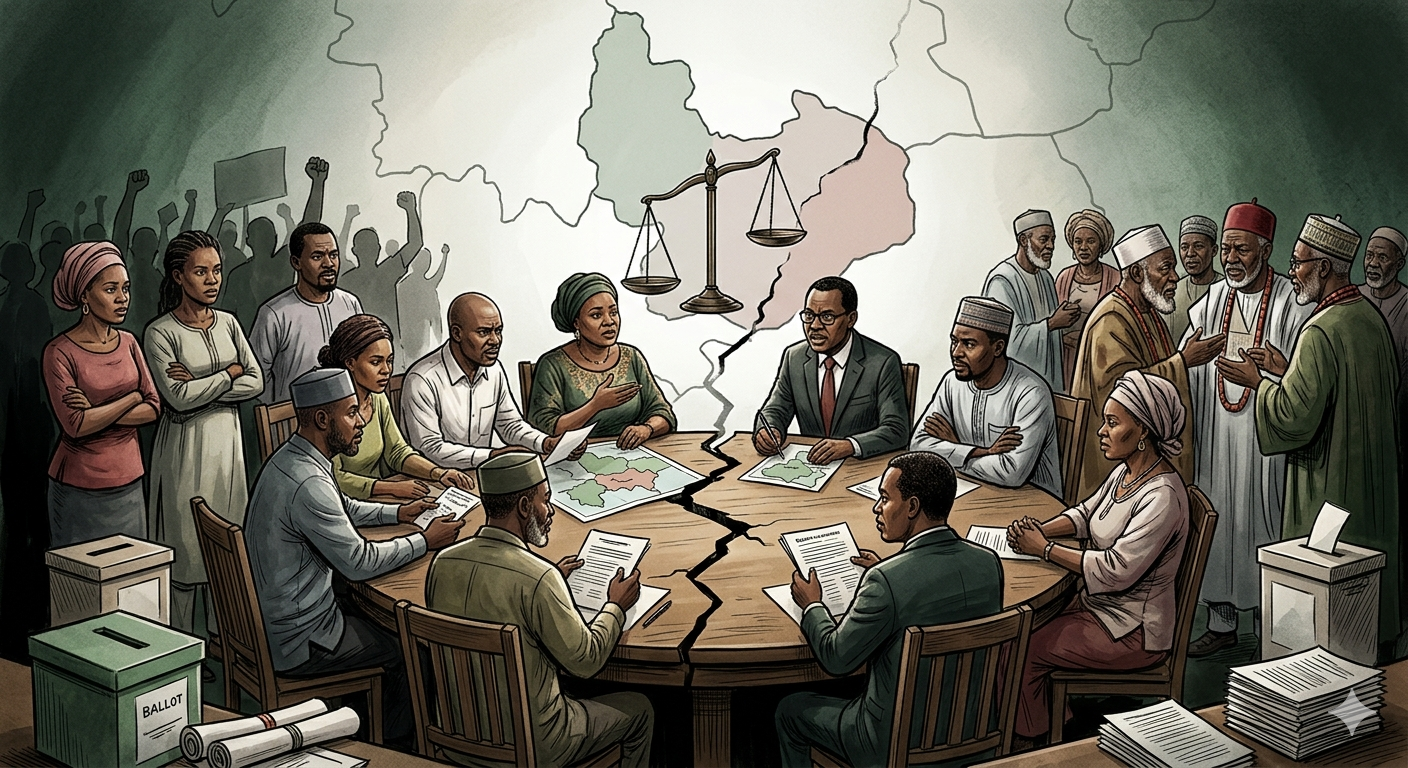
That distinction is important, but so too is present reality. In Plateau State, the zoning debate has moved beyond private consultations and elite discussions into public confrontation. Demonstrations have erupted in parts of the state, with protesters insisting that since the return of democracy in 1999, zoning has served as a recognised framework for balancing political opportunities.
Their argument is straightforward. Zoning, in their view, has encouraged inclusiveness, reduced domination and helped preserve unity in a state with deep historical sensitivities. To discard it casually, they fear, would amount to tearing up a long-standing understanding without consultation.
That concern deserves serious attention. If the issue is left unattended until after party primaries, leaders may find themselves responding to a preventable crisis rather than managing a healthy democratic contest. Silence at such a moment can be costly. Plateau has seen enough avoidable tensions to know that unresolved grievances rarely disappear on their own.
The call, therefore, is for urgent engagement by those whose voices still carry moral and political weight. Traditional rulers, party leaders, religious figures, elder statesmen and community influencers should not remain spectators while suspicion deepens. They should convene sincere discussions now, before the matter hardens into bitterness.
No single party or senatorial zone can resolve this question alone. It touches identity, fairness, history and the future shape of Plateau politics. Mishandled today, it could poison future election cycles and widen distrust among communities.
Yet, the legal reality must also be plainly acknowledged. The 1999 Constitution of the Federal Republic of Nigeria, as amended, does not expressly recognise or enforce political zoning in the manner political parties practise it. There is no constitutional clause requiring Plateau’s governorship to rotate among north, central and south.
What the Constitution does provide is the principle of Federal Character under Section 14(3), which applies to appointments into federal institutions and seeks to prevent dominance by any state or ethnic group. That principle does not extend to elective offices in the direct sense many assume.
Strictly speaking, then, zoning remains a political convention rather than a constitutional obligation. No court can compel a political party to zone its ticket, and no party is legally bound to maintain such an arrangement if it chooses otherwise.
That is the law. But politics is not lived in legal texts alone.
Politics is lived in public expectations, shared memories and the unwritten understandings that communities rely upon to preserve confidence in the system. Since 1999, zoning has played a significant role in Plateau’s political life. Under different parties and administrations, there has been deliberate effort to rotate major offices, especially the governorship, among the three senatorial zones. Similar logic has influenced legislative seats, local government leadership and councillorship positions in various areas.
For twenty-five years, many citizens have built their political expectations around that pattern. To them, zoning is no longer merely a party tactic. It has become part of Plateau’s informal political culture. That explains why many now feel that a quarter-century understanding is being threatened without broad consultation. The danger lies at both extremes.
If zoning is enforced rigidly, leadership can become a mere turn-by-turn exercise where competence, ideas and public appeal are subordinated to geography. That would weaken democracy and deny voters the benefit of genuine competition.
If zoning is discarded abruptly and contemptuously, communities may conclude that fairness has been abandoned and that some zones are condemned to permanent exclusion. That too would damage democracy by breeding resentment and alienation. Plateau must avoid both traps.
The sensible path is neither blind adherence nor reckless abandonment. It is thoughtful dialogue leading to a modern consensus. Political leaders should acknowledge that zoning has helped manage diversity and maintain relative balance since 1999. They should also acknowledge that no democratic society can thrive permanently on unwritten arrangements that are never reviewed.
Traditional and religious leaders, whose influence often transcends party lines, can help guide a broader conversation toward fairness, merit and peace. Plateau must ask itself difficult but necessary questions.
Can a new model be developed that guarantees no zone feels permanently shut out while preserving room for merit, capacity and popular choice? Can inclusion be institutionalised without strangling competition? Can historical sensitivities be respected without imprisoning the future?
These are not questions to postpone.
A gentleman’s agreement works only when all gentlemen remain willing to sit at the table. Today, some are protesting, some are positioning quietly and others are pretending no issue exists. That combination is dangerous. If the table collapses, Plateau may pay through distrust, unrest and stalled development.
The coming party primaries will be the immediate test of political maturity. Stakeholders must engage now, speak honestly now and seek common ground now.
Plateau’s unity is too valuable to be left to chance, imposition, or avoidable confrontation. The time to address zoning is not after tempers boil over.
The time is now.