



Fuel price increases are taking a heavy toll on households and businesses across Plateau State, forcing many residents to trek to work, scale down operations, raise service charges and struggle to meet family responsibilities. In this report, CHRISTIANA DANGYANG captures the daily hardship faced by transport users, artisans, traders and small business owners in Jos as they battle soaring transport fares, shrinking incomes and rising operating costs
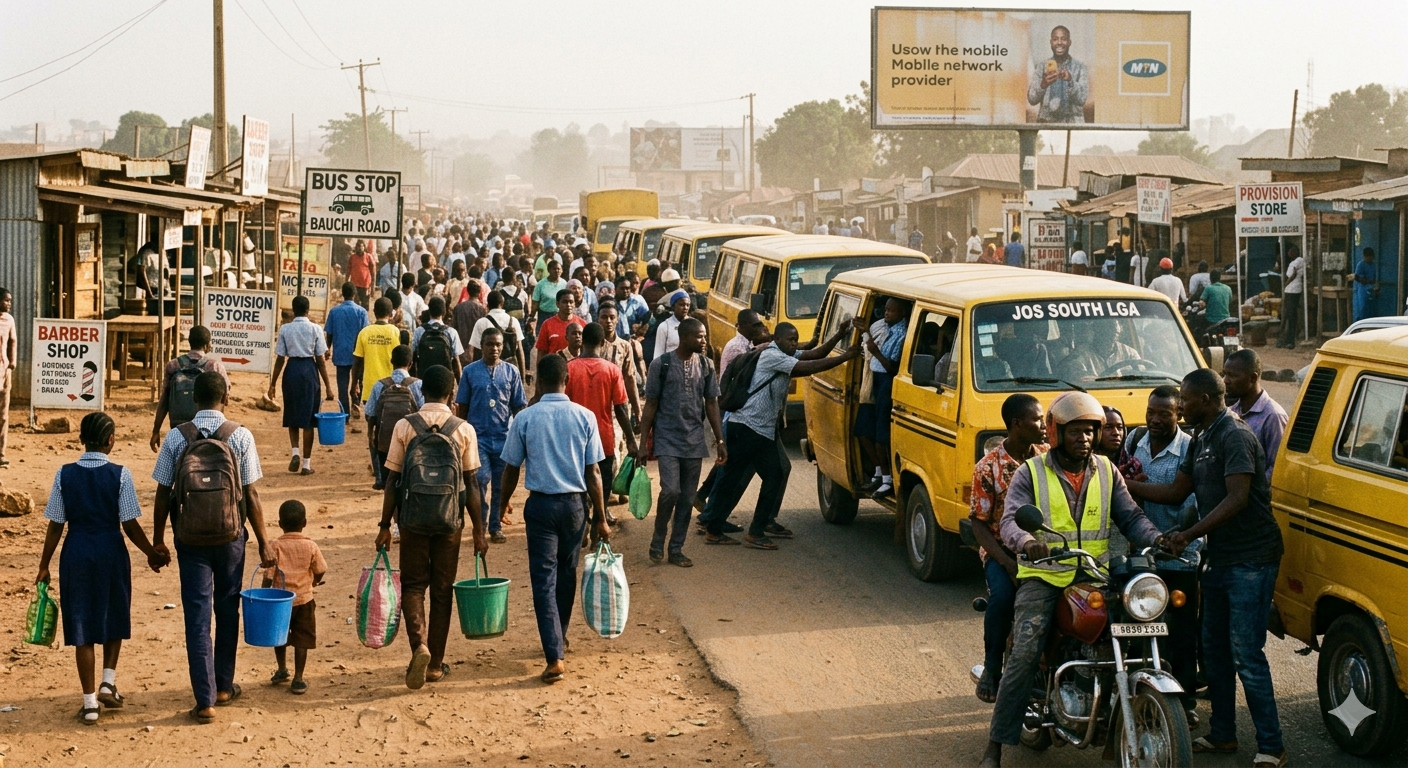
At 7:15 a.m., the road from Bukuru is already a scene of intense activity. State government-owned metro buses are filled to capacity before leaving the park, while commercial motorcycle operators now demand fares in triple digits for trips that previously cost only N100. Along the roadside, many people are walking—not for exercise, but because spending N1,000 to get to work and another N1,000 to return home has become a painful choice between transportation and feeding.
This is now the reality in Jos. Fuel is no longer just expensive; it is rationed by necessity, bought in small quantities, weighed against school fees and blamed for everything from silent generators to idle workshops.
“Fuel has become a hot cake,” said Mr. Abdul Bassey Abdulrazak, Assistant Managing Director of Rasco Furniture on Rayfield Road. “Before, we didn’t have to calculate transport before budgeting; fuel was not an issue. Now, not everyone can afford to move. Everything has changed.”
Businesses losing customers
For Mrs. Patience, who requested anonymity and owns a laundry service in Jos, the first casualty of the fuel hike was convenience. Her business had relied on free pickup and delivery services to attract customers. Staff would collect dirty clothes, wash, iron and return them at no extra cost.
That changed when fuel prices crossed N900 per litre.
“Before now, we didn’t charge for transportation,” she said. “But since the price of fuel increased, we charge a token for pickup or ask customers to bring their clothes themselves.”
The new charges did not go down well with some customers.
“It doesn’t sit well with some of our clients. Some live far away and have decided to use laundries closer to them,” she explained.
As patronage dropped, she slightly increased laundry charges to cover the cost of running a generator during power outages, but customers reduced further.
“Income is affected,” she said. As a result, she now depends partly on a small poultry business to survive.
“The government should consider reducing the price of fuel because it is affecting businesses, livelihoods, and transportation—including children going to school. Some schools use buses to pick up and drop off children, and now those fees have increased.”
Mr. Gyang Choji, who runs ICT Resort Nigeria opposite the DSS office in Gyel Market, disclosed that transport costs have risen sharply.
“Transportation costs have increased by about 50 per cent, making my previous budget insufficient,” he said. “As a result, I now occasionally trek to and from work to reduce expenses.”
He added that business operations have slowed due to fewer customers and higher expenses.
His coping measures include trekking more often, limiting generator use to high-paying jobs, and using government metro buses whenever possible.
He urged the government to expand public transport and alternative energy support.
“Provide more metro buses and invest in electric transportation systems. Consider grants to help businesses install solar power systems. This would reduce the cost of operations and help control the rising cost of goods and services.”
Family budgets under pressure
At Rasco Furniture, Mr. Abdulrazak described the fuel crisis as a chain reaction affecting every sector.
“The high price of fuel has led to an increase in the cost of raw materials. What we charge for labour has also changed, and this has affected all businesses,” he said.
He noted that the impact goes beyond business.
“We have to take care of family needs. Before you can afford furniture, you have to be fit enough to sustain yourself. What affects the economy also affects the family negatively.”
According to him, many families are now forced to adjust their spending and lifestyle.
“The only thing to do is adjust our spending and our way of living. Everything is not permanent; it is temporary, due to international conflicts affecting the export and import of fuel and crude oil. We believe
that after this, everything will fall back into place.”
Still, he appealed directly to government: “The government should look into the fuel situation and bring down the cost. Then, everything will return to normal.”
Artisans battle for survival
For tradesmen, the hardship is severe. An anonymous welder in Jos said his biggest burden is the cost of electricity and fuel for his generator.
“My issue is electricity. I have to buy fuel for my generator to do my work,” he said.
He explained that even prepaid electricity units vanish quickly.
“I recharge my prepaid meter with N5,000, for instance, and within two hours, it is finished. We charge phones and many other things with electricity. Where the electricity distribution company fails to supply power, we have no choice but to buy fuel to continue our work; otherwise, the business will collapse.”
His conclusion was blunt: “The government must wake up to its responsibilities.”
At No. 2 Rayfield Road, Yelwa Club Junction, mechanic, Musa Sani, said his workshop has become unusually quiet.
“The high price of fuel is affecting my business seriously,” he said. “Before, I would give my boys transport money for errands, but now they use bicycles most of the time because of the cost of fuel.”
He added that spare parts have also become more expensive.
“Even in the market, the price of car parts has shot up because of fuel prices. Our customers hardly bring their cars for repairs, oil changes, or servicing. If they do bring a car, it must be because they have something very important to use it for.”
When customers eventually come, earnings are low.
“If I service their cars, they might only give N1,000 or N2,000, which is nothing to take home. Honestly, work is down.”
Musa said he depends on the job to feed his family, pay school fees, and meet daily needs.
“The fuel price increase has made work slow and stagnant. Schools have resumed, but there is no money to pay school fees because business is so poor.”
He revealed that he can no longer provide transport money for apprentices, causing some of them to leave: “I have had to drop many things because customers don’t come anymore. There is no work. We cannot kill ourselves.”
His frustration is aimed at political leaders.
“The government knows about our issues. We vote for them to help us, not for us to struggle like this while they ignore our complaints. That is the trouble. We are hoping the government does its best to support us and help bring down the price of fuel.”
Fuel has now become the invisible cost driving hardship in Jos. It determines who works, who walks, who keeps a business open, and who shuts down for the day. For many Plateau residents, survival now depends on cutting costs, enduring hardship and hoping for urgent relief.