



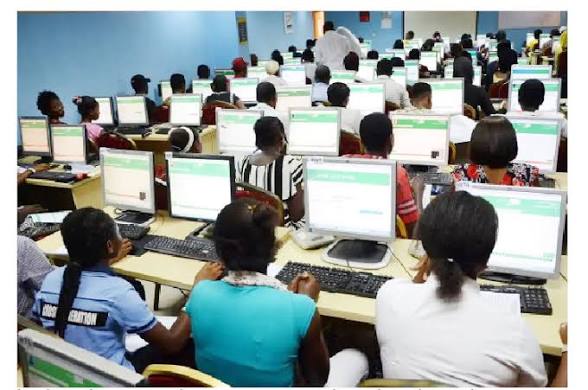
The 2026 UTME has raised serious concerns over Nigeria’s examination system, with widespread technical glitches, inadequate infrastructure and fairness issues affecting candidates across the country, alongside controversy over JAMB’s response to the abduction and rescue of some candidates, NICK DAZANG writes
The 2026 Unified Tertiary Matriculation Examination (UTME), organised by the Joint Admissions and Matriculation Board (JAMB), was expected to showcase Nigeria’s growing capacity to conduct technology-driven assessments on a massive scale.
With 2.2 million candidates participating across 966 accredited Computer-Based Test (CBT) centres nationwide, the exercise was indeed an improvement on last year’s fiasco.
Yet, beneath that modest progress lay a troubling reality of systemic lapses, technical failures and a shocking controversy that has cast another shadow over the credibility of the examination body.
The examination, structured into four daily sessions, was plagued by disruptions, network glitches, malfunctioning systems, abrupt shutdowns, forced logouts, inconsistencies in time tracking and administrative delays. Across the country, candidates were stranded, frustrated and subjected to needless anxiety. Predictably, complaints poured in from several centres.
These recurring challenges expose a deeper institutional problem. Many of the CBT centres appear not to have met JAMB’s minimum benchmarks of functional computer systems, stable internet connectivity, dependable electricity supply and trained personnel.
More fundamentally, 966 centres for a country with 774 local government areas is grossly inadequate, particularly for a population of over 200 million people where millions seek tertiary admission annually.
Burden of weak infrastructure
Nigeria’s persistent infrastructure deficit was once again laid bare. Internet access remains grossly unequal, with urban centres enjoying relatively stronger connectivity while rural communities continue to struggle with weak or non-existent service. In such an environment, the success of a fully digital national examination cannot be guaranteed.
Electricity supply posed another obvious threat. Unless many centres relied entirely on generators throughout the exercise, the examination was vulnerable from the outset. This happened at a time when the nation’s power sector was itself under severe strain.
More damaging, however, was the fact that not all candidates were given a level playing field. Technical failures and delays meant some students lost valuable examination time through no fault of their own. That raises serious questions about fairness, assessment standards and the integrity of the results.
One candidate lamented on X: “My exam was for 9:00 a.m. but started around 12:00–12.30 p.m. During the exam, my screen showed 30 mins left, yet we were told only 6 mins remained, and I was logged out before finishing English.”
At SkillPath International Academy, Old Karu, candidates were reportedly logged out repeatedly because of network failure and could not complete their papers, yet were still asked to leave before their allotted time expired.
When candidates became victims of insecurity
Even more disturbing was the abduction of some candidates on the eve of the examination.
On Wednesday, April 16, gunmen reportedly abducted 16 young men travelling in a Benue Links commercial bus from Makurdi to Otukpo. Eight of those kidnapped were said to be on their way to write the UTME.
The incident naturally generated outrage, especially coming amid renewed insecurity in parts of the country, including recent Boko Haram attacks on military bases and the abduction of hundreds of persons in Ngoshe, Borno State.
The Chairman of Otukpo Local Government Council, Maxwell Ogiri, acknowledged the incident. Benue State Commissioner of Police, Ifeanyi Emenari, also confirmed it and assured the public that rescue efforts were ongoing.
Yet instead of demonstrating empathy and urgency, JAMB responded dismissively through its Head of Protocol and Public Affairs, Fabian Benjamin, who said: “You know Nigerians love this kind of story. I have made calls and no one has been able to give me anything to that effect. So it is speculative.”
The abductees were later rescued and presented publicly on Sunday, April 19, by Governor Hyacinth Alia and Commissioner of Police Emenari. At that presentation, the commissioner stated: “Among the victims are eight students who were preparing to write UTME while others are regular commuters.”
Two of the candidates, Gbenda Daniels and Ngukulan Iornav, also narrated their ordeal to journalists.
A response that deepens distrust
Rather than acknowledge the facts, JAMB later claimed its investigation showed the abductees were participants in a police recruitment exercise who had travelled to Makurdi and were merely returning to Otukpo.
That assertion raises troubling questions. Was the governor misinformed? Was the commissioner of police mistaken? Was the local government chairman wrong? Were the rescued candidates lying? If not, why would JAMB choose a narrative so sharply at odds with publicly available evidence?
The board’s position has only deepened public distrust. It suggests an institution more concerned with defending its image than confronting reality. That is dangerous for an examination body whose credibility depends entirely on public confidence.
After the backlash that followed the 2025 UTME, many Nigerians had hoped JAMB had learnt valuable lessons. But the combination of fresh technical failures and an insensitive response to the plight of abducted candidates suggests otherwise.
JAMB must understand that efficiency alone is not enough. Accountability, transparency and empathy are equally essential. Millions of young Nigerians entrust their future to the board each year. They deserve competence in the conduct of examinations and compassion in moments of crisis.
Dazang, OON, writes from Abuja via nickdazang@gmail.com