



By SEKYEN WALSHAK
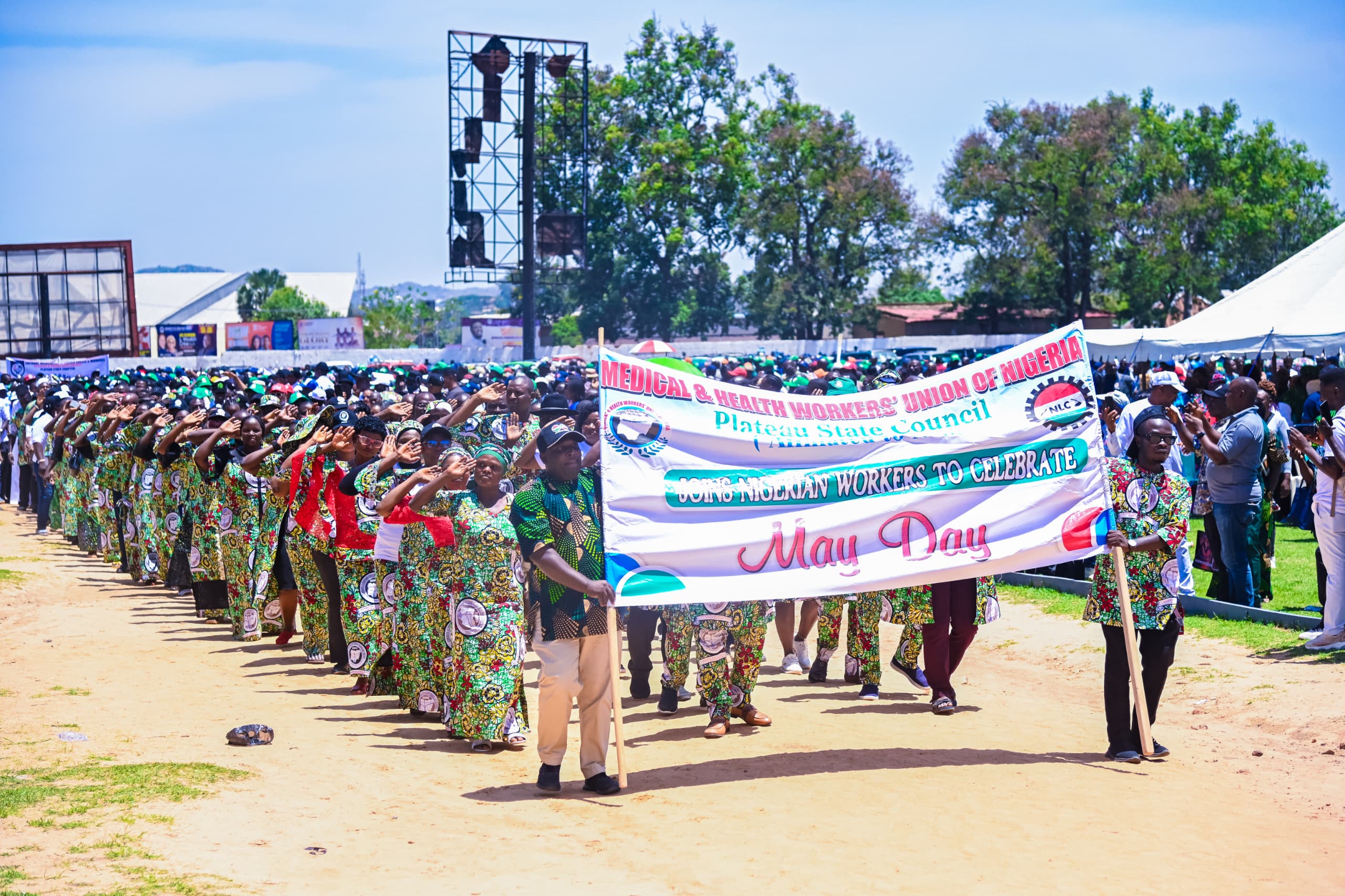
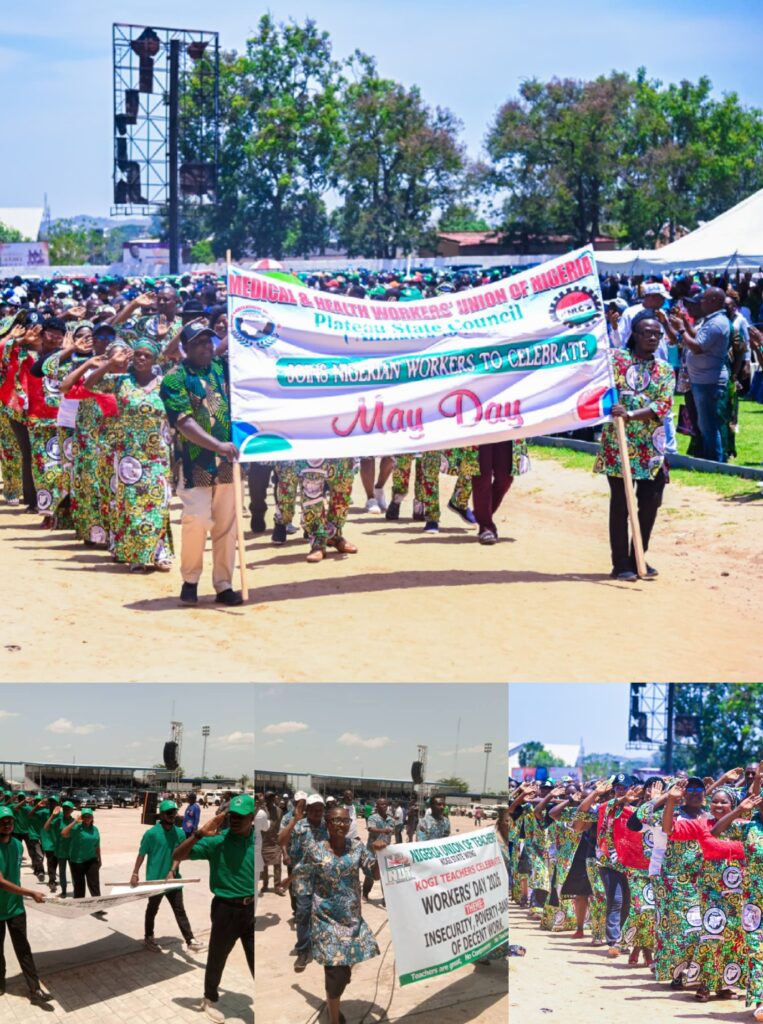
May 1 is set aside annually to celebrate the contributions and sacrifices of Nigerian workers, the men and women whose daily efforts keep the nation’s economic machinery running.
Across the country, labour unions and government officials marked the day with rallies, speeches and messages of appreciation for the workforce.
In an official statement, the Minister of Interior, Olubunmi Tunji-Ojo, praised workers for their dedication, describing them as the backbone of economic growth and national progress.
He urged workers to improve productivity and maintain high professional standards while highlighting the Federal Government’s commitment, under President Tinubu, to improving workers’ welfare, ensuring safety and fostering a productive economic environment.
Tunji-Ojo also called on workers to remain law-abiding and committed to the administration’s ‘Renewed Hope’ agenda.
Similarly, Governor Mutfwang of Plateau State commended the resilience and invaluable contributions of civil servants across the state, noting that their efforts continued to drive local development.
The governor reaffirmed his administration’s commitment to workers’ welfare, pointing to progress made in addressing longstanding issues such as unpaid gratuities and pensions, while assuring the public that efforts were being intensified to sustain the momentum.
Workers lament economic hardship
However, beyond the official ceremonies, many workers said there was little to celebrate.
At both federal and state levels, employees expressed deep dissatisfaction with the prevailing economic conditions, citing high inflation, insecurity, salary arrears and the slow implementation of the new minimum wage.
For many, the rising cost of living had significantly eroded the value of their earnings.
Azi Peter, a staff of Plateau State University, Bokkos,vpainted a grim picture of the current situation.
“First and foremost, as Nigerian workers, we thank God for life. But in reality, we are facing total hardship. Our colleagues and relatives are being killed, kidnapped, or held captive. Nobody sleeps with both eyes closed anymore.
“We are alive, yes, but what are we celebrating? We cannot feed ourselves with our salaries. The naira keeps falling, petrol is over ₦1,400 per litre, and transportation costs are unbearable. Even farmers cannot go to their fields due to insecurity or the high cost of inputs,” he said.
Describing the plight of workers, Peter added that Nigerian workers were now being treated like second-class citizens compared to political office holders who earn huge sums.
“The government must prioritise workers’ welfare at all levels,” he stressed.
He also pointed to ongoing labour unrest, noting that unions such as the Joint Union of Plateau State-owned Tertiary Institutions were already on strike, while others were threatening industrial action over unresolved grievances.
For traders, the story was not different.
Adar Stephen, a phone dealer along Ahmadu Bello Way, Jos, described a sharp decline in business activities.
“In the past, phones were affordable and customers came in daily. But over the last year, we have struggled to find buyers. Sometimes we offer heavy discounts just to make a sale, yet it’s still difficult,” he said.
“Conditions for both workers and traders need serious improvement. If nothing changes, we don’t know what the next few years will look like.”
Retirees express frustration
Retirees also spoke of growing hardship and frustration over delayed pensions and worsening living conditions.
Yakon Posat, a retiree, reflected on what he described as better times in the past while lamenting the current situation facing former civil servants.
“In the 80s and 90s, civil servants were respected. There was dignity in the system, and what you earned actually served a purpose. Back then, you could plan your life and even save for the future,” he pointed out.
“Today, everything has changed. Many retirees are struggling to survive after serving this country for decades. Pensions are delayed, and when they do arrive, they are not enough to meet basic needs. Many of us now depend on our children, who are also struggling.”
Posat also highlighted the healthcare difficulties confronting elderly citizens.
“At our age, we need regular medical attention, but how can you afford it when your pension cannot even cover food? Many retirees are suffering in silence,” he lamented.
“I weep for this country. The future looks uncertain for this generation and those to come. Leaders need to do far more than what we are seeing now, especially for those who gave their best years in service.”
For many Nigerians, this year’s Workers’ Day was marked less by celebration and more by sober reflection on insecurity, economic hardship and an uncertain future.
While government officials continue to offer assurances, workers insist that meaningful change must go beyond rhetoric and translate into tangible improvements in wages, security and living conditions.
As the country marks another May Day, the message from many Nigerians remains clear: recognition is appreciated, but real relief is urgently needed.