



By SAMSON ILIYA
As the rains approach and the farming season beckons, Plateau State stands at a crossroads. For generations, our hills and valleys have fed not just our families but much of Nigeria. Today, however, the hoe and cutlass have become symbols of courage rather than just cultivation, as too many farmers now till their land with one eye on the soil and the other scanning the bush for danger.
The plight is stark and painful: men and women set out at dawn to their ancestral farmlands only to be ambushed, killed or chased away, while crops painstakingly nurtured for months are destroyed overnight by roaming herds. Entire communities in Mangu, Bokkos, Riyom, Barkin Ladi and other LGAs now live under a cloud of fear. This is not random violence. The pattern is too consistent and too widespread to ignore. It is a systematic terror targeting the very backbone of Plateau’s economy and identity — the farmer.
Governor Caleb Mutfwang’s administration cannot afford to treat this as business as usual. The farming season waits for no one, and once the window for planting closes, a year of hunger opens. The call is therefore simple and urgent: the Plateau State Government must provide adequate security and an enabling environment for farmers now, before the first seeds go into the ground.
Security must begin with visible presence. Joint patrols of the police, NSCDC and vetted community vigilantes should be stationed in known flashpoints throughout the planting, weeding and harvest periods. Mobile response units must be equipped to reach distress calls from remote farmlands within minutes, not hours.
Beyond presence, there must be strategy. Intelligence gathering should shift from reactive to proactive. Traditional rulers, youth leaders and farmer cooperatives already have eyes on the ground and must be integrated into a state-wide early warning system. Technology can also play a critical role, with drones deployed to monitor grazing routes and a dedicated emergency line established for farmers in distress.
Equally important is the need for structured intervention. The establishment of a ‘Farm Protection Task Force’ under Operation Rainbow, equipped with vehicles, communication toolsmand clear rules of engagement, would strengthen efforts to protect lives and property without escalating conflict. Safe farming corridors and properly enforced grazing reserves would further reduce deadly clashes between herders and crop farmers.
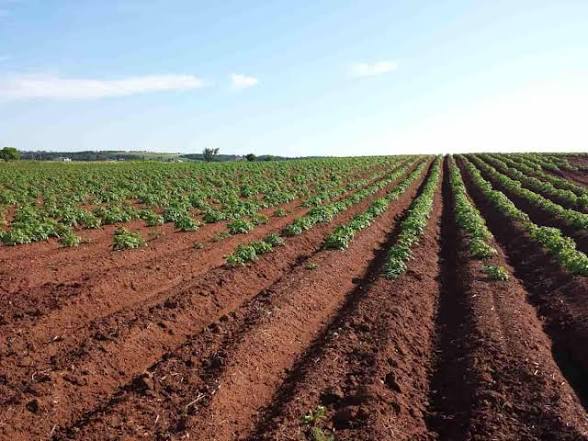
Food security is, ultimately, national security. When farmers abandon their fields in Plateau, the consequences extend far beyond the state. Plateau remains a major producer of Irish potatoes, tomatoes, maize and vegetables that supply markets in Abuja, Lagos and across the country. Failure to secure these farms invites a triple crisis: food shortages, rising prices and deepening poverty.
A hungry society is an unstable one. Youth who should be productively engaged in agriculture are instead forced into urban migration, often without prospects, thereby fuelling crime and social unrest. At the same time, declining agricultural productivity weakens internally generated revenue and undermines the government’s broader development agenda. In this context, inaction is not merely a policy failure but an economic and moral liability.
However, security alone is not enough. Farmers also require the tools and support necessary to thrive. An enabling environment must include timely access to fertilisers and improved seedlings, functional extension services that reach rural communities and micro-credit schemes protected from exploitation by middlemen. Rebuilding markets and rural roads destroyed by past attacks is equally essential to ensure that produce can move freely and efficiently.
Governor Mutfwang campaigned on the promise that ‘The Time is Now’. For Plateau’s farmers, that time is not abstract. It is this planting season. Another year of abandoned fields and disrupted livelihoods cannot be allowed, nor should the tragic normalisation of violence in farming communities continue.
The government must, therefore, act decisively by deploying personnel, strengthening community engagement, protecting farmlands and prosecuting those who destroy crops or take lives. Peace is not merely the absence of conflict. It is the presence of justice and the assurance of safety.
Ultimately, the safety of farmers in Plateau is inseparable from the state’s food supply, economic stability and long-term peace. This farming season must not be remembered for bloodshed in the fields, but for decisive leadership that stood with the people and secured the harvest.