


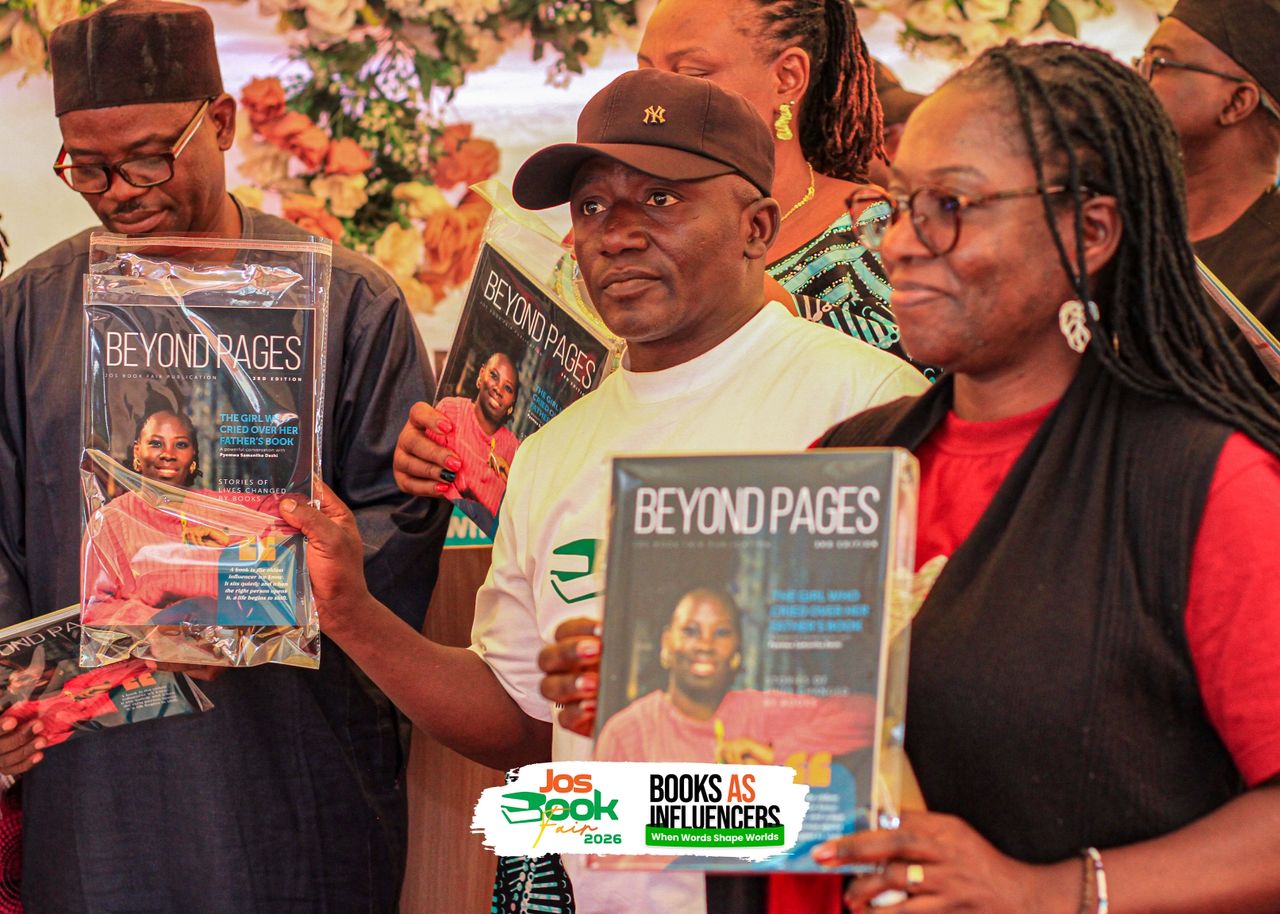


PALANG KASMI reflects on how the Jos Book Fair 2026 has grown beyond a literary event into a cultural movement aimed at reviving Nigeria’s reading culture, preserving linguistic heritage and reconnecting communities—especially young people—with the enduring value of books in an increasingly digital age
The organisers of the Jos Book Fair hosted a four-day series of events to commemorate the 2026 World Literacy Day, with a clear intention to inspire and revive a reading culture that many fear is gradually fading in Nigeria.
Rather than the usual glamour associated with public events, the fair introduced a ‘Book Carpet’—a creative display of literary works by various authors, combined with interactive sessions designed to engage students and encourage participation. Over four days in Jos, the atmosphere transformed into something deeper than celebration; it became a space where books, stories and ideas came alive through dialogue, laughter and shared learning.
The fair, which ran from April 22 to 25, began with a sensitisation walk from Zaramaganda Junction to the National Library in Jos, setting the tone for a programme filled with discussions, presentations and community engagement. Participating organisations included the Punchline Poetry Society, Jenta Reads, the National Library and the Jos Writers Club.
A key highlight was the launch of the ‘Plateau Read Project’ for secondary schools, alongside the unveiling of Beyond Pages, a magazine capturing personal reading journeys, with its maiden cover featuring Plateau-born storyteller Pyemwa Deshi.
Hundreds of books were sold during the fair, some priced as low as ₦100, reinforcing the organisers’ goal of making literature accessible to all.
This marked the third edition of a movement that began in April 2024 with a bold question: what if books could help rebuild what conflict has broken? And what if a book fair could evolve into a platform for peacebuilding, literacy promotion and cultural renewal in a city often associated with crisis?

Why the Jos Book Fair matters
One of the most powerful reflections from the event captured its essence: “A reader today is a leader tomorrow. A book in the hand of a child is a seed in the soil of the nation.”
Across the sessions, a recurring belief emerged—that books are not merely tools for learning, but instruments for healing, unity and social transformation. They provide a space where stories become bridges across differences, fostering empathy and understanding.
In one of the presentations, Dr Ahmed Rabiu emphasised the importance of preserving history through writing.
“When you write, you preserve the history of a place,” he said.
He cautioned against overdependence on digital platforms, noting that while the internet provides information, it does not necessarily offer knowledge. “When you pick up a book, you drop your weapon; the book becomes your weapon, making you a better person,” he added.
He also highlighted the imaginative freedom that reading offers, explaining that, unlike films, books allow readers to become “directors” of their own mental images. He encouraged daily reading habits, even if not extensive, stressing consistency over volume.

Dr Hankuri Gaya
The Convener of the Fair, Dr Hankuri Gaya, also International Director of the Campus Missions and Leadership Initiative (CMLI) and Managing Director of ACTI Publishing Limited, explained that the initiative was born out of concern over a generation growing increasingly detached from books.
“We were watching a generation grow up further from books—children with phones in their hands but no stories in their hearts,” he said.
He noted that reading culture has also declined among adults and even university graduates, many of whom now read only for examinations rather than for growth or curiosity.
Reflecting on Plateau State’s history, he added: “Our state has known both beauty and brokenness. In this context, books are not a luxury; they are part of the answer. A child who reads about someone unlike themselves begins to learn empathy. To heal, we must read.”
Starting in 2024 with a small team and no external funding, the fair has now grown into its third edition. Dr Gaya noted that its impact continues to deepen with each year, describing it as a movement where “words shape worlds, and our world is shaped for the better.”
In its first edition themed Books as Bridges, the fair hosted over 35 vendors and 3,000 participants, leading to the establishment of community libraries in Angwan Rogo and Lamingo.
Reviving a fading reading culture
The 2026 Jos Book Fair was conceived not just as an event, but as a deliberate effort to revive reading habits, especially among young people increasingly distracted by digital technology. It sought to rebuild reading communities and reconnect local narratives with global literary conversations.

Cordelia Pam, Branding and Publicity Team Lead of the fair, observed that declining reading habits cut across generations, not just Gen Z. She noted, however, that the fair succeeded in rekindling interest among participants.
“Seeing the number of people who bought books for themselves and their loved ones was a major step in the right direction,” she said.
Today, the Jos Book Fair stands not just as a literary gathering, but as a growing cultural movement aimed at restoring reading culture, strengthening identity and inspiring a new generation of thinkers.