



By MARIE-THERESE NANLONG
Each rainy season in the last five years, as farmers in the Miango town, Bassa local government area of Plateau State, head to their fields, Paulina Barry tags along, not to go to her own farmland, but as a farm hand where she works to earn a living.
Driven by violence from her Te’egbe community, Irigwe Chiefdom of Bassa, she now lives in displacement, cut off from the land that once sustained her.
Each planting season, the mother of three says she misses her farmland at Te’egbe. The season also evokes the pain of the displacement that she tries to forget, and this triggers a mood swing. The loss is deepened not just in the income, but her identity.
Her story echoes across Plateau State. From Bassa, Bokkos, Barkin Ladi, Mangu, Qua’an Pan to Riyom and across other local government areas, years of recurring violence have forced hundreds of farming families off their land causing forced migration, and the abandonment of fertile farmland.
What were once thriving agricultural communities are now marked by forced eviction, fractured relationships and growing food insecurity.
Rising insecurity and deserted communities
In the last year, communities like Jepmorop, Gyergu, Doop, Fo’or, Muutbuet, Ganwang I and II in Qua’an Pan have been deserted due to insecurity, Elisha Mark, a source from Nteng village of the local government area revealed.
These conflicts do not occur in isolation but driven by a complex mix of historical grievances, weak accountability, competing narratives and increasing pressure on land and water resources.
As violence escalates and perpetrators go unpunished, cycles of reprisal have become entrenched, leaving communities trapped in prolonged instability.
Attacks on farmlands and economic impact
In Riyom, Bassa, Bokkos, Barkin Ladi, and Mangu Local Government Areas, where displaced persons make efforts to return to their farms, the destruction of livelihoods remains a constant threat.
On the 15th of April, 2026, over four hectares of farmland at Ropp district of Barkin Ladi local government area, cultivated by the inhabitants of Gassa of Barkin Ladi were destroyed when hazardous chemical was sprayed on maize, hot pepper, and other crops.
One of the affected farmers, Ishaya Pam described the situation as economic war and warned that without decisive action, such incidents could further inflame tensions.In the last week of April, more than 50 hectares of irrigation farmland in Jol community of Riyom were overrun within two days, wiping out crops, the primary source of income for many families.
Women and households hardest hit
For Mary Phar, a widow from Nzharuvo community in Bassa, the impact of crop destruction is deeply personal as she noted that repeated destruction of farms by cattle has devastated her livelihood in over four years.
She stressed, “Farming is my only source of income. Last year, everything I planted was destroyed. I had nothing to give my children. After planting, you wake up in the morning to find out that everything has been destroyed by cattle driven into the farms by the herders.
“A few weeks ago, I paid two women to go and clear my farm but they were chased away by the herders. They didn’t work but I had to pay them. Last year, I planted soya beans and green beans, the cows destroyed everything.
“I trust that there would be a positive change this year. We have no industries to employ us or our youths. We have been having meetings with women from the Fulani community at Dutsen Kura, we talked about these things but the situation persists. It has been very difficult to cater for my children.”
Repeated attacks on farmlands have left many like her unable to cultivate, pushing households deeper into poverty and uncertainty.
Humanitarian crisis in affected communities
Apart from economic hardship, displacement has created a humanitarian crisis, particularly for women and children.
From Daffo, approximately 75 to 90KM away from Jos, the Saf Daffo (District Head of Daffo), Dauda Maren whose community is affected by violent conflicts says many families have been reduced to extreme vulnerability, with widows and orphans struggling to survive after losing homes, livelihoods and support systems.
He stated that many women and children have been displaced from over a dozen communities in Daffo alone, listing them to include Morok, Nghakudung, Hottom, Josho, Shillim, Chunduk, Ganda, and others.
He justified his data stating that where a man has two or three wives and they are displaced, the man is alone while the number of women and their children are higher.“Women are the most affected. Many have lost everything and are now living in extreme hardship. The displacement has led to poverty, child trafficking, drug abuse, prostitution. A hungry child cannot listen to the mother. The situation is very difficult,” he added.
Calls for dialogue and cooperation
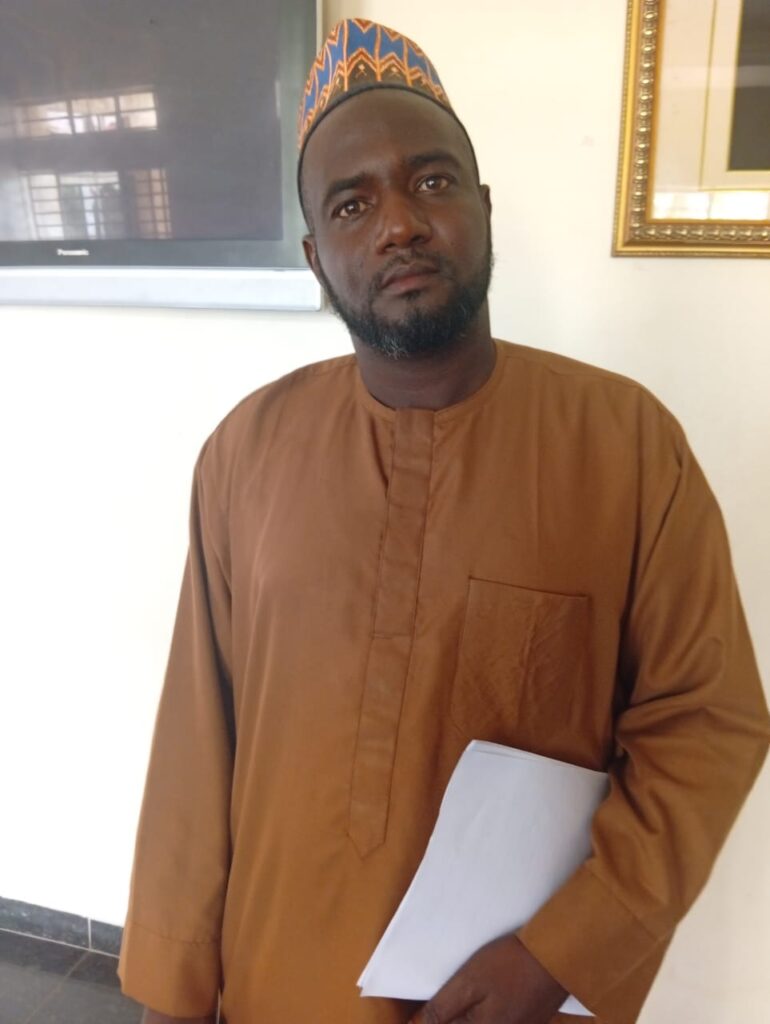
Saidu Idris, the Assistant Youth Leader of Miyetti Allah Cattle Breeders Association, MACBAN in the State said the Fulani community is equally affected by the recurring violence as they suffer cow theft, and cow poisoning, but pointed out the peacebuilding efforts to stem the tide.
He noted, “We believe in dialogue but sometimes, some of the engagements going on, some people are not being carried along as expected. We want a sincere dialogue that will involve all stakeholders so that we understand ourselves.
“We should stop relying on the presence of security agencies to force us to live in peace. We can live in peace if we want. MACBAN had a meeting with the council of Ardos in Bokkos two year ago. Even last year, the Fulani community formed a committee that should police grazing to identify those grazing on farmed crops.
“We discovered some culprits, arrested some of them and took them to the security. The owners of the crops were compensated. The committee is there but there is no support hence the impact is going down.”
To Dapam Bot, the State Secretary of the All Farmers’ Association, AFAN, “Farmers are obviously displaced from their lands, the government can help reclaim the land so that farmers are not killed when trying to do so. We advise farmers to cultivate in clusters not in isolation due to insecurity.
‘We do have meetings with the herders so there should be an understanding that we are one in the agriculture business. We are surprised at the enmity when they should be cooperation for the common good of all.”
Emerging community-led solutions
Amid the hardship, efforts to rebuild trust and restore coexistence are beginning to take root.At the Kihang Buhit community of Bassa, a community-led initiative is bringing farmers and herders together through a shared livelihood project focused on sustainable forage production.
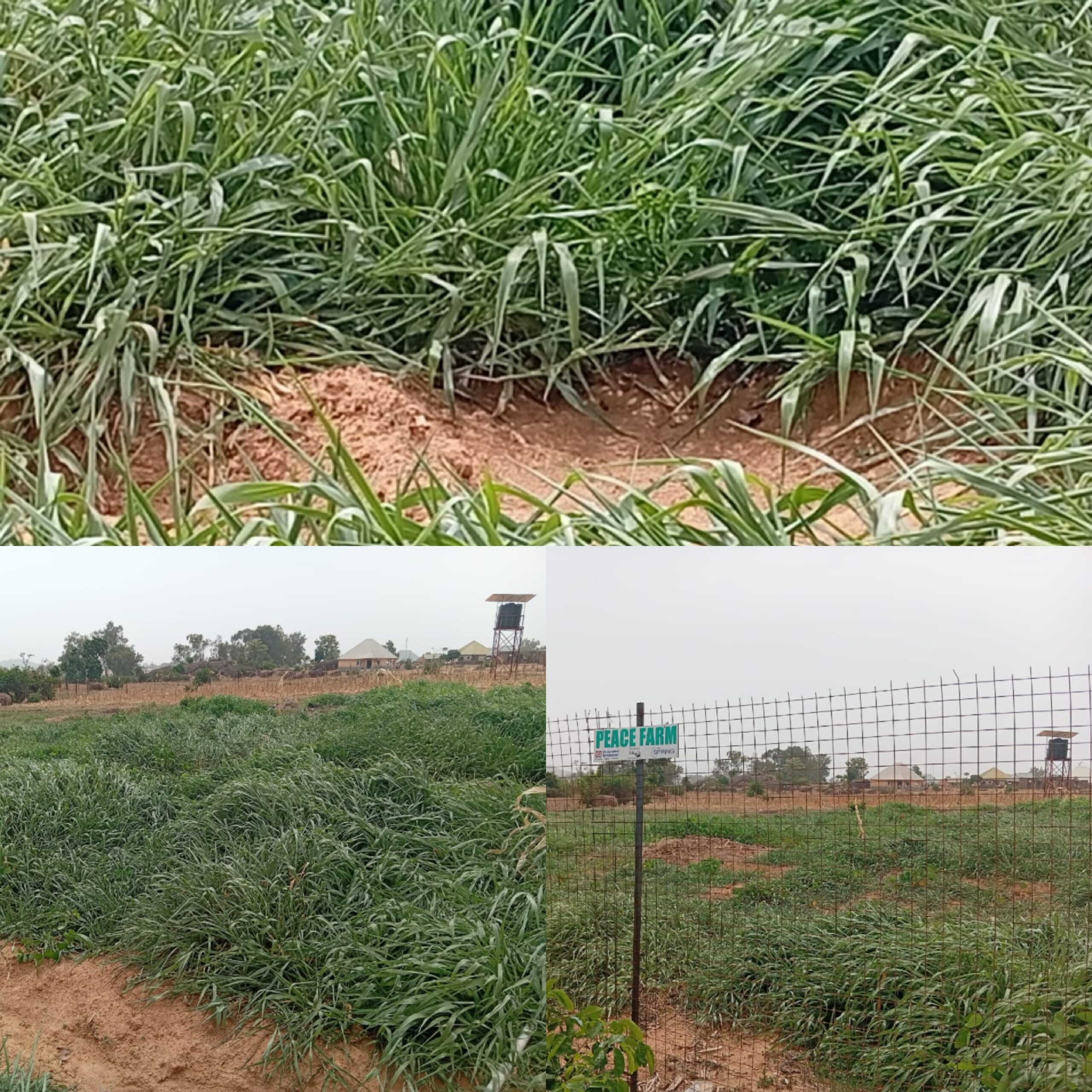
On a 0.5 hectare of land, both groups jointly cultivate drought-resistant grasses and legumes (the Congo grass or brachiaria and the mucuna beans) for cows, an approach designed to reduce competition over scarce resources.
These crops improve livestock nutrition and reduce the need for herders to migrate in search of pasture.
Rebuilding trust through shared livelihoods
Initially met with scepticism, the project has gradually gained acceptance as explained by Abisi Ataki, a farmer, and Abubakar Abdulkadir, a herder involved in the initiative.
The duo confessed mutual suspicion caused palpable tension among the farming and herding communities but the joint project doused the tension and encouraged a healthy relationship.
“We thought it was a joke,” recalls Abdulkadir. “People laughed at us when we started. But now they see the benefits.”
Through training in organic fertiliser production, irrigation and rotational farming, they are able to grow animal feed even during the dry season. By increasing access to forage, herders are less compelled to migrate in search of grazing land, one of the key triggers of conflict.
More importantly, the project is rebuilding social relationships.
“Before now, we had very little interaction,” Abdulkadir says. “Now we farm together. We visit each other, and we eat from each other.”
Women gaining economic independence
For women like Abisi Ataki, the impact has gone beyond agriculture and enhanced healthy relationship between ethnic and religious groups.
Once without a source of income, she now produces yoghurt from locally sourced milk, gaining both skills and financial independence.
“Before, we didn’t even talk with the Fulanis,” she says. “Now we exchange pleasantries, attend events together, visit and eat together. I even learnt how to make yoghurt from the cow milk.”
Dialogue efforts in other communities
Similar peacebuilding efforts are unfolding in Riyom, where Youth Initiative Against Violence & Human Rights Abuse (YIAVHA) led structured dialogue between Berom and Fulani communities especially in Bangai through a series of Inter-Community Dialogue Forum (IDF) meetings.
This has led to practical agreements aimed at reducing tensions using mechanisms like early reporting of incidents, responsible grazing practices and the establishment of joint committees to mediate disputes.
The community also had a jointly cultivated farmland to encourage wholesome relationships.
Women and youth groups in Bangai are also playing a growing role, leading awareness campaigns, countering harmful narratives and promoting non-violence.

How ‘Peace Farm’ is fostering cohesion
Explaining the Kihang Buhit initiative, Aondona Iorapuu, Programme Coordinator for Youth, Adolescent Reflection and Action Centre (YARAC), says climate change has worsened tensions between herders and farmers in communities across the State.
According to him, “In the last couple of years, there have been tensions between herders and farmers, and sadly, we recorded cases of attacks and cattle poisoning in some communities.
”To address this, YARAC introduced a peacebuilding initiative focused on economic cooperation, social cohesion and resource management. The organisation selected a community with a balanced population of both herders and farmers in the pilot phase of the project.
The initiative, titled Enhancing Peaceful Coexistence through Sustainable Forage Production, focuses on reducing conflict by improving access to grazing resources.
“We identified key resources that usually cause conflict and used them as entry points for dialogue and cooperation,” he added.
From resistance to acceptance
Using agriculture as a tool for peace, initial resistance turns to growing trust
He emphasised, “By increasing access to forage, herders no longer need to move from place to place, which often leads to conflict. The two groups were also trained in paddocking (controlled grazing), rotational farming, mixed cropping on small land areas, organic fertiliser production using materials like corn stalk, chicken waste, cow dung, molasses.”
“This approach helps preserve soil nutrients while ensuring sustainable farming. Due to declining water levels caused by climate change, the project introduced solar-powered irrigation systems, allowing year-round farming.
“At the start, the project faced resistance due to long-standing mistrust between the two groups. There was suspicion because herders and farmers did not see eye to eye. As they began working together, both groups developed mutual understanding.
“Herders gained insight into the effort required for crop production, while farmers began to appreciate livestock management. Over time, cooperation improved significantly. When the grass matured, especially during the dry season, the community saw its value. Herders now have access to feed even when natural grass is scarce.”
Government and expert perspectives
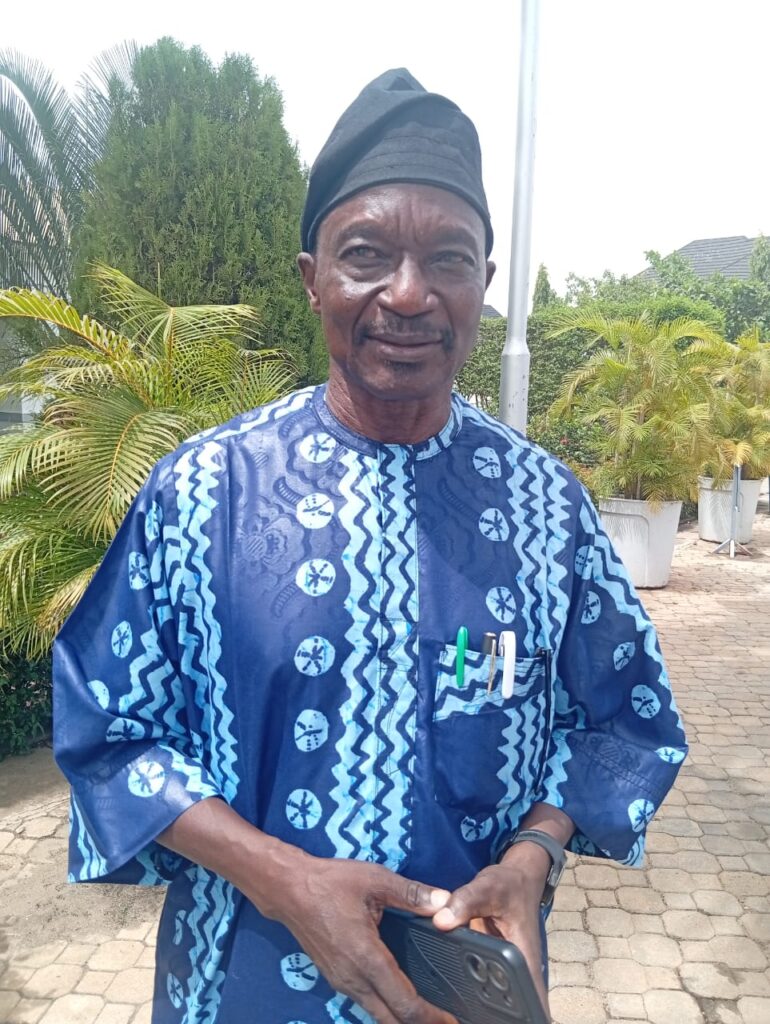
However, the State Commissioner for Livestock Development, Veterinary Services and Fisheries, Sunday Akpa, commended the initiative and urged emulation across communities.
He traced the historically interdependent relationship between farmers and herders, and noted that any conflicts were once localised and quickly resolved, but have now escalated into widespread insecurity requiring broader intervention.
Akpa emphasised dialogue and reconciliation at the community level, highlighting ongoing government efforts to promote livestock value chains and awareness campaigns aimed at reducing tensions while creating economic opportunities.
The two models call for more involvement by the government and civil society organisations working in the peacebuilding space. Such initiatives must be supported by broader reforms.
Civil society actor, Chris Agoha notes that the crisis has evolved beyond traditional farmer–herder conflicts, now encompassing criminal networks, and governance failures.
“The inability to provide security and enforce justice has created a vacuum,” he says. “Communities are increasingly resorting to self-help, which deepens instability.”
A road to peace
The journey from violent conflicts to peaceful coexistence in communities looks far.
As Paulina Barry, and others in her situation continue to wait for land, and a chance to rebuild, modest efforts like joint farming projects, planting of forage crops within designated community land, paddocking system, and building of social relationships, among others as seen in Bangai and Kihang Buhit, can as well be what is needed to make the journey complete.