



By NANBAL PANPE
It is no longer news that Nigeria is gradually approaching another general election cycle. Across the country, political activities are already gathering momentum as parties, aspirants and supporters prepare for the 2027 elections.
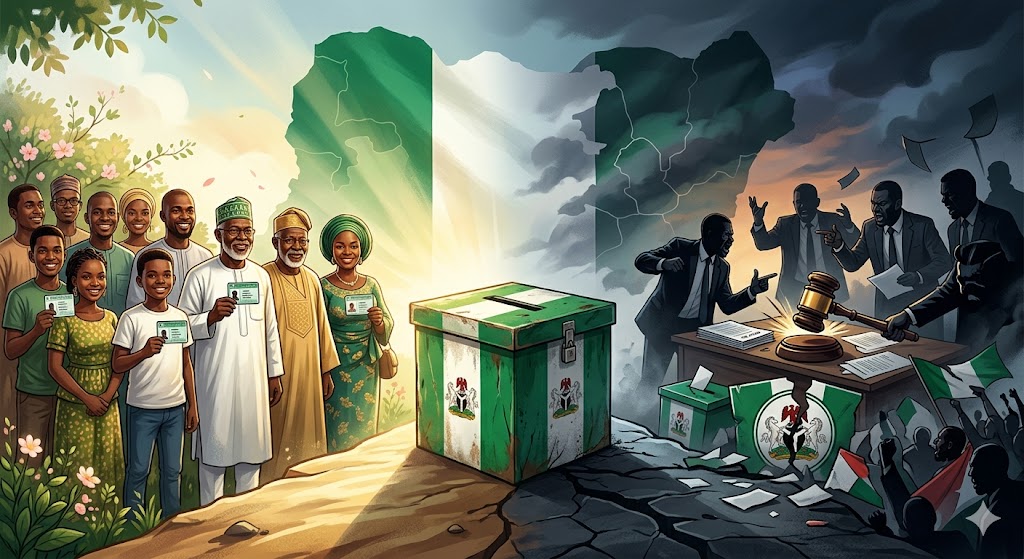
On the surface, everything appears normal, with political actors seemingly operating within democratic boundaries. However, a closer examination of the political atmosphere reveals a troubling reality that raises serious concerns about the future of the nation’s democracy.
One of the most glaring issues ahead of the elections is the desperation among political contestants. Elections naturally produce winners and losers, yet many Nigerian politicians appear unwilling to accept any outcome other than victory. The prevailing “win-at-all-costs” mentality continues to undermine democratic values and fuels the rejection of election results whenever expectations are not met.
If every candidate believes he or she is the only rightful winner, then who will willingly accept defeat? This desperation remains one of the major causes of post-election disputes, violence, and endless allegations of rigging. Both politicians and voters must begin to understand that a candidate may be competent and popular, yet still lose because the electorate chose another option. Accepting this democratic reality would go a long way in reducing tension and strengthening confidence in the electoral process.
Closely linked to this problem is the “winner-takes-all” syndrome that dominates Nigeria’s political environment. Once elected, many politicians govern as though victory grants them exclusive ownership of power, leaving little room for inclusion or collaboration.
Former political opponents often become enemies rather than partners in nation-building. This attitude weakens democracy and deepens political division.
Democracy should not operate as warfare where only one side benefits. If political leaders and citizens truly share the common goal of national development, then governance should transcend party lines and political rivalry.
As in football, the most important thing is the success of the team, not necessarily the individual who scores the winning goal. Nigeria would make significant democratic progress if politicians embraced the understanding that there is no winner in a losing team and no loser in a winning team.
Another major challenge is the unresolved issue of zoning, which remains outside constitutional provisions despite its significant influence on Nigeria’s political structure. The absence of constitutional backing for zoning has continued to create tension and suspicion among various regions and ethnic groups. Many Nigerians fear marginalisation and domination by certain sections of the country, making the struggle for power increasingly intense.
Although some political parties rely on informal agreements and internal arrangements regarding zoning, the question remains whether such agreements can truly be enforced when personal ambition and political interests come into play.
Party supremacy has also become increasingly weak in Nigeria’s democracy. Most political parties lack the capacity to discipline erring members, especially influential politicians already occupying public office. This weakness largely stems from the fact that wealthy politicians often fund party structures and activities, thereby wielding enormous influence over party decisions.
As the popular saying goes, “He who pays the piper dictates the tune.” Until political parties become institutionally stronger than individuals, internal democracy and party discipline may remain difficult to achieve.
Equally troubling is the growing political apathy among many Nigerians. Years of poor governance, broken promises and worsening economic conditions have left many citizens disillusioned and indifferent toward the political process. Politicians often take advantage of this public silence and lack of participation to act without accountability.
However, withdrawing completely from governance is not in the interest of the people. Democracy thrives when citizens actively participate, demand accountability and insist on responsible leadership. The longer Nigerians remain passive, the more difficult meaningful change may become.
The inability of many elected leaders to fulfil campaign promises has further weakened public confidence in democracy. Many citizens now believe that every new administration simply repeats the same slogans and promises while conditions continue to deteriorate.
For some Nigerians, the only feature that still makes the system appear democratic is the regular conduct of elections every four years. This widespread loss of optimism represents a serious danger to the country’s democratic future.
The role of the electoral umpire also remains central to the credibility of elections. An electoral body is expected to operate independently and impartially. Yet many Nigerians continue to question the neutrality of the present electoral system.
There is a growing perception among sections of the public that the electoral body often works in favour of the ruling party. Once confidence in the impartiality of the umpire is lost, it becomes difficult for citizens to accept election outcomes, regardless of the official results declared. In any democracy, the credibility of the process is just as important as the final outcome.
The judiciary has equally faced increasing criticism over its handling of electoral matters. Traditionally regarded as the last hope of the common man, the judiciary is now perceived by many as inconsistent and vulnerable to political influence. Conflicting judgments, controversial interpretations and endless injunctions have weakened public trust in the institution.
Many Nigerians long for a judicial system where judgments are based primarily on facts, justice and fairness rather than technicalities and political considerations.
For Nigeria’s elections to truly be regarded as free, fair and credible, these critical issues must be confronted honestly and decisively. Without meaningful reforms, the 2027 general elections may simply become another political exercise that changes little in the lives of ordinary citizens.
Ultimately, the responsibility for protecting and strengthening democracy rests with both leaders and the people. Nigeria’s democratic future depends not only on those seeking power, but also on the willingness of citizens to demand accountability, fairness, justice and credible leadership at all levels.
In-depth, facts and straight to point.
Let he who has ears, listen to the voice of reason.