


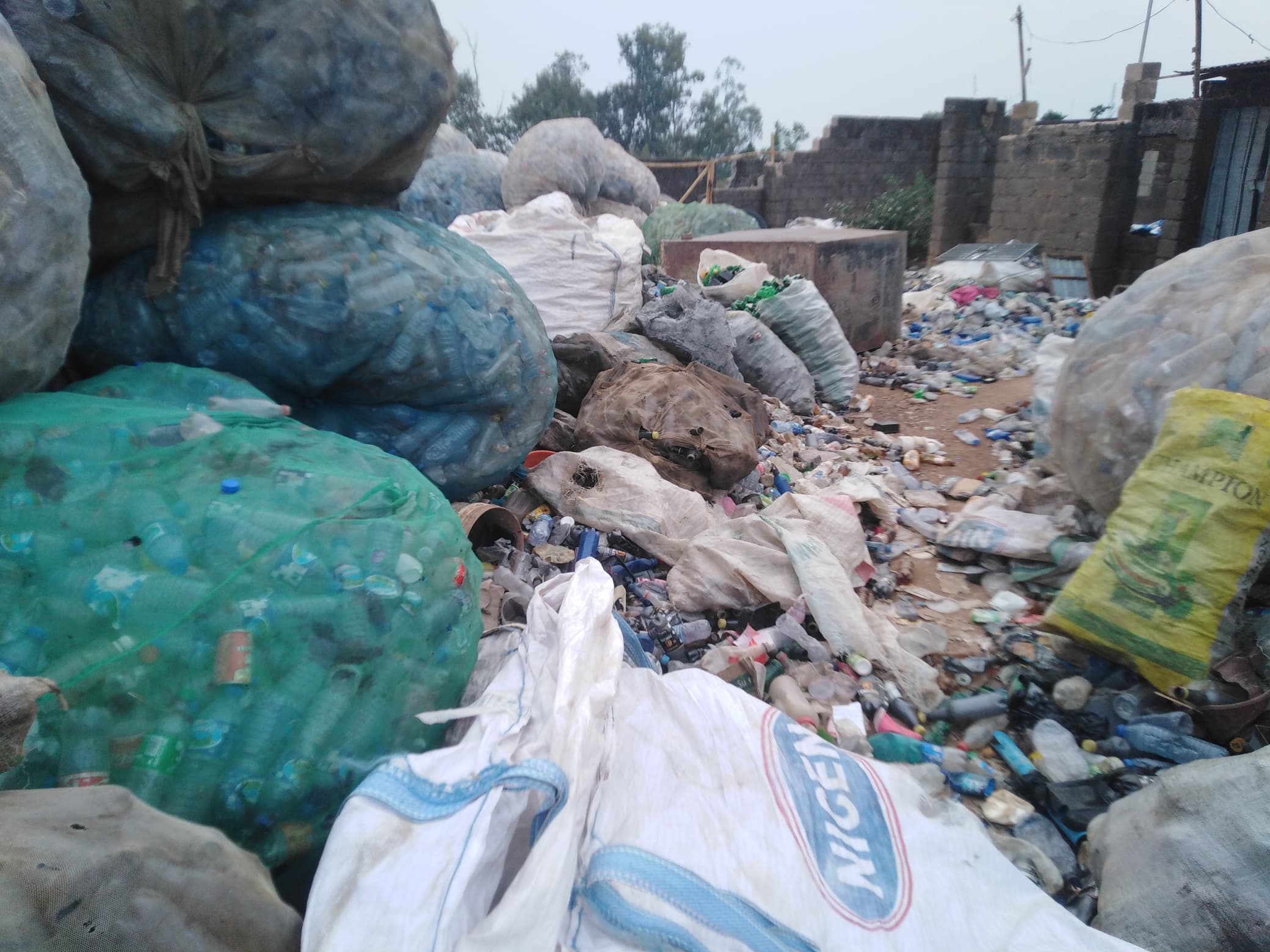

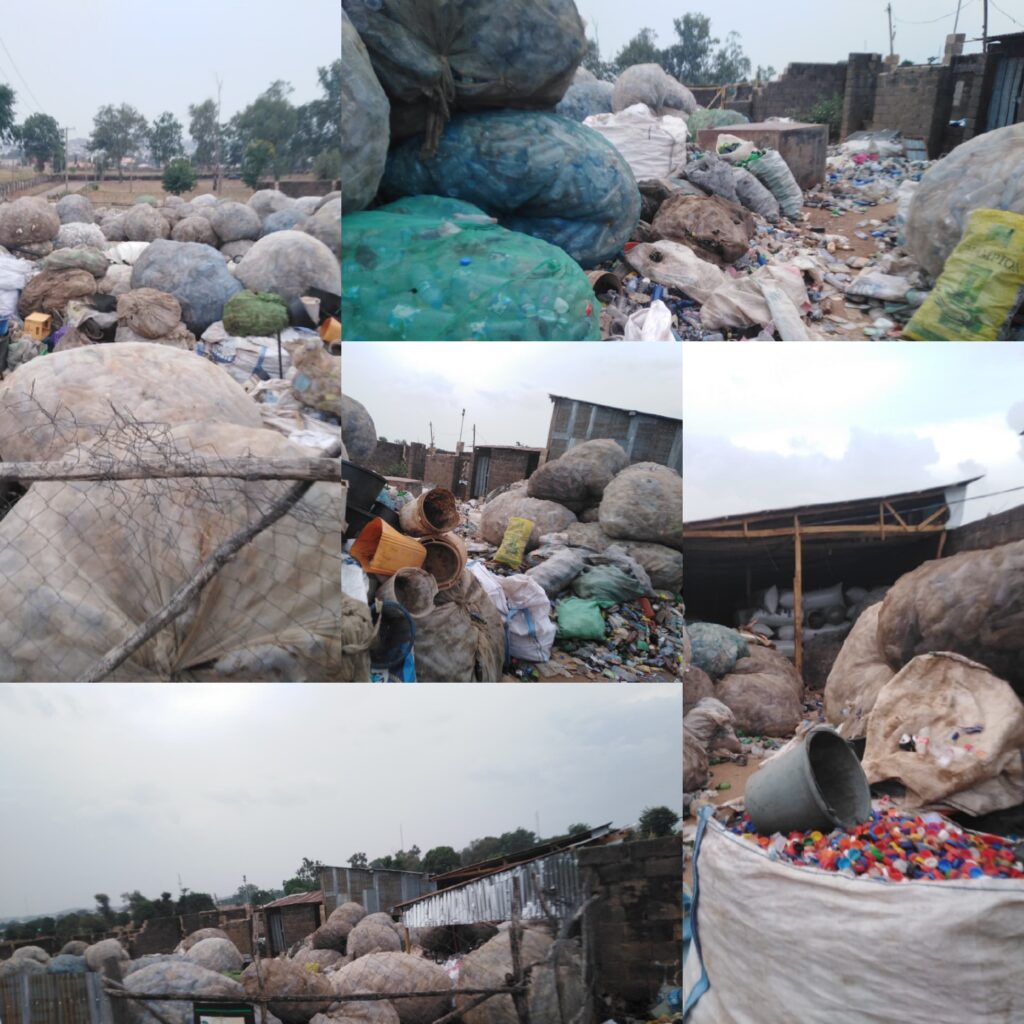
GASHION KUTYIL reports on a waste-to-wealth transformation in Jos, Plateau State, where a Nigerian graduate has built an industry from discarded plastics, challenging conventional ideas of employment, waste management and entrepreneurship in Nigeria’s informal economy
In the salubrious and windy highland city of Jos, Plateau State, where the air carries a mix of fine Saharan dust and the quiet determination of its people, a revolution is unfolding. It is not a revolution born in glass-paned corporate boardrooms or at high level government summits.
Instead, it is taking place amid the rhythmic clatter of heavy machinery, the rustle of discarded plastics and the steady, weathered hands of men and women who have learned to see value where the rest of the world sees only filth.
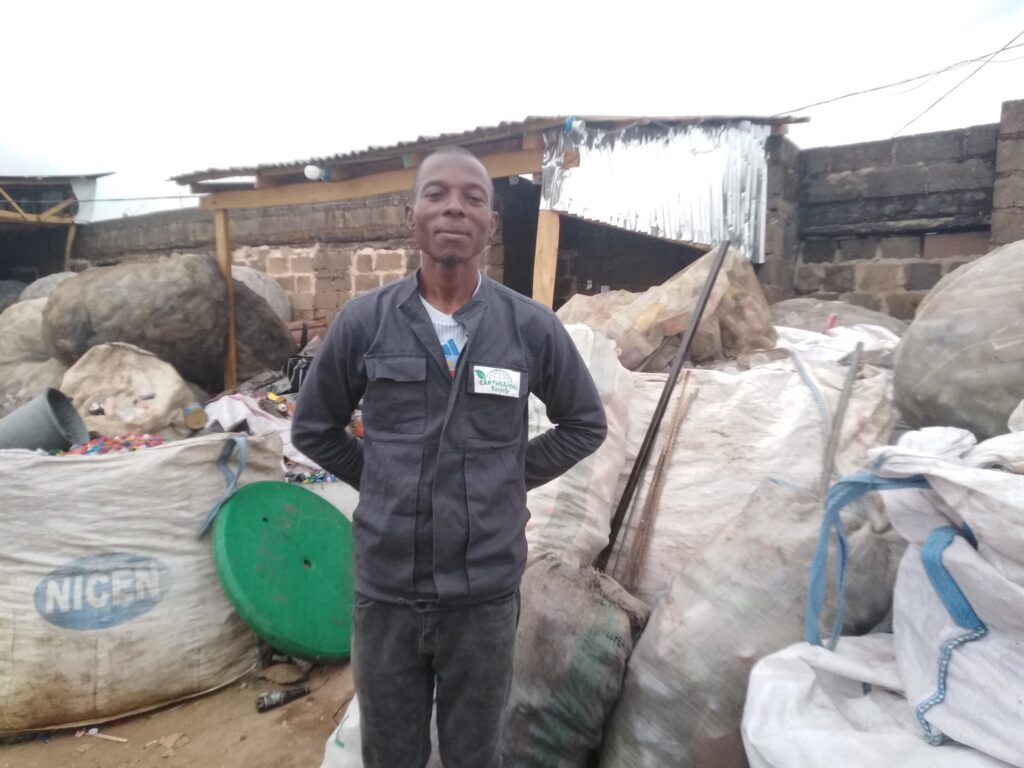
At the center of this transformation is Chinedu James. An Electrical and Electronics Engineering graduate originally from Anambra State, Chinedu chose a path that many of his peers would consider a step downward.
While thousands of Nigerian graduates spend years chasing the elusive stability of a ‘white-collar’ office job or a government appointment, Chinedu has built his future and reputation in the unpredictable, gritty world of plastic recycling. In the sprawling yards of Jos, among heaps of PET bottles, discarded nylon bags and industrial scrap, he has found something more valuable than a steady paycheck: he has found a purpose.
“Every second, people call you about waste,” Chinedu says, his voice firm with the conviction of a man who has looked into the depths of a landfill and seen a gold mine.
“Yes, they call it waste. But we, we call it treasure,” he declares, firmly.
A vision born from industry experience
Chinedu’s journey did not begin in the recycling yards. Like many ambitious young Nigerians, he initially followed the conventional route of education, certification and corporate employment. He landed a coveted role with a major global beverage company, where he became intimately familiar with high-speed industrial processes and the complexities of global supply chains. Later, he moved to Jos, briefly working with another firm.
But even while moving through the air-conditioned corridors of corporate life, a different vision was taking root.
“I had this business in mind,” he recalls. It wasn’t a random epiphany; it was an insight born from observation. In the beverage industry, he had witnessed firsthand the staggering volume of plastic waste generated every single day.
While the world regarded the bottle as a finished product to be consumed and discarded, Chinedu began to see it as a raw material at the end of one cycle waiting to be restarted.
The turning point came through a friend named Ayuba, a recycler from Maiduguri who was already operating in Jos. Ayuba spoke of the hidden economy of plastic a world where “rubbish” was traded like a commodity.
That conversation reawakened everything Chinedu had observed at the bottling plant. He realized that the world was drowning in plastic, and if he could bridge the gap between the gutter and the factory, he could build something lasting.
“I remembered everything I had seen before,” he says.
“I remembered what happened at the place where I used to work. They would say, ‘Recycling, recycling.’ I saw how even the white and green plastics were separated. I realized this was the future. That was when I decided: I will go into it.”
Building from the ground up
The transition from engineer to recycler was not a leap into a ready made factory. There were no venture capitalists, no government grants and no grand opening ceremonies. There was only a decision and the profound humility required to start at the very bottom.
“I started very small. Very, very small,” Chinedu emphasizes.
In those early days, he became a familiar, if misunderstood, figure at his local church. He began gathering discarded bottles and nylon bags from the church grounds, storing them in heaps behind the buildings near the refuse bins.
The stares from onlookers were a mix of pity and confusion. To the congregation, he was a graduate who had perhaps “lost his way” or fallen on hard times.
“Even the security people said, ‘Ah, why are you keeping this now?’” he laughs. “I told them, ‘Don’t worry, I’ll keep it.’”
This period served as an unofficial apprenticeship. Without a warehouse or staff, Chinedu learned the nuances of the trade. He learned how to sort materials by grade and how to understand the fluctuating value chain.
He built relationships with middlemen large scale collectors who served as intermediaries between small gatherers and the massive industrial processors, often Chinese owned firms, that exported the material.
He would accumulate ten to twelve tons of plastic, bale it as best he could and transport it to buyers. It was slow, manual and messy work.But it provided foundational knowledge that no textbook could offer.
Unlike many participants in Nigeria’s informal recycling sector, Chinedu brought a critical advantage to the table: technical expertise. In the recycling world, the difference between profit and bankruptcy often comes down to the condition of the machines.
“If not for my engineering knowledge,” Chinedu admits, “this business would have collapsed long ago.”
He recalls a period when his first pressing machine became a “serious headache.” Persistent mechanical failures nearly shut him down. When the machine broke, he couldn’t process enough plastic to fill a long haul truck for the lucrative Lagos market. Instead, he was forced to sell his un-baled stock locally at significantly lower prices just to keep the business going.
“The machine would just break down pah! No cash around,” he says.
“If you can’t bale the required tons for a truck, how can you carry it to Lagos? You can’t. So you sell it for less here because you have no option.”
Rather than waiting for expensive technicians or importing parts, Chinedu rolled up his sleeves. He applied his Electrical and Electronics background to the mechanical workings of his equipment.
Today, he operates and maintains almost all his machinery personally. He has also integrated safety standards, insisting on personal protective equipment (PPE) such as earplugs and safety boots – a rarity in the informal scrap yards of Nigeria.
Cash flow pressure, a threatened future
The economics of recycling in Nigeria are as brutal as they are simple. It is a cash driven industry. Every day, Chinedu’s yard is visited by dozens of small-scale collectors – men and women who spend their days scouring streets, dumpsites and drainage systems for plastic. These collectors live hand to mouth and do not operate on credit.
“When they come, you must pay,” Chinedu explains. “They don’t want stories. The one bringing one kilogram or two kilograms needs their cash immediately.”
This creates constant pressure on liquidity. To keep the flow of material coming in, Chinedu must keep the flow of cash going out. It is a relentless cycle: buy, process, sell and repeat. Margins are razor-thin once you factor in transport, labour, diesel for generators and machine maintenance.
However, within this cycle, Chinedu has created an unexpected oasis of employment. Today, his operation employs ten permanent staff members. In a poignant reflection of Nigeria’s current economic climate, many of these workers are themselves educated – holding National Diplomas (ND) or National Certificates in Education (NCE). In Chinedu’s yard, their degrees are not gathering dust on a shelf. They are being used to power a business that feeds their families.
“People think this work is dirty,” Chinedu says, gesturing to his team.
“But look at them. Nobody here is without an NCE or ND. For me, that is empowerment. Not just talk real empowerment.”
Beyond his core staff, he engages a rotating group of daily labourers, particularly women, who earn their living by sorting and cleaning plastics. They remove labels and caps, earning about 40 naira for every kilogram processed.
A fast worker can make upwards of 6,000 naira a day, a significant sum that sustains entire households in Jos.
Despite the clear environmental and social benefits of his work, Chinedu now faces his greatest challenge yet: the threat of displacement.
His current recycling site, which he rented to build his business, has recently been identified as government property. The Plateau Environmental Protection and Sanitation Agency (PEPSA) has asked him to vacate the premises to make way for government projects.
For a business that relies on heavy machinery and vast amounts of space, relocation is a logistical and financial nightmare.
The irony is not lost on him. Chinedu is doing exactly what the government claims to want: removing waste from the streets, preventing blocked drainage systems and flash flooding and creating jobs for unemployed graduates. Yet he finds himself labeled a nuisance.
“If we were not here, you would see plastic everywhere,” he argues.
“We are helping the environment. All we are asking for is a soft landing. Don’t pull a young man who is trying to be self-reliant back into the street.”
His plea reflects a wider struggle in Nigeria’s micro-industrial sector: the need for recognition, support and policy stability.
Despite the looming threat of eviction, Chinedu remains focused on expansion. He does not see himself as a scrap worker. He sees himself as a future industrialist.
He draws inspiration from global figures like Elon Musk, believing that scale is the only difference between a small yard in Jos and a global enterprise.
“I see myself going far,” he says.
“When you go to Lagos, you see what is possible. You see the massive recycling plants. That is where we are going. If you think average, you stay average. But if you think big, you grow,” he declares.
His philosophy challenges Nigeria’s white-collar obsession.
“Going back to work for a company? I don’t think I can,” he reflects.
As the sun sets over the Jos Plateau, Chinedu James continues working among mounds of plastic, quietly building an industry from what others discard.
He is not just recycling plastic. In a country grappling with economic uncertainty, he is recycling opportunity, hope.