



By FAVEN NANA
Traditional agriculture, once regarded as the backbone of Nigeria’s economy and rural livelihood, is gradually losing its grip as many smallholder farmers abandon the sector in search of alternative means of survival.
Across farming communities, the reality has become increasingly harsh. Most crops require a minimum of three months to mature, with additional time needed for drying, storage and eventual sale. Maize, for instance, follows this long and demanding process. Yet, despite the enormous labour, time and resources invested in cultivation, many farmers end up making very little profit after harvest. In some cases, they suffer outright losses due to poor market conditions and environmental challenges.
Beyond low returns, farmers continue to face numerous obstacles that make agriculture less attractive and increasingly unsustainable. Poor storage facilities expose harvested crops to infestation by weevils and other destructive insects, forcing many farmers to sell their produce prematurely at low prices to avoid further losses.
At the same time, unpredictable weather patterns continue to threaten crop yields in ways many traditional farming methods cannot withstand. Excessive rainfall, prolonged dry spells and changing climatic conditions have made farming more uncertain than ever before.
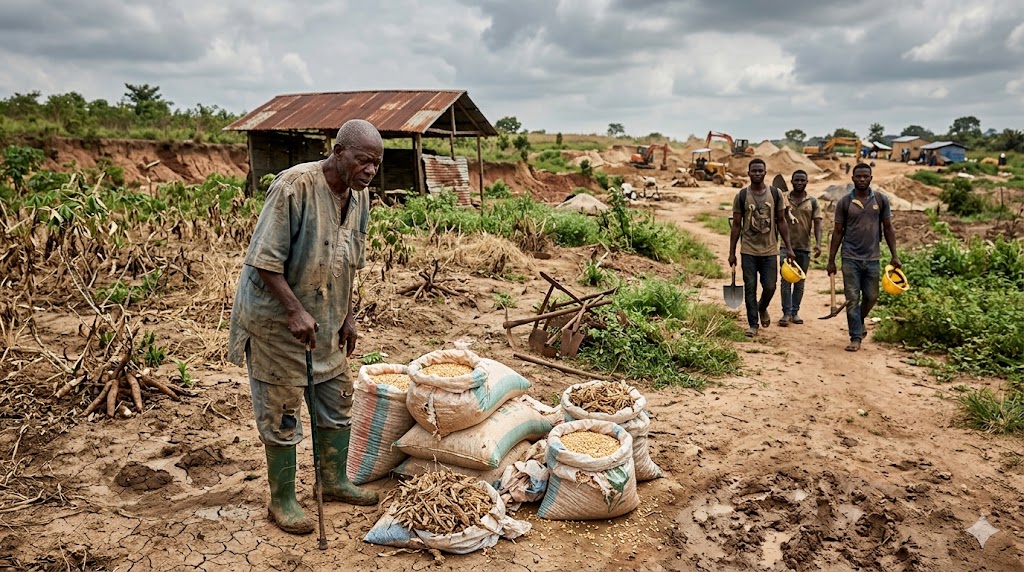
Perhaps even more concerning is the declining interest among young people in agriculture. Many youth now view farming as stressful, unprofitable and incapable of delivering immediate financial rewards. Instead, they are increasingly drawn toward activities such as mining and other ventures perceived to be more lucrative and faster-paying.
Today, if a young person is invited to work on a farm, the first question often asked is: “How much are you going to pay?” or “Can you pay the equivalent of mining money?” This growing preference for quick income over long-term agricultural investment poses a serious threat to the future of food production in Nigeria.
Older farmers are gradually retiring from active farming, while only a few younger individuals are willing to take up the responsibility of sustaining the sector. If this trend continues unchecked, the country may face severe agricultural decline in the years ahead.
Several factors have contributed to this shift away from traditional agriculture. Farming demands months of labour before any financial return can be realised, unlike alternative livelihoods that provide relatively immediate income. Faced with mounting economic pressure, many farmers now consider other occupations more practical for survival. To reverse this dangerous trend, deliberate interventions must be introduced.
Government and relevant stakeholders must provide subsidies for farm inputs and improve access to modern farming technologies capable of increasing productivity and reducing losses. Better storage facilities should also be established to minimise post-harvest damage and stabilise market prices.
Farmers urgently need support through reduced costs of agricultural inputs such as fertilisers, pesticides and improved seedlings. Fair pricing mechanisms should equally be introduced to ensure farmers do not continually operate at a loss.
For example, following last year’s harvest season, the market experienced a sharp drop in crop prices due to excess supply. Ironically, despite the current lean season, prices have still not risen significantly, even though farmers endured high production costs during cultivation. Many farmers were compelled to sell their produce at low prices simply to meet pressing family responsibilities, including school fees and household expenses.
Access to low-interest loans also remains critical. Farmers require financial assistance that is both affordable and accessible so they can invest in their farms, improve productivity and better manage climate-related risks. Such interventions will not only support existing farmers but may also encourage younger people to reconsider agriculture as a viable and rewarding profession.
Nigeria cannot survive without farmers. Smallholder farmers remain responsible for producing a significant portion of the nation’s food supply, including essential cereals, vegetables and tubers that sustain households across the country. Research indicates that smallholder farmers contribute nearly 75 per cent of food production in many parts of Nigeria.
Without them, the nation could face severe food shortages and become dangerously dependent on food imports. Ultimately, traditional agriculture is weakening under the pressure of low profitability, rising production costs, poor infrastructure and changing economic realities. Many farmers are abandoning cultivation for alternatives such as mining because agriculture no longer guarantees sustainable returns.
The situation demands urgent attention. Thus, agriculture must be repositioned as a profitable and respected sector capable of supporting livelihoods and strengthening national food security. Farmers should not be forced to choose between survival and the profession that feeds the nation.
Rescuing traditional agriculture is therefore not merely about preserving a cultural heritage; it is about safeguarding Nigeria’s economic future, ensuring food security and protecting the wellbeing of millions of citizens who depend directly or indirectly on farming for survival.