



By RALPH MADUGU
“A society that tolerates daily bloodshed without sustained outrage is a society that has lost its moral compass.” — Anonymous
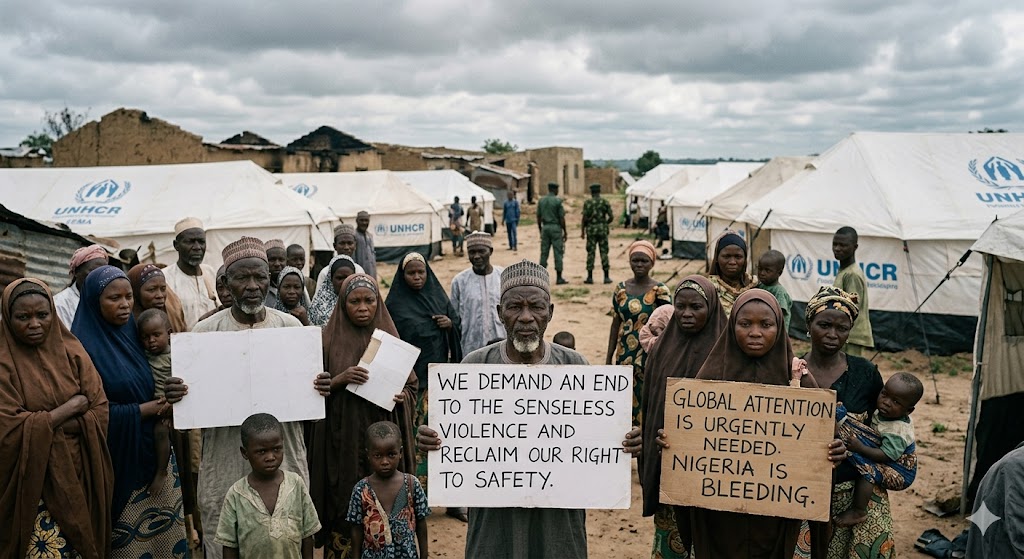
Nigeria today is bleeding profusely, yet the nation appears to be growing increasingly silent in the face of the daily tragedy. Every morning brings fresh reports of killings. Every day, families bury fathers, mothers, sons and daughters, not because the country is officially at war, but because criminal violence has become deeply entrenched in society.
From banditry and kidnapping to insurgency and violent attacks by armed militias, innocent Nigerians continue to lose their lives across communities, farms, highways and even within their homes. The frequency of these killings has created a disturbing reality where human life appears to have lost its value.
In any sane and civilised society, the killing of a single innocent person should provoke national outrage and serious action. Sadly, many Nigerians now scroll through reports of massacres and abductions with frightening indifference, almost as though such tragedies have become normal. This growing apathy is dangerous because silence and indifference often allow evil to thrive unchecked.
The Universal Declaration of Human Rights, adopted in 1948, clearly affirms the sanctity and inviolability of human life. Nigeria’s Constitution equally states that the security and welfare of the people shall be the primary purpose of government. Yet, across the country today, innocent lives are taken daily while perpetrators often escape justice.
Bandits raid villages and disappear without consequence. Kidnappers collect huge ransoms and return to strike again. Insurgents continue to challenge the authority of the Nigerian state in several areas, while even security personnel charged with protecting citizens are increasingly becoming targets themselves.
The situation goes beyond mere insecurity. It reflects a deeper moral and societal collapse. When people justify killings in the name of land disputes, religion, politics or revenge, society gradually loses its humanity. Every innocent life destroyed diminishes the collective moral conscience of the nation.
Human life remains sacred because it is a gift from God. No individual possesses the moral right to take innocent life without consequence. The continued bloodshed across Nigeria therefore represents not only an attack on citizens, but also a dangerous assault on justice, morality and the nation’s future.
The time has come for decisive action. Nigerians must refuse to normalise mass burials, ransom payments and the displacement of entire communities as part of everyday existence. Citizens in states such as Zamfara, Benue, Plateau, Borno and several other parts of the country deserve the right to live safely without fear of violent attacks.
Justice must no longer remain weak or selective. Arrests alone are meaningless if prosecutions never follow. Criminals who kill innocent citizens must face the full weight of the law. Failure to punish offenders only emboldens others to continue the cycle of violence.
There is also an urgent need to strengthen and reform the nation’s security architecture. Security agencies are often overstretched, poorly equipped and in some cases compromised. Communities need effective policing systems they can trust, while the nation’s borders must be better secured to prevent the proliferation of illegal arms.
Beyond government action, religious leaders, traditional rulers, parents and teachers all have critical roles to play in rebuilding societal values. Future generations must be taught that no grievance, ideology or political ambition justifies the shedding of innocent blood.
Nigeria may not officially be at war, but the scale of killings and insecurity across the country tells a different story. The country is gradually drifting into a dangerous conflict against itself, while the world watches with concern.
Ultimately, the bloodshed will only stop when Nigerians collectively decide that enough is enough. The nation must rise above ethnic, religious and political divisions and begin to value every human life equally, regardless of tribe, religion or social status.
The future of Nigeria depends on restoring the dignity and sanctity of human life. If the country fails to protect its citizens and uphold justice, it risks losing not only its security, but also its moral foundation.
Nigeria must therefore reject violence, confront injustice and rebuild a society where human life is truly respected and protected. Only then can the country begin to heal from the wounds of insecurity and move towards lasting peace and national unity.
Madugu is the Editor, TODAY’S CHALLENGE Magazine