


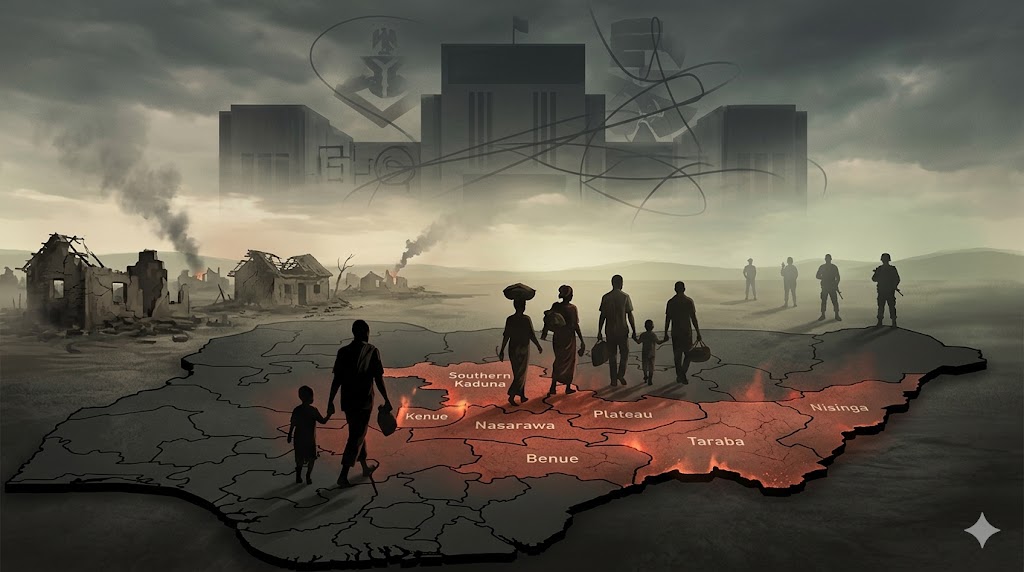

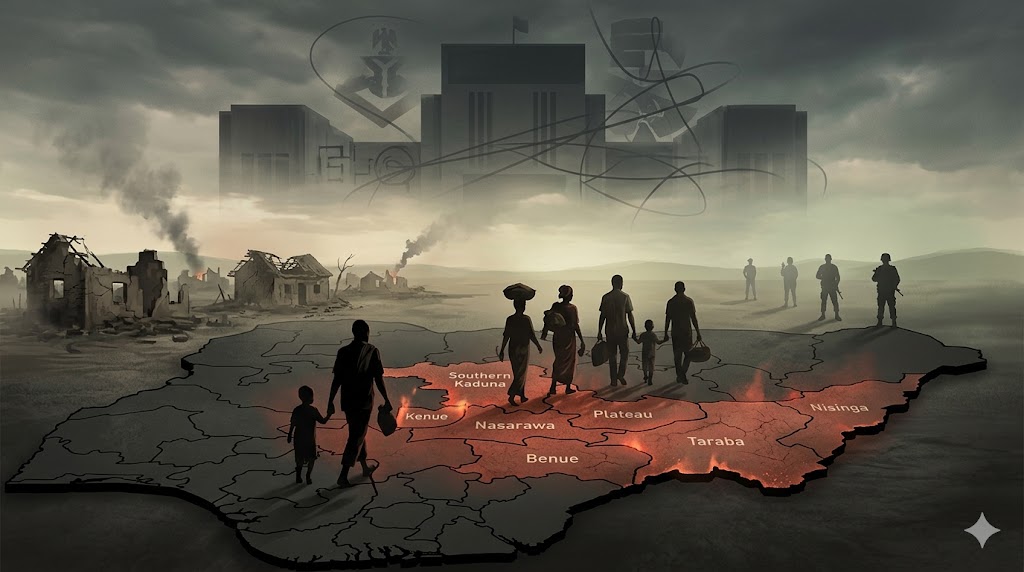
THE persistent killings, attacks and displacement in most parts of the Middle Belt—Plateau, Benue, Nasarawa, Taraba, Adamawa, Niger and southern Kaduna—continue to deepen anger and mistrust among indigenous communities. For many, the crisis has become not only a humanitarian emergency but also a test of fairness and neutrality in Nigeria’s security architecture.
A key concern repeatedly raised is the perceived inability of the Office of the National Security Adviser (NSA), Mallam Nuhu Ribadu, to adequately reflect or prioritise the security realities of the Middle Belt within national security decision-making. Critics argue that despite the scale of attacks in these states, the response has not reflected the urgency required.
AT the centre of this perception is a conflict of interest argument rooted in ethnic sensitivities. Given allegations that some perpetrators are linked to Fulani herder groups, critics contend that it becomes difficult to pursue or communicate policies that may be seen as targeting one’s ethnic kin. This perception—whether fair or not—continues to shape how many in the Middle Belt interpret federal security responses.
RECENT reports of tension within the security establishment, including concerns over operational overreach and coordination within the security hierarchy, have further strengthened doubts about the effectiveness and neutrality of the current structure. These concerns have only widened public anxiety in already-affected communities. It is against this backdrop that the appointment of a Special Adviser on Homeland Security by President Bola Tinubu has been widely welcomed in some quarters. For many in the Middle Belt, the new office is seen as a corrective measure that could provide additional oversight and improve focus on internal security threats.
HOWEVER, questions remain over mandate clarity and institutional overlap, especially given that the Office of the NSA is already constitutionally responsible for coordinating national security and intelligence across all agencies. Some observers fear duplication of roles may further complicate an already strained security architecture. There is also concern that unless clearly defined, the new structure could create parallel lines of authority that weaken rather than strengthen coordination among security agencies. In an environment already burdened by inter-agency rivalry, clarity of command is critical to effective response.
FURTHERMORE, the timing and context of the appointment have generated debate within policy circles, with some analysts arguing that reforms in the security sector must be carefully structured to avoid confusion in roles, responsibilities and reporting lines. Without such clarity, institutional friction may overshadow intended gains. For communities in the Middle Belt, however, the central issue remains simple and urgent: the need for tangible protection of lives and property. Years of repeated attacks have left deep scars, and public trust in security guarantees continues to erode with each new incident.
ULTIMATELY, Nigeria’s security challenge requires urgent attention, coordination and trust. What is clear is that perception matters as much as policy. In a fragile federation, any hint of partiality or conflict of interest—real or perceived—weakens confidence in national institutions.