


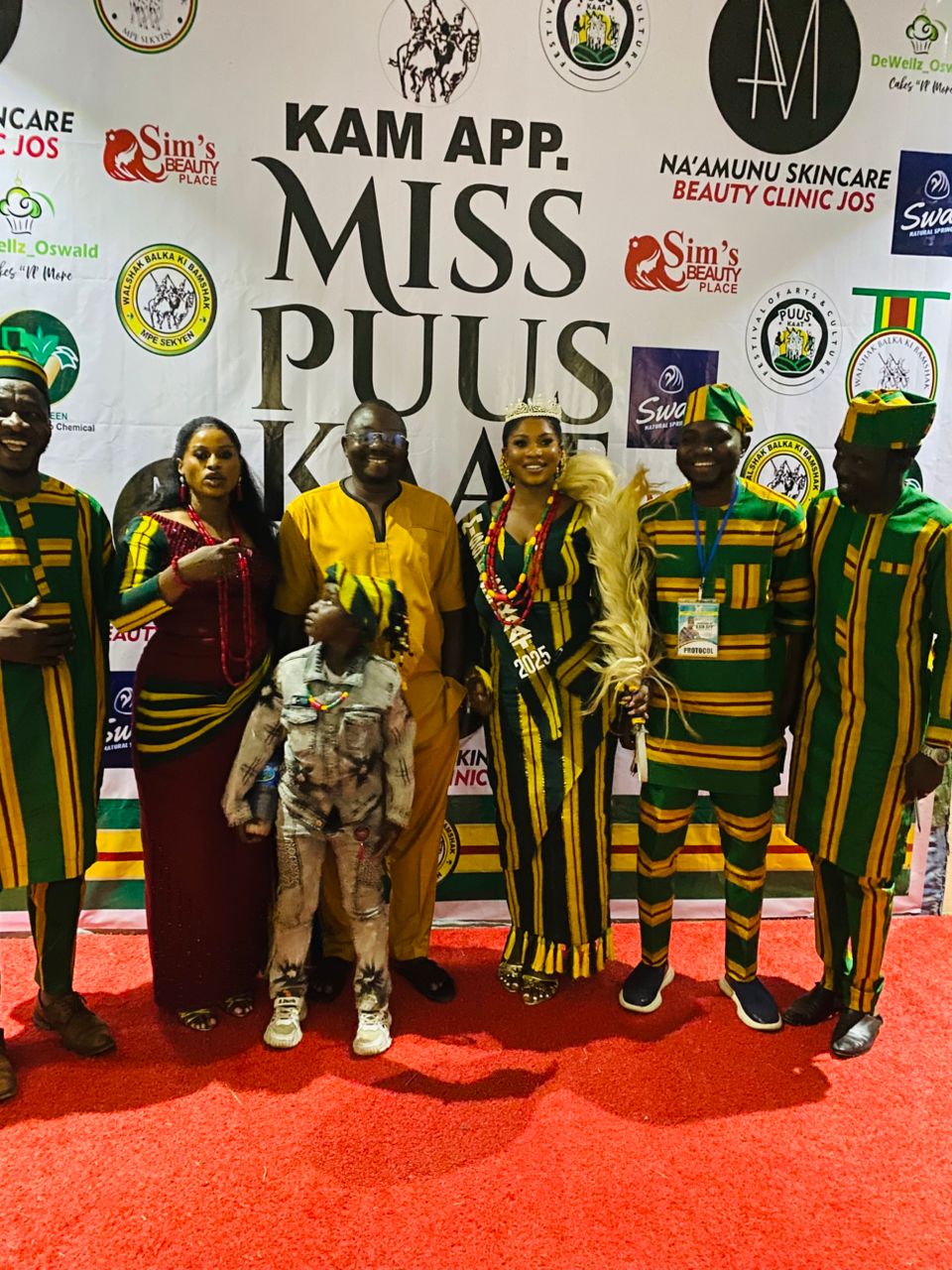

At a time when many indigenous languages are steadily losing relevance among younger generations, the unveiling of the KAM App by 2025 Miss Puuskaat Beauty Pageant winner, Nankiling Bigwan, has emerged as a bold cultural intervention and statement aimed at preserving the Mwaghavul language and identity through modern technology. PANLE VWAR writes on how the initiative is redefining pageantry, youth influence and digital innovation in Plateau State
In a society where beauty pageants are often dismissed as glamorous displays with little lasting value, Miss Nankiling Bigwan has offered a refreshing and inspiring counter-narrative that is making waves all over Nigeria, even beyond.
The winner of the 2025 Miss Puuskaat Beauty Pageant organized by the Mwaghavul Youth Movement, MYM, has demonstrated that crowns carry responsibility and that influence can be channelled into meaningful change.
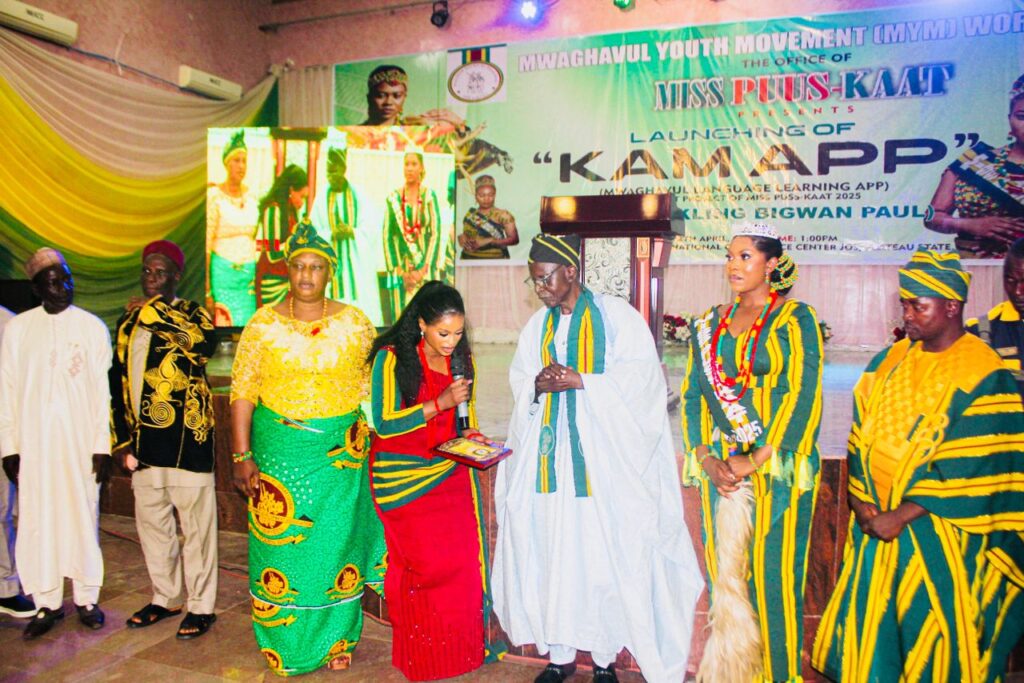
Her recent unveiling of the KAM App at the Millennium International Conference Centre was more than the launch of a digital platform. It was a bold statement on the future of indigenous identity in a rapidly globalising world.
In her introductory remarks at the event, Bigwan, the initiator of the project, explained the vision behind the innovation.
“The app is meant to promote and sustain the Mwaghavul language beyond borders,” she explained.
She also expressed gratitude to PLASMIDA for supporting her pet projects—the beneficiaries of which include beauty queens across Plateau State—and thanked everyone whose contributions made the launch a success.
Across Africa, many indigenous languages face the threat of gradual extinction as younger generations increasingly adopt foreign languages and digital cultures.
When a language disappears, its history, values and identity often fade with it.
Bigwan’s intervention is, therefore, both timely and necessary.
By creating an app that teaches the Mwaghavul language through English, Hindi, Chinese, Spanish, French, Portuguese and German, she has shown uncommon foresight.
She understands that preserving culture does not mean resisting modernisation. Rather, it means using modern tools to protect heritage.
A digital tool for cultural preservation
Speaking, the President of the Mangu Traditional Council and Mishkagham Mwaghavul, Da John Putmang Hirse, lauded the initiative, describing it as another milestone in the history of the Mwaghavul people.
“We have been recognized before when we became the first indigenous language on the Plateau to translate the New Testament of the Holy Bible into Mwaghavul,” he said.
“Now, this idea of the KAM App aligns with the new trends in information and communication technology.”
The monarch further noted that the innovation would make language learning easier for younger generations.
“It will help our children learn the language with ease. We are in a world of technology and we cannot afford to be left behind. The traditional council will decide on how best to support this innovation,” he added.
One of the guests at the event, Mark Adams, emphasized the cultural urgency of the project.
“For Africans in particular, there is an urgent need to cherish, preserve, and proudly speak our God-given mother tongues rather than abandon them in pursuit of foreign languages,” Adams noted.
“Embracing one’s native language does not diminish progress; instead, it enriches the individual, strengthens family bonds, promotes social cohesion, and safeguards cultural heritage for generations yet unborn.”
The message this initiative sends to young people is highly commendable.
At a time when many youth are consumed by unproductive digital trends, the KAM App redirects attention toward learning, identity and self-development.
It proves that technology can be a tool for empowerment rather than distraction.
Redefining meaning of pageantry
This initiative also challenges long-held public perceptions of pageantry.
Too often, beauty queens are celebrated briefly and forgotten soon after.
No doubt, Nankiling Bigwan has redefined what it means to wear a crown, transforming symbolic recognition into practical service.
Participants at the event described the initiative as a welcome development for the Mwaghavul nation.
Satmak Istifanus, an entrepreneur, remarked: “It will greatly help beginners learn the language more easily while also promoting Mwaghavul culture and identity.
“Indeed, the Mwaghavul language is reaching beyond the shores of this country. Kudos to Miss Mwaghavul for this commendable innovation.”
Bigwan’s example sends a clear message to other titleholders, youth leaders and public figures: visibility should come with vision, influence should produce impact and titles should serve as platforms for solutions.
The KAM App is not merely a local innovation. It is a model that other ethnic nationalities across Plateau State and, indeed, Nigeria as a whole, can emulate.
If replicated widely, digital tools like this could become powerful instruments for preserving endangered languages nationwide.
Another participant, who preferred to remain anonymous, said, “Nankiling deserves commendation—not just for her intelligence and creativity, but for understanding that true beauty shines brightest when it uplifts others.”
Timely call to protect indigenous languages
Dignitaries at the event included the Commissioner for Local Government and Chieftaincy Affairs, Ephraim Usman, and the Wife of the National Chairman of the All Progressives Congress, Martina Yilwada, who was represented by a delegate.
They considered the initiative timely and commendable, especially at a period when many indigenous languages are gradually sliding toward extinction due to neglect.
A major cause of this decline is the growing tendency of parents to communicate with their children only in foreign, second or official languages, even within the home, while their native tongues are ignored.
This project should serve as a clarion call to society to recognize the vital place of the mother tongue in the social and intellectual development of the younger generation.
Language is more than a means of communication. It is a gift, a marker of identity and a bridge that connects a people to their roots, culture, history and values.